The Importance of Land Tenure

The Economist today highlighted some recent work by Dr Thomas Elmqvist of Stockholm University. Using a combination of Landsat satellite imagery and interviews and surveys with locals in Madagascar, they examined whether human population densities or land tenure systems were more important for determining patters of tropical deforestation.

“From the Landsat images they were able to distinguish areas of forest loss, forest gain and stable cover. Different parts of Androy exhibited different patterns. The west showed a continuous loss. The north showed continuous increase. The centre and the south appeared stable. Damagingly for the population-density theory, the western part of the region, the one area of serious deforestation, had a low population density.

This is not to say that a thin population is bad for forests; the north, where forest cover is increasing, is also sparsely populated. But what is clear is that lots of people do not necessarily harm the forest, since cover was stable in the most highly populated area, the south.

The difference between the two sparsely populated regions was that in the west, where forest cover has dwindled, neither formal nor customary tenure was enforced. In the north—only about 20km away—land rights were well defined and forest cover increased. As with ocean fisheries, so with tropical forests, everybody’s business is nobody’s business.”

Land tenure (spatial) structure was one of the variables I examined in my agent-based model of agricultural land-use decision-making in Spain. I found that whilst the neighbourhood effects were evident in patterns of land-use due to land tenure, market conditions were the primary driver of change (NB land-use/cover change in the traditional Mediterranean landscape I examined is of a markedly different type).

memories of a British coastal landscape


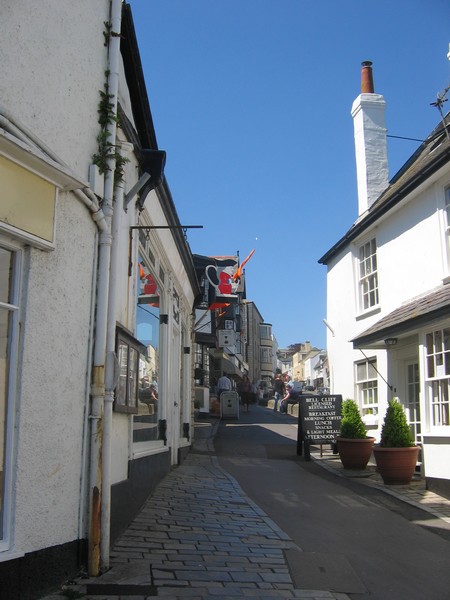
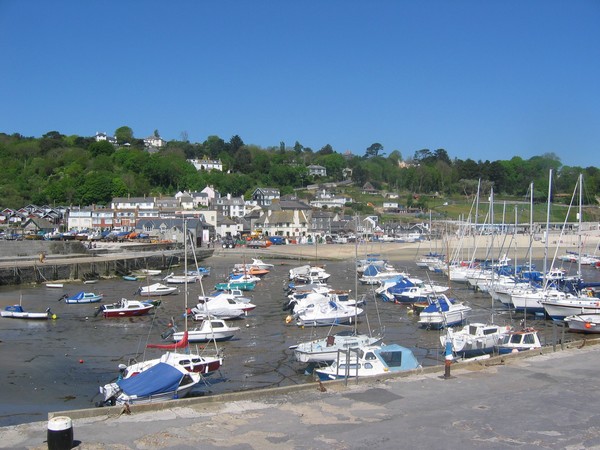
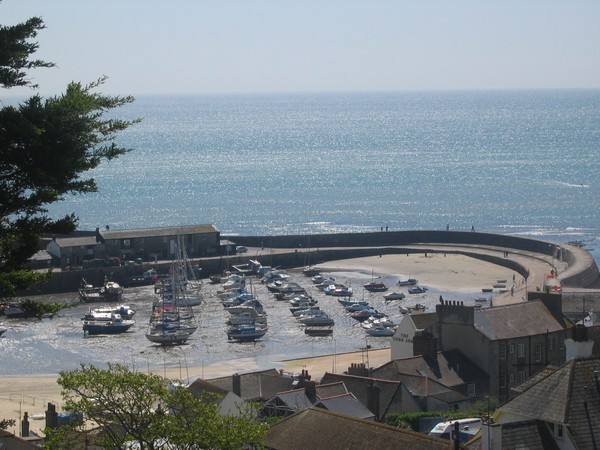
Before my impending departure to the States I’ve been out and about visiting a few places that I won’t see for a while. This week, I took my Grandmother back to the town where she grew up on the English south coast – Lyme Regis in Dorset. I’d never been and she hadn’t been back for a while so it was a trip down both new and old memory lanes.


And what steep lanes. Apparently they used drag cargo up Cobb Road from ships docked in ‘the Cobb’. They realised it was a bit much like hard work up these steepled slopes and stopped a fair while ago. But there were other war-time stories about the inclines; run-away trucks with failed breaks, careening down narrow lanes toward the sea-front, their landings cushioned not by a sandy beach but by the solid walls of the old coal merchants (it seems it’s still happening these days too). Line upon line of American soldiers snaking up and down Broad Street outside the old Regent Cinema (then The New Thing In town). Apparently it remains quintessentially British today – tea and biscuits from a china cups and saucers before taking your seats (aside the fact it shows the latest Hollywood block-busters of course).


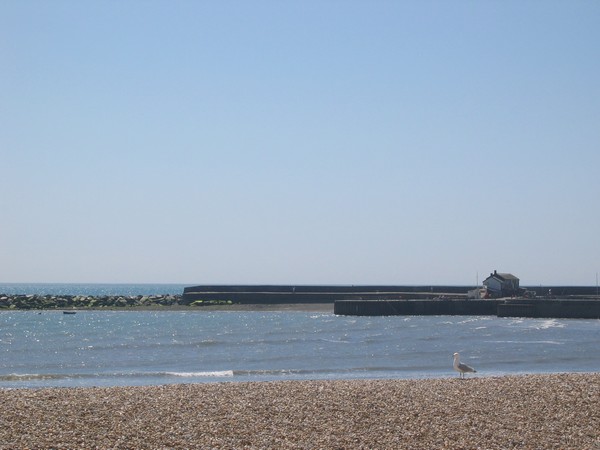
The vertiginous topography has not only caused rapid runaway of trucks, but also the rapid (and creeping) runaway of the soil. Efforts to manage and reduce land slippage are being undertaken in parallel with a £17 million coastal defence and harbour improvement scheme. Whilst understanding that it is necessary if they want to save their sea-front industry (which has changed from sea-trading and fishing to sea-swimming and tourism), locals aren’t happy about the large new shingle banks that provide the needed protection. Sand has accumulated in the harbour over recent years and has now been joined by a nice sandy beach imported from France.


Alongside visiting the sea-side we had tea and cake at some old friend’s house – all in all a good day stocking up on memories of the British coastal landscape before I jet off across the pond.

Useless Arithmetic?

Can we predict the future? Orrin Pilkey and Linda Pilkey-Jarvis say we can’t. They blame the complexity of the real world alongside a political preference to rely on the predictive results of models. I’m largely in agreement with them on many of their points but their popular science book doesn’t do an adequate job of explaining why.

The book is introduced with an example of the failure of mathematical models to predict the collapse of the Grand Banks cod fisheries. The second chapter tries to lay the basis of their argument, providing an outline of underlying philosophy and approaches of environmental modelling. This is then followed by six case studies of the difficulties of using models and modelling in the real world: the Yucca Mountain nuclear waste depository, climate change and sea-level rise, beach erosion, open-cast pit mining, and invasive plant species. Their conclusion is entitled ‘A Promise Unfulfilled’ – those promises having been made by engineers attempting to apply methods developed in simple, closed systems to those of complex, open systems.

Unfortunately the authors don’t describe this conclusion in such terms. The main problems here are the authors’ rather vague distinction between quantitative and qualitative models and their inadequate examination of ‘complexity’. In the authors’ own words;

“The distinction between quantitative and qualitative models is a critical one. The principle message in this volume is that quantitative models predicting the outcome of natural processes on the surface of the earth don’t work. On the other hand, qualitative models, when applied correctly, can be valuable tools for understanding these processes.” p.24

This sounds fine, but it’s hard to discern, from their descriptions, exactly what the difference between quantitative and qualitative models is. In their words again,

Quantitative Models:

  • “are predictive models that answer the questions ‘where’, ‘when’, ‘how much'” p.24
  • “if the answer [a model provides] is a single number the model is quantitative” p.25

Qualitative Models:

  • “predict directions and magnitudes” p.24
  • do not provide a single number but consider relative measures, e.g “the temperature will continue to increase over the next century” p.24

So they both predict, just one produces absolute values and the other relative values. Essentially what the authors are saying is that both types of models predict and both produce some form of quantitative output – just one tries to be more accurate than another. That’s a pretty subtle difference.

Further on they try to clarify the definition of a qualitative model by appealing to concepts;

“a conceptual model is a qualitative one in which the description or prediction can be expressed as written or spoken word or by technical drawings or even cartoons. The model provides an explanation for how something works – the rules behind some process” p.27.

But all environmental models considering process (i.e. that are not empirical/statistical) are conceptual, regardless of whether they produce absolute or relative answers! Whether the model is Arrhenius’ back of the envelope model of how the greenhouse effect works, or a Global Circulation Model (GCM) running on a Cray Supercomputer and considering multiple variables, they are both built on conceptual foundations. We could write down the structure of the GCM, it would just take a long time. So again, their distinction between quantitative and qualitative models doesn’t really make things much clearer.

With this sandy foundation the authors examine suggest that the problem is that the real world is just too complex for the quantitative models to be able to predict anything. So what is this ‘complexity’? According to Pilkey and Pilkey-Jarvis;

“Interactions among the numerous components of a complex system occur in unpredictable and unexpected sequences.” p.32

So, models can’t predict complex systems because they’re unpredictable. hmm… A tautology no? The next sentence;

“In a complex natural process, the various parameters that run it may kick in at various times, intensities, and directions, or they may operate for various time spans”.

Okay, now were getting somewhere – a complex system is one that has many components in which the system processes might change in time. But that’s it, that’s our lot. That’s what complexity is. That’s why environmental scientists can’t predict the future using quantitative models – because there are too many components or parameters that may change at any time to keep track of such that we couls calculate an absolute numerical result. A relative result maybe, but not an absolute value. I don’t think this analysis quite lives up to it’s billing as a sub-title. Sure, the case-studies are good, informative and interesting but I think this conceptual foundation is pretty loose.

I think the authors’ would have been better off making more use of Naomi Oreskes’ work (which they themselves cite) by talking about the difference between logical and temporal prediction, and the associated difference between ‘open’ and ‘closed’ systems. Briefly, closed systems are those in which the intrinsic and extrinsic conditions remain constant – the structure of the system, the processes operating it, and the context within which the system sits do no change. Thus the system – and predictions about it – are outside history and geography. Think gas particles bouncing around in a sealed box. If we know the volume of the box and the pressure of the gas, assuming nothing else changes we can predict the temperature.

Contrast this with an ‘open’ system in which the intrinsic and extrinsic conditions are open to change. Here, the structure of the system and the processes operating the system might change as a result of the influence of processes or events outside the system of study. In turn, where the system is situated in time and space becomes important (i.e. these are geohistorical systems), and prediction becomes temporal in nature. All environmental systems are open. Think the global atmosphere. What do we need to know in order to predict the temperature in the future in this particular atmosphere? Many processes and events influencing this particular system (the atmosphere) are clearly not constant and are open to change.

As such, I am in general agreement with Pilkey and Pilkey-Jarvis’ message, but I don’t think they do the sub-title of their book justice. They show plenty of cases in where quantitative predictive models of environmental and earth systems haven’t worked, and highlight many of the political reasons why this approach has been taken, but they don’t quite get to the guts of why environmental models will never be able to accurately make predictions about specific places at specific times in the future. The book Prediction: Science, Decisions Making, and the Future of Nature provides a much more comprehensive consideration of these issues and, if you can get your hands on it, is much better.

I guess that’s the point though isn’t it – this is a popular science book that is widely available. So I shouldn’t moan too much about this book as I think it’s important that non-modellers be aware of the deficiencies of environmental models and modelling and how they are used to make decisions about, and manage, environmental systems. These include:

  • the inherent unpredictability of ‘open’ systems (regardless of their complexity)
  • the over-emphasis of environmental models’ predictive capabilities and expectations (as a result of positivist philosophies of science that have been successful in ‘closed’ and controlled conditions)
  • the politics of modelling and management
  • the need to publish (or at least make available) model source code and conceptual structure
  • an emphasis on models to understand rather than predict environmental systems
  • any conclusions based on experimentation with the model are conclusions about the structure of the model not the structure of nature

I’ve come to these conclusions over the last couple of years during the development of a socio-ecological model, in which I’ve been confronted by differing modelling philosophies. As such, I think the adoption of something more akin to ‘Post-Normal’ Science, and greater involvement of the local publics in the environments under study is required for better management. The understanding of the interactions of social, economic and ecological systems poses challenges, but is one that I am sure environmental modelling can contribute. However, given the open nature of these systems this modelling will be more useful in the ‘qualitative’ sense as Pilkey and Pilkey-Jarvis suggest.

Orrin H. Pilkey and Linda Pilkey-Jarvis (2007)
Useless Arithmetic: Why Environmental Scientists Can’t Predict the Future
Columbia University Press
ISBN: 978-0-231-13212-1

Buy at Amazon.com

[June 3rd 2007: I just noticed Roger Pielke reviewed Useless Arithmetic for Nature the same day as this original post. Read the review here.]

Ecological and economic models for biodiversity conservation

As a follow-up to yesterday’s post, the latest volume of Ecological Economics has a paper by Drechsler et al. entitled, ‘Differences and similarities between ecological and economic models for biodiversity conservation’. They compare 60 ecological and economic models and suggest:

“Since models are a common tool of research in economics and ecology, it is often implicitly assumed that they can easily be combined. By making the differences between economic and ecological models explicit we hope to have helped to avoid miscommunication that may arise if economists and ecologists talk about “models” and believe they mean the same but in fact think of something different. The question that arises from the analysis of this paper is, of course: What are the reasons for the differences between economic and ecological models?”

The authors suggest five possible routes into the examination of this question:

  1. Different disciplinary traditions
  2. Differences in the systems analysed
  3. Differences in the perception of the system analysed
  4. Varying personal preferences of researchers
  5. Models serve different purposes

Drechsler et al. conclude:

“The general lesson from this is that economists who start thinking about developing ecological–economic models have to be prepared that they might be involved in complex modelling not typical and possibly less respected in economics. On the other hand, ecologists starting collaborations with modellers from economics have to be aware that in economics analytical tractability is much higher valued and simple models are more dominant than in ecology.”

Integrating Ecology and Economics

With my viva voce just over two weeks ago I really should be concentrating all my efforts on ensuring that I’m adequately prepared for the oral defence of my PhD thesis. I’m doing OK, but I’m a little distracted by my impending move to the Center for Systems Integration and Sustainability at Michigan State University. There I’ll be working on a project that will take a systems approach to develop an integrated ecological-economic model for the management of a forest landscape in Michigan’s Upper Peninsula.

I touched on some of the difficulties of integrated ecological-economic modelling in my thesis:

The difficulties of integrating ecological and economic theory into a model or framework for study have been outlined by Svedin and Bockstael et al.. These authors highlight some common points regarding time and space scales. First, the spatial boundaries on systems’ analysis may not coincide, as economists place their boundaries according to the extent of the market, whilst ecologists typically use physical features. Second, the temporal extents of study may differ vastly as economists do not believe they can predict too far into the future, but ecologists are often more ambitious. Potentially the biggest stumbling block for integrating economic and ecological approaches however, is the difference in the disciplines’ fundamental approach and philosophy. First, economists disregard things that they cannot value financially but ecologists believe that a theoretical framework must take account of the most important aspects of a problem (regardless of financial value – Bockstael et al.). As ecosystem processes are very difficult (if not impossible) to value in financial terms, these two standpoints are hard to reconcile. These differences in approach, and the difference in the systems of study, result in different “units of measurement, populations of interest, handling of risk and uncertainty and paradigms of analysis” when modelling (Bockstael et al. p.146). Svedin discusses the potential of using energy or information as fundamental units that might be used in common by the two disciplines. However, Bockstael et al. point out that reducing systems to the lowest possible common denominator has often simply resulted in larger black box models, compromising individual model modules’ integrity. Svedin possibly realised this when he concluded that integration should be context-dependent for the study at hand, and that the underlying philosophies of different disciplines must be remembered when attempting integration.

One method that has been developed to address these issues is economic valuation of ecosystem services. A recent example of this sort of exercise was undertaken for the trees of New York City. Designed for use in urban areas, the USFS Stratum model uses a tree growth model coupled with data on the regional climate, building construction and energy use patterns, fuel mix for energy production, and air pollutant concentrations to estimate environmental benefits and costs as well as effects on property values. Alongside the economic value of the trees (the annual monetary value of the benefits provided and costs accrued), Stratum estimates the resource’s structure (species composition, extent and diversity), function (the environmental & aesthetic benefits trees afford the community), and resource management needs (evaluations of diversity, canopy cover, and pruning needs). According to Stratum the nearly 600,000 trees lining the streets of New York City are worth $122 million – and this doesn’t include the 4.5 million trees in parks and on private land.

As the outputs of Stratum suggest, there are both monetary and non-monetary forms of ecosystem valuation, both with pros and cons. One notable form of monetary ecosystem valuation is non-market valuation. Non-market valuation attempts to estimate the value of goods and services that do not have observable market values. In the forthcoming project at CSIS we hope to use non-market valuation as a complementary approach to more traditional market valuation analysis to better examine economic trade-offs between various ecosystem services and ensure the development of sustainable management plans. In developing the model in this way we will be exploring ways to overcome the fundamental differences between economic and ecological theory.

Reference
Svedin, U. (1985) Economic and ecological theory: differences and similarities In: Hall, D. O., Myers, N. and Margaris, N. S. Economics of ecosystems management:31-39 Dordrecht: Dr W. Junk Publishers

‘What I Want’ versus ‘What Is Best’

When ‘what is best’ doesn’t align with ‘what I want’, making the right decision is hard. We need to find ways of working out how make these options align as closely as possible.

Jared Diamond’s point in Collapse is that the fate of contemporary society is in our own hands. I read and wrote about the introductory chapter to a while ago. Eventually I did read the whole book, though as Michael Kavanagh points out;

“You could read the introduction and the last few chapters and get the point. But then you’d miss out on what Jared Diamond does best: tell stories.”

Kavanagh is right; as I’ve talked about before here storytelling is an important way of understanding the world. William Cronon has suggested narratives of global change that offer hope are needed for us to tackle the (potential) problems that contemporary society faces. Most of Diamond’s stories about the fate of previous societies don’t offer much hope however – most collapsed and the only modern example of positive action on the environment is Iceland. Diamond’s identifies five contributing factors to societal collapse:

“… climate change, hostile neighbours, trade partners (that is, alternative sources of essential goods), environmental problems, and, finally, a society’s response to its environmental problems. The first four may or may not prove significant in each society’s demise, Diamond claims, but the fifth always does. The salient point, of course, is that a society’s response to environmental problems is completely within its control, which is not always true of the other factors. In other words, as his subtitle puts it, a society can “choose to fail.”

Diamond emphasises the need for individual action – for a bottom-up approach to make sure that we choose not to fail. Kavanagh suggests the implications is that

“in a world where public companies are legally required to maximize their profits, the burden is on citizens to make it unprofitable to ruin the environment — for an individual, a company, or a society as a whole.”

Others suggest more dramatic action is needed however. Richard Smith suggests that this ‘market meliorist strategy’ won’t be enough. Smith contrasts the bottom-up decision-making of the New Guinea villages that Diamond uses as a potential model for contemporary decision-making with that of contemporary capitalist society. Whereas the New Guinea villages’ decision-making process takes into account everyone’s input:

“…we do not live in such a ‘bottom-up’ democratic society. We live in a capitalist society in which ownership and control of the economy is largely in the hands of private corporations who do not answer to society. In this system, democracy is limited to the political sphere. …under capitalism, economic power is effectively monopolized by corporate boards whose day-to-day requirements for reproduction compel their officers to systematically make ‘wrong’ decisions, to favour the particular interests of shareholders against the general interests of society.”

Smith’s solution? As the global issues contemporary society faces are so interconnected and international, international governance by a “global citizenry” is required. Critics to this approach are likely to be many, but whether it will be enough for individual consumers to “make it unprofitable to ruin the environment”, or whether the we develop a “global citizenry”, the ultimate question here seems to be ‘Are we prepared to change our lifestyles to ensure the survival of our contemporary (global) society’?

With the “End of Tradition” in western societies (i.e. life is no longer lived as fate in these societies) maybe the future of society really is in our hands as Diamond suggests. On the other hand, as Beck points out, as contemporary problems are due to dispersed causes (e.g. individuals driving their car to work everyday) responsibility is rather easily evaded and some form of global decision-making would be useful. To me the latter seems unlikely – those with power are unlikely to give it up easily. The ‘global’ institutions we currently have are frequently undermined by the actions of individual states and leaders. The power to change society and lifestyles (in the west at least) now lies with individuals. But with power comes a responsibly which, on the whole, currently we individuals are shirking.

The changes my and the next generation will need to make will have to go further than simply throwing our glass, paper and plastic in different boxes. There are small ways in which we can save ourselves money whilst helping the environment and they all add up. But sea changes in lifestyle are likely to be required. Governments will not make people do that, and have no right in a democracy. They can cajole via taxation (if they do it right) but they can’t force people to change their lifestyles. People must make those changes themselves because they want to make it profitable to sustain contemporary society. The problem is it’s very difficult to do what’s best when it doesn’t align with what you want. It can hurt. Findings ways of making the two align will become increasingly important. Often the two will not align and it will be necessary to take individual responsibility by accepting there will be a degree of pain. But once this responsibility has been accepted, the next step can be taken – working to minimise the pain whilst ensuring people get as close to what they want as possible.

Inevitably, I think modelling may have something to offer here. Just as Diamond uses evidence of historical environmental, technological and social change to discuss and tell stories about past problems we might use models to discuss and tell stories about potential problems we might face in the future. Simulation models, if appropriately constructed, offer us a tool to reconstruct and examine uncertain landscape change due to environmental, technological and social change in the future. Further, simulation models offer the opportunity to examine alternative futures, to investigate traps that might lie in wait. Just as we should learn from past histories of landscape change (as Diamond suggests), we should be able to use simulation models to construct future histories of change in our contemporary landscapes.

These alternative ‘model futures’ are unlikely to be realised exactly as the model says (that’s the nature of modelling complex open systems), and may not contain the details some people might like, but if they are useful to get people around a table discussing the most sustainable ways of managing their consumption of natural resources then they can’t be a bad thing. Modelling offers insight into states of potential future environmental systems given different scenarios of human activity. At the very least, models will provide a common focus for debate on, and offer a muse to inspire reflection about, how to align ‘what I want’ with ,‘what is best’.

EGU 2007 Poster

I’m not attending the European Geophysics Union General Assembly this year as I have done the past couple. However, I do have a poster there (today, thanks to Bruce Malamud for posting it) on some work I have been doing with Raul Romero Calcerrada at Universidad Rey Juan Carlos in Madrid, Spain. We have been using various spatial statistical modelling techniques to examine the spatial patterns and causes (including both socioeconomic and biophysical) of wildfire ignition probabilities in central Spain. The poster abstract is presented below and we’re working on writing a couple of papers related to this right now.

Spatial analysis of patterns and causes of fire ignition probabilities using Logistic Regression and Weights-of-Evidence based GIS modelling
R. Romero-Calcerrada, J.D.A. Millington
In countries where more than 95% of wildfires are caused by direct or indirect human activity, such as those in the Iberian Peninsula, ignition risk estimation must consider anthropic influences. However, the importance of human factors has been given scant regard when compared to biophysical factors (topography, vegetation and meteorology) in quantitative analyses of risk. This disregard for the primary cause of wildfires in the Iberian Peninsula is owed to the difficulties in evaluating, modelling and representing spatially the human component of both fire ignition and spread. We use logistic regression and weights-of-evidence based GIS modelling to examine the relative influence of biophysical and socio-economic variables on the spatial distribution of wildfire ignition risk for a six year time series of 508 fires in the south west of the Autonomous Community of Madrid, Spain. We find that socioeconomic variables are more important than biophysical to understand spatial wildfire ignition risk, and that models using socioeconomic data have a greater accuracy than those using biophysical data alone. Our findings suggest the importance of socioeconomic variables for the explanation and prediction of the spatial distribution of wildfire ignition risk in the study area. Socioeconomic variables need to be included in models of wildfire ignition risk in the Mediterranean and will likely be very important in wildfire prevention and planning in this region.

Rajasthan

OK, so I’m back from gallivanting and just beginning to get my brain back up to speed to after some well-needed mental free-wheeling. Well, actually, maybe free-wheeling isn’t the best phrase – rather, I needed to get my head out of my thesis and back into the real world.

Travelorphan

And what better place to escape from the ivory tower than to Rajasthan, northern India, former jewel in the crown. Here, my theoretical assumptions were confronted and summarily dismissed by the harsh practical realities of people struggling to survive amongst a billion countrymen all sharing a common, upwardly mobile, dream. Western rationalism met Eastern mysticism. Swirling scarlet saris, spiced sauces, sweet (and sour) smells sharply contrasted pale personal computing, drab digital logic and the dreary desk-bound slog of ‘writing-up’. Confronting a hoard of fare-seeking rickshaw drivers is quite a different problem to attempting to find a single bug amongst several hundred lines of code (though a similar level of patience is useful). Needless to say this diligent young PhD scholar took a few days to get up to speed…

Travelorphan

However, once the common ground had been found (“My name? James… Yes, that’s right like James Bond…”, “I’m from England… Yes, that’s right we beat those Canadians in the cricket last week…”) everything went swimmingly. Upon meeting some young street cricketers in Jaisalmer during the second week it was beginning to feel much more like home. The game was just like I remember my summertime street-cricket – same rules (“6 and out”), same characters (tempestuous batsmen, earnest bowlers and lackadaisical fielders) – just a little hotter and dustier than the suburbs of Bristol.

Travelorphan

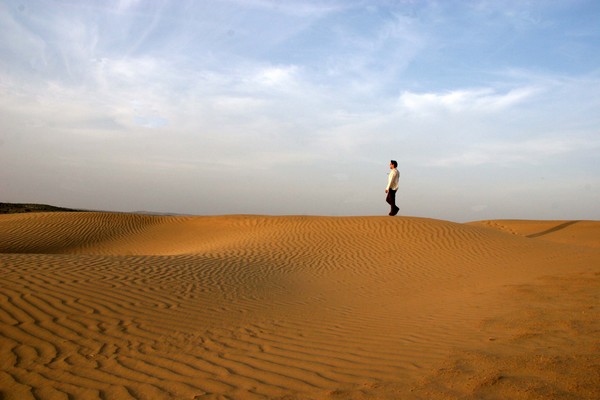
Our ‘safari’ into the Desert National Park aboard chapatti eating camels was an opportunity to get away from the mayhem – a silent night’s sleep under the stars was welcome. But even in this more remote and inhospitable environment the population size and pressure continues to grow. The government has improved water supplies recently but even now there seems to be pressure on the limited resources.

Travelorphan

Further south, the lake-side towns of Udaipur and Dungapur were much more relaxed than the manic Jaipur and Jodhpur. Here we had time to swim, and I to find out just how unforgivingly hard marble can be when when one lands on it back first. The grand finale of our tour was the majestic and ethereal Taj Mahal. It diffuses light like a cloud. And, I am adamant, it looks bigger the further you are away from it. Then it was back to Delhi for fond farewells and enlightening twilight conversations on the nature of being, reincarnation, Karma, Reike… Thanks to all the guys for their hospitality and the fun in Delhi.

Travelorphan

I decided not to take my camera with me – I wanted to free myself of as much technical paraphernalia as possible. So all the pics here are thanks to Erin – permalinks to the others she’s posted are listed below. Now, back to some work and preparations for my viva and impending departure for CSIS at MSU.

Picture Links:
Jaisalmer Sunset
Taj
Jaisalmer Fort
Henna
Pickpocket
Shooting Stars
Blessings
Flying James
Sunglasses
Train Station
Cricket
Shoes
Dancing
Palace View
Dancing2
Chapati
Dancing3
Jaisalmer

Rajasthani Pictures

A missed bus gives me a couple of minutes to get online to point you in the direction of Erin’s blog (http://travelorphan.blogspot.com) for some pictures of our Rajasthani gallivating (i.e. the pictures posted on March 29 2007 – permanent URLs to follow in a later post).

Briefly: Busy Delhi (no belly yet), Gangaur festival in Jaipur, lakeside downtime in Pushkar, Fort and pool in Jodhpur, street-cricket in Jaisalmer, camelback desert safari near Khuri, and now on to Udaipur, Bundi, Agra and Delhi (via this unintended stop-over in Jodhpur). More soon…

gone gallivanting – back soon

Due to my recent thesis preoccupation there has been a distinct lack of blogging going on here. This situation isn’t going to be remedied for a while either – I’m off on a cheeky three-week vacation and will be offline for the duration.

In the mean time keep your eyes out for the Ecosystems paper that might be OnlineFirst at Springer by the time I’m back.

Also, checkout the recent edition of Oekologie which unfortunately I never got round to submitting to this time.

No doubt I’ll have tales from my gallivating with which to regale you upon my return in April…