memories of a British coastal landscape


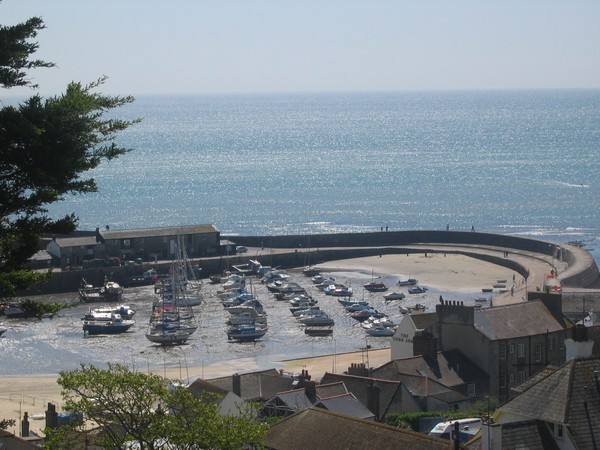
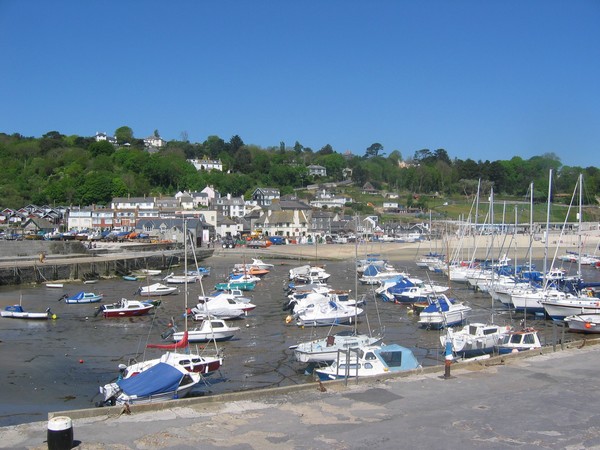
Before my impending departure to the States I’ve been out and about visiting a few places that I won’t see for a while. This week, I took my Grandmother back to the town where she grew up on the English south coast – Lyme Regis in Dorset. I’d never been and she hadn’t been back for a while so it was a trip down both new and old memory lanes.


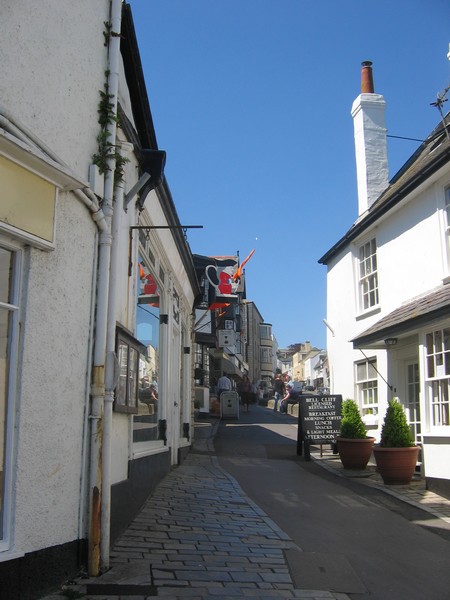
And what steep lanes. Apparently they used drag cargo up Cobb Road from ships docked in ‘the Cobb’. They realised it was a bit much like hard work up these steepled slopes and stopped a fair while ago. But there were other war-time stories about the inclines; run-away trucks with failed breaks, careening down narrow lanes toward the sea-front, their landings cushioned not by a sandy beach but by the solid walls of the old coal merchants (it seems it’s still happening these days too). Line upon line of American soldiers snaking up and down Broad Street outside the old Regent Cinema (then The New Thing In town). Apparently it remains quintessentially British today – tea and biscuits from a china cups and saucers before taking your seats (aside the fact it shows the latest Hollywood block-busters of course).


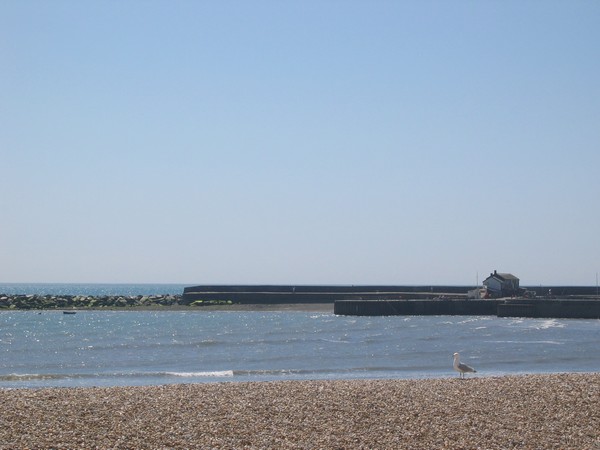
The vertiginous topography has not only caused rapid runaway of trucks, but also the rapid (and creeping) runaway of the soil. Efforts to manage and reduce land slippage are being undertaken in parallel with a £17 million coastal defence and harbour improvement scheme. Whilst understanding that it is necessary if they want to save their sea-front industry (which has changed from sea-trading and fishing to sea-swimming and tourism), locals aren’t happy about the large new shingle banks that provide the needed protection. Sand has accumulated in the harbour over recent years and has now been joined by a nice sandy beach imported from France.


Alongside visiting the sea-side we had tea and cake at some old friend’s house – all in all a good day stocking up on memories of the British coastal landscape before I jet off across the pond.

PhD Thesis Completed

So, finally, it is done. As I write, three copies of my PhD Thesis are being bound ready for submission tomorrow! I’ve posted a short abstract below. If you want a more complete picture of what I’ve done you can look at the Table of Contents and read the online versions of the Introduction and Discussion and Conclusions. Email me if you want a copy of the whole thesis (all 81,000 words, 277 pages of it).

So just the small matter of defending the thesis at my viva voce in May. But before that I think it’s time for a celebratory beer on the South Bank of the Thames in the evening sunshine…

Modelling Land-Use/Cover Change and Wildfire Regimes in a Mediterranean Landscape

James D.A. Millington
March 2007

Department of Geography
King’s College, London

Abstract
This interdisciplinary thesis examines the potential impacts of human land-use/cover change upon wildfire regimes in a Mediterranean landscape using empirical and simulation models that consider both social and ecological processes and phenomena. Such an examination is pertinent given contemporary agricultural land-use decline in some areas of the northern Mediterranean Basin due to social and economic trends, and the ecological uncertainties in the consequent feedbacks between landscape-level patterns and processes of vegetation- and wildfire-dynamics.

The shortcomings of empirical modelling of these processes are highlighted, leading to the development of an integrated socio-ecological simulation model (SESM). A grid-based landscape fire succession model is integrated with an agent-based model of agricultural land-use decision-making. The agent-based component considers non-economic alongside economic influences on actors’ land-use decision-making. The explicit representation of human influence on wildfire frequency and ignition in the model is a novel approach and highlights biases in the areas of land-covers burned according to ignition cause. Model results suggest if agricultural change (i.e. abandonment) continues as it has recently, the risk of large wildfires will increase and greater total area will be burned.

The epistemological problems of representation encountered when attempting to simulate ‘open’, middle numbered systems – as is the case for many ‘real world’ geographical and ecological systems – are discussed. Consequently, and in light of recent calls for increased engagement between science and the public, a shift in emphasis is suggested for SESMs away from establishing the truth of a model’s structure via the mimetic accuracy of its results and toward ensuring trust in a model’s results via practical adequacy. A ‘stakeholder model evaluation’ exercise is undertaken to examine this contention and to evaluate, with the intent of improving, the SESM developed in this thesis. A narrative approach is then adopted to reflect on what has been learnt.

Past from Above: George Gerster

I went to Georg Gerster’s exhibition ‘Past from Above’ at the British Museum over the weekend. As the title might suggest the exhibition is a collection of photographs of archaeological and historical landmarks shot from the air. Gerster suggests


“Height provides an overview. And an overview facilitates insight, while insight generates consideration.”

Some of the photos don’t really fit this perspective however, shot with such a zoom that an overview isn’t actually provided. For example the shot of the Minaret of the Great Mosque at Samarra, Iraq (see it here). What’s the scale of this building? What’s the context? This shot is from above but it doesn’t provide an overview. I get the feeling some the shots like this might have provided more insight if they’d been taken from a location on the ground.

However, this aside there are some images that really show off the context of the archaeological sites well. Whether it be the grand locations of derelict temples or the juxtaposition of sweeping, fluid sand dunes encroaching upon and over the geometric remains of a dead city. These are the shots that do provide some insight into what the past might have been like, how the landscape may have been different from today, and how it is still changing now.

Obviously some of these images are very reminiscent of Yann Arthus Bertrand and his “Earth from Above” project, and browsing Gerster’s website I think I actually prefer some of his shots of contemporary landscape patterns – both those imposed by humans and those of a more natural origin.

Overall, the exhibition was an interesting way to spend 45 minutes on a Sunday afternoon – but some of the shots didn’t quite fit the ethos of the exhibition.

Landscapes as Kaleidoscopes

A recent special issue of The Professional Geographer focuses specifically on the integration of theory and methods from Landscape Ecology and Geographic Information Science (GIScience). Entitled “Landscape Form, Process and Function: Coallescing Geographic Frontiers”, the six papers arose from the Centennial meeting of the 2004 Association of American Geographers and span the application-theory (e.g. Mast and ChambersMalanson et al. respectively) and the GIScience-Landscape Ecology (e.g. Southworth et al.Young and Aspinall respectively) spectra.

The general message is that the integration of method and theory GIScience and Landscape Ecology offers the opportunity to better examine and understand the interactions of pattern, process and landscape change. Concluding the special issue, Young and Aspinall use the metaphor of landscapes as kaleidoscopes;


“… a kaleidoscope serves as an engaging metaphor in this context because of its visualization of fragments, shreds, patches, and filaments that create a host of mosaics. A kaleidoscope creates these and other patterns and then shifts them, changing one set of forms into another, by altering colors and the locations of edges, thereby changing the appearances, sizes, and spatial distributions of the fragments. This device captures some of the complexity and shifting dynamics of the forms that characterize the Earth’s land surfaces. It would be difficult, but feasible, to record, measure, and otherwise describe those changes taking place within a kaleidoscope. It might even be possible to predict future patterns, or at least bracket the possible forms and patterns that could occur by tracking changes through time. Rather than a person creating these patterns by rotating a colorful tube, however, it is the landscape-forming and landscape-transforming processes that do so in reality.”

But in the majority of contemporary landscapes it is people rotating the landscape. Those landscape-forming and landscape-transforming processes are people-driven. The emphasis in this special issue is still largely presented from a formal (spatial) scientific perspective in the tradition of American Landscape Ecology, emphasising technical and philosophical approaches for examining patterns and processes. Given Professional Geographer is the forum and journal of the Association of American Geographers this is understandable and these approaches will surely improve and enhance our ability to examine and understand landscape change. However, landscape is an intrinsically holistic concept and change is often due to the interplay of both biophysical and human causes. Alongside furthering our technical abilities to study changing landscapes we need to continue to develop innovative approaches that consider the more humanistic side of landscape change and integrate them with the technical tools. Computer models, satellite imagery and the tools of GIScience are and will continue to be useful to monitor, evaluate and project change in their own right, but increasingly we need to find and develop ways that incorporate and include the humans turning the kaleidoscope.

Generational Landscape Change: Montana and Madrid

It’a been out for a while (so there are several reviews available ) but I only just got and started reading Jared Diamond’s Collapse (How societies choose to fail or survive). I’ve only read the first part (Modern Montana) so far, but already I’ve come across several parallels between the socio-economic changes, and their potential ecological impacts, occuring in the landscapes under Montana’s Big Sky and Madrid’s Sun-Blessed Skies.

The broad similarity between the change Diamond describes in Montana and that occurring in my PhD study area (SPA 56, an EU protection area for endangered bird species to the west of Madrid, Spain) is the shift from an economy and landscape driven by agricultural activity to one driven by recreational activities. Such a shift reflects both the differing visions of multiple stakeholders within these landscapes, but also generational changes in attitude between older inhabitants and their children and grandchildren. In Montana’s Bitteroot Valley larger macroeconomic changes nationally and internationally have made previously profitable extractive industries (forestry, mining and agriculture) largely unsustainable economically. This has come about as land is now valued not according to resource and agricultural production but according to real-estate potential for incoming retirees, second-homers and tourists. Incoming (usually older) ‘out-of-staters’ arrive to enjoy the outdoor recreation (fishing, hiking, etc.), beauty and lifestyle opportunities, replacing the younger generation of Montanans going the other way to seek modern urban lifestyle opportunities and lifestyles;


“It’s a wonderful lifestyle to get up before dawn and see the sunrise, to watch fly hawks overhead, and to see deer jump through your hay field to avoid your haying equipment. … Occasionally I get up at 3 AM and work until 10 AM. This isn’t a 9 to 5 job. But none of our children will sign up for being a farmer if it is 3 AM to 10 PM every day.”

Dairy Farmer, Montana

Locals in SPA 56 have expressed similar feelings and ideas when I have visited over the last few years. Younger generations that would have previously continued the family farm that has passed through generation upon generation of farmers, are now seeking out employment in construction and service sectors to secure what is understood as a more ‘modern’ lifestyle. A lifestyle that affords leisure time at specified times of the week and at regular intervals (i.e. the weekends and paid holidays);


“Most farmers are part-time, maintaining the tradition agriculture. The children or grandchildren of those [farmers] do not have interest [in agriculture] because is it not profitable and requires a lot of dedication. The youths go or they seek other work.”

Local Development Official, Madrid (2006)

In Montana, Diamond describes the conflicts that have arisen between existing inhabitants and the new-comers, each with differing world-views, priorities and values. For example, contrast the attitudes of the third generation dairy farmer fighting to ensure the survival of his farm in the global economy vs. the lady who complained to him when she got manure on her white running shoes. Of course, these multiple perspectives within the landscape are inevitable in a changing world and tools and strategies must be found and employed to ensure appropriate decisions and compromises are made. In my simulation model of agricultural decision-making I have attempted to represent the influence of two differing world-views on landscape change (as have other modellers). I have termed the representative agents ‘commercial’ and ‘traditional’; the former behaving as a perfectly rational actor (in economic terms), the latter designed to reflect the importance of traditional cultural values in land-use decision-making;


“Whoever has a vineyard nowadays is like a gardener… they like to keep it, even if they lose money. They maintain vineyards because they have done it all their life and they like it, even having to pay for it. If owners were looking for profitability there would be not a singe vineyard… People here grow wine because of a matter of feeling, love for the land…”

Vinter, Madrid (2005)

As the primary thesis of his book Diamond highlights, for both contemporary and historical societies, the impacts of social, economic and technological change on the physical environment, and the sustainability of those changes. Of the several issues of concern in Montana, those related to forestry and water availability are likely to be of most concern in SPA 56. One particular interest of my PhD thesis is the importance of changes in the landscape for wildfire regimes, which Diamond discusses with reference to previous management strategies of the Unites States Forest Service (USFS). Commercial forestry has not been a widespread activity in SPA 56, the nature and human history of Mediterranean ecosystems restricting contemporary timber productivity. However, the problems of increased fuel loads due to the fire suppression policies of the USFS during the 20th century may be beginning to present themselves in SPA 56. If the agricultural sector continues to decline due to the social and economic trends just outlined, farmland will (continue to) be abanoned or converted to recreational uses (for example, hunting reservations). In turn this will leading to increased biomass and fuel loads in the landscape. As yet the consequences of such change on the frequency and magnitude of fires in the region is unclear due to spatial relationships and feedbacks between vegetation growth and burning. In the very near future the results of my simulation model will be able shed some light on this aspect of the region’s changing landscape and ecology.

Buy on Amazon


Diamond Reviews
GristMill
Ecological Economics
Futures

Stoic Bravery and the Bull Economy

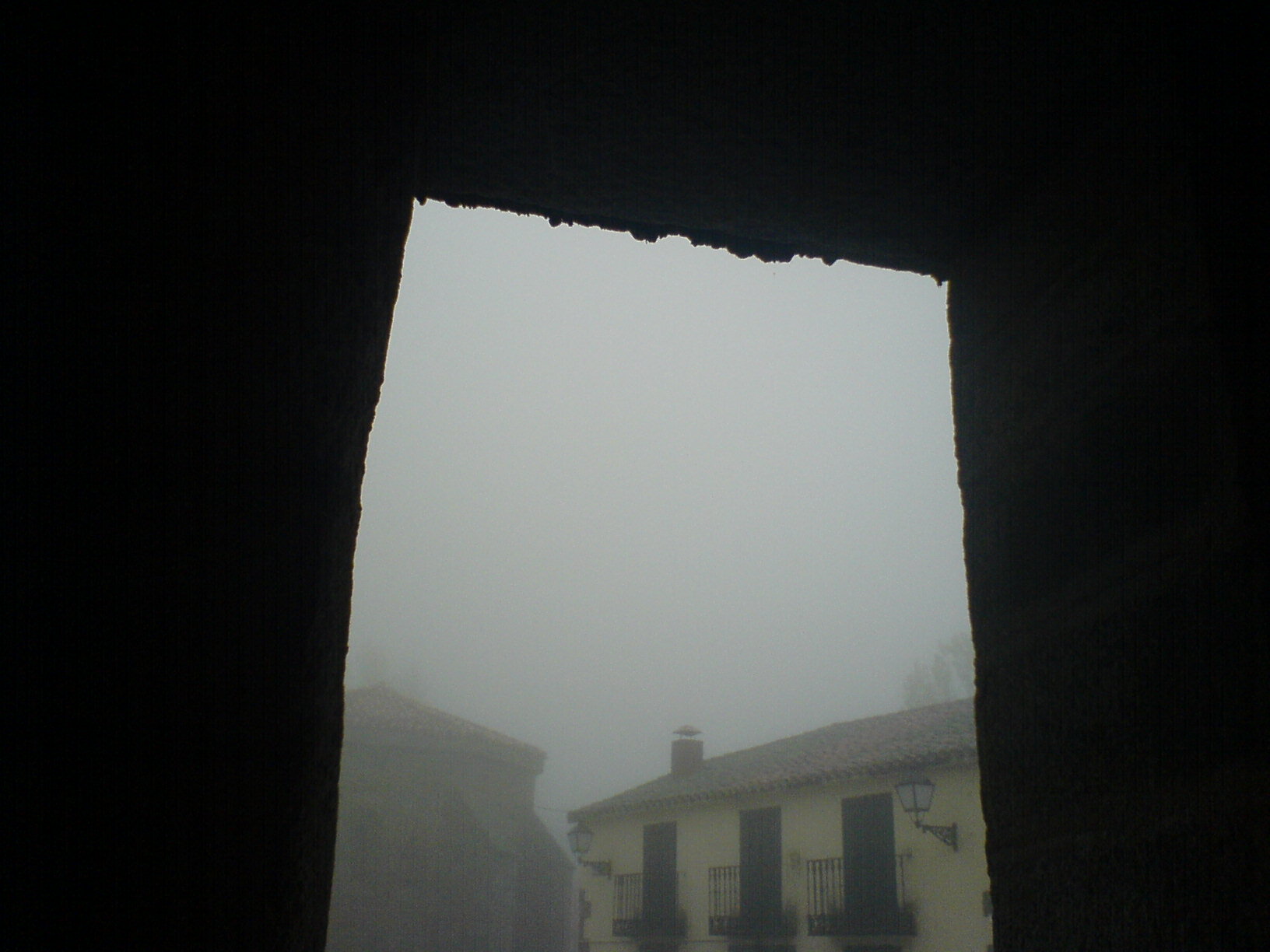
The rain in Spain stays mainly on the plain? Not when I’m there it doesn’t, then it follows me about. In this case all the way up to Santa Maria de la Alameda in the Sierra de Guadarrama.

Santa Maria de la Alameda
Quite a gloomy picture. We were up there interviewing the president of a local cattle farming organisation for some work related to my PhD. Earlier in the week we had been talking about bullfighting, and Raul had pointed out the large stones found in each corner of town squares, one on either side of the road, with large holes cut through them. The purpose of these holes is to hold wooden poles across the road, closing the square for the corrida de toros. As we waited for el presidente to arrive we sheltered from the rain in the porch of the ayuntamiento. Looking at the bullring’s cornerstones and the balconies that would allow spectators to overlook the confrontation, the town square reminded me of a story retold in Hemingway’s For Whom the Bell Tolls. On that occasion it wasn’t a bullfight, it was a civil war a massacre.

Hemingway’s leading characters display stoic bravery becoming, in Lawrence Broer’s view, “manifestations of the Spanish matador”;

The bull was on him as he jumped back and as he tripped on a cushion he felt the horn go into him, into his side. He grabbed the horn with his two hands and rode backward, holding tight onto the place. The bull tossed him and he was clear. He lay still. It was all right. The bull was gone.

He got up coughing and feeling broken and gone. The dirty bastards!

“Give me the sword”, he shouted. “Give me the stuff.”

Fuentes came up with the muleta and the sword.

Hernandez put his arm around him.

“Go on to the infirmary, man”, he said. “Don’t be a damn fool.”

“Get away from me”, Manuel said. “Get to hell away from me.”

He twisted free. Hernandez shrugged his shoulders. Manuel ran toward the bull.

There was the bull standing, heavy, firmly planted.

All right, you bastard! Manuel drew his sword out of the muleta, sighted with the same movement, and flung himself onto the bull. He felt the sword go in all the way. Right up to the guard. Four fingers and his thumb into the bull. The blood was hot on his knuckles, and he was on top of the bull.

The bull lurched with him as he lay on, and seemed to sink; then he was standing clear. He looked at the bull going down slowly over on his side, then suddenly four feet in the air.

Then he gestured at the crowd, his hand warm from the bull blood.

[from Ernest Hemingway, The Undefeated]

Down on the plains of Madrid below Santa Maria, the rain has stopped and the attitude seems more ‘spirited optimism’ than ‘stoic bravery’. The Spanish economy is booming, with GDP steadily rising year on year.

The environs of Madrid feel positive, the attitude is ‘go-ahead’. Cranes are everywhere, more than in London probably. Apartments being thrown up rapidly. New roads and motorways being constructed apace. It’s been like that the last few years I’ve been visiting.

Further out, within range of the commuters (going into Madrid) and the day-trippers (coming out), economic change is modifying the landscape. The agricultural sector is in decline and as the younger generation seeks out employment in manufacturing, construction and service sectors. Talking to people in my study area it seems such employment is desired as it brings more stable working hours, more benefits, greater leisure time and a more ‘modern’ lifestyle. The environmental consequences of these shifts are still playing themselves out however. For example, such a lifestyle is likely to require more water, a precious resource in the Mediterranean. Environmentalists still campaign against large dam projects and the environmental impacts of tourism along the Costa del Sol and the Balearic Isles are well known. Maybe James ‘The Bringer of Rain’ Millington should spend more time in those places…

My particular interest is the impact of agricultural change on wildfire regimes; will the spirited optimism have to be tempered by some stoic bravery in the face of increasing wildfire risk? I’m nearing the end of my PhD research now so I hope to be able to comment on that with more authority in the near future.

Categories: , , , , , , , , , , ,

toros de guisando


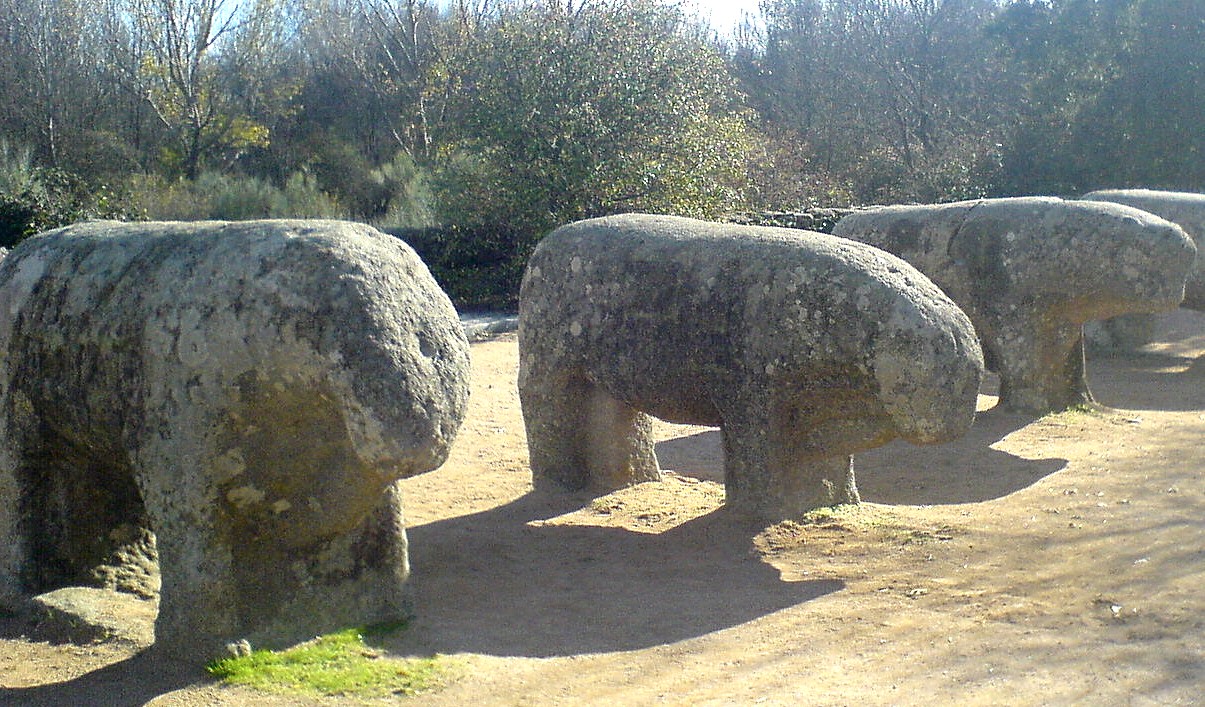
This week I´ve been in Madrid doing the final fieldwork for my PhD. On our Quixotic travels to interview local stakeholders about the credibility of the output from my model (more on that another time), we came across el Toros de Guisando. These guys have been here for over 2,500 years (though moved from their original scattered locations by the Romans) and have been characters in many a contested story…

CHAPTER XIV

WHEREIN IS CONTINUED THE ADVENTURE OF THE KNIGHT OF THE GROVE

Among the things that passed between Don Quixote and the Knight of the Wood, the history tells us he of the Grove said to Don Quixote, “In fine, sir knight, I would have you know that my destiny, or, more properly speaking, my choice led me to fall in love with the peerless Casildea de Vandalia. I call her peerless because she has no peer, whether it be in bodily stature or in the supremacy of rank and beauty.

Another time I was ordered to lift those ancient stones, the mighty bulls of Guisando, an enterprise that might more fitly be entrusted to porters than to knights. Again, she bade me fling myself into the cavern of Cabra – an unparalleled and awful peril – and bring her a minute account of all that is concealed in those gloomy depths. I stopped the motion of the Giralda, I lifted the bulls of Guisando, I flung myself into the cavern and brought to light the secrets of its abyss; and my hopes are as dead as dead can be, and her scorn and her commands as lively as ever.

To be brief, last of all she has commanded me to go through all the provinces of Spain and compel all the knights-errant wandering therein to confess that she surpasses all women alive to-day in beauty, and that I am the most valiant and the most deeply enamoured knight on earth; in support of which claim I have already travelled over the greater part of Spain, and have there vanquished several knights who have dared to contradict me; but what I most plume and pride myself upon is having vanquished in single combat that so famous knight Don Quixote of La Mancha, and made him confess that my Casildea is more beautiful than his Dulcinea

Don Quixote was amazed when he heard the Knight of the Grove, and was a thousand times on the point of telling him he lied, and had the lie direct already on the tip of his tongue; but he restrained himself as well as he could, in order to force him to confess the lie with his own lips; so he said to him quietly, “As to what you say, sir knight, about having vanquished most of the knights of Spain, or even of the whole world, I say nothing; but that you have vanquished Don Quixote of La Mancha I consider doubtful; it may have been some other that resembled him, although there are few like him.”

Categories: , , , ,

skytower (not rugby)

England’s loss to the All Blacks on Saturday reminded me of an email I sent over a year ago from New Zealand, detailing my adventures on the day after the Lions first crushing defeat of their tour. I’ve posted it here for posterity…

Sunday 26th June 2005

Hi Guys! Only me. I know what you’re thinking; “Oh No, it’s that boring bloke on the other side of the world with another email the length of my arm rambling and ranting about rubbish…”. Don’t worry this one’s shorter (maybe) but definitely has more pictures.

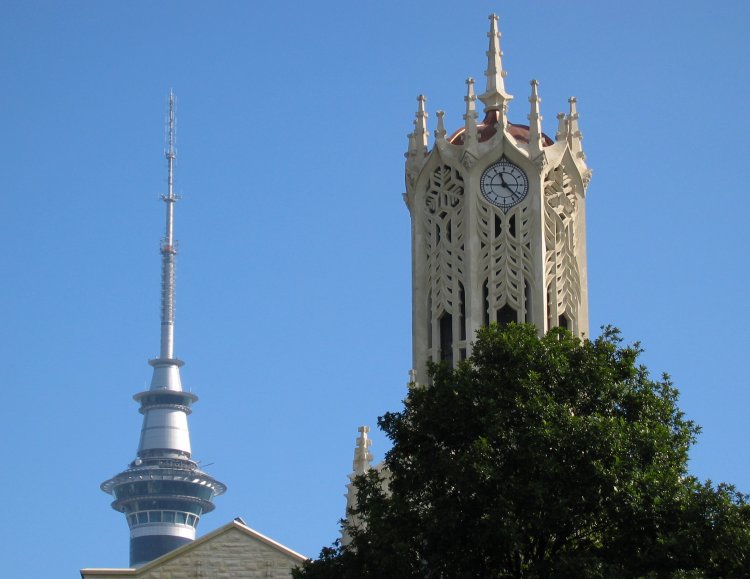
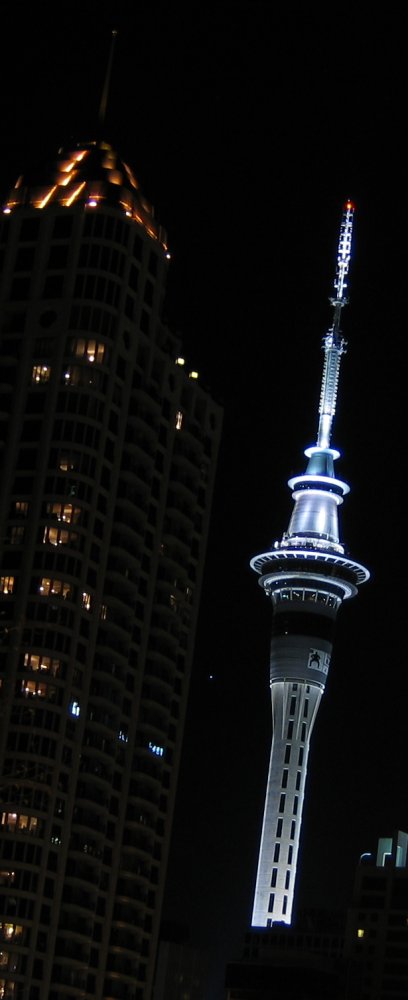
The Skytower: Auckland’s newest landmark and the tallest human-made structure in the Southern Hemisphere (does that make it the shortest in the Northern Hemisphere?). The Skytower is your point of reference for navigating this city, you can see it from pretty much everywhere and it always seems to be lurking in the background somewhere. Look at the first pic of the University of Auckland Clock Tower.


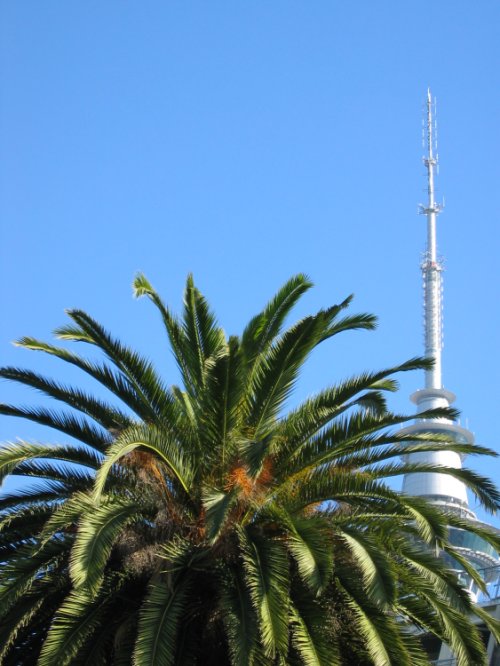
Quite nice eh? But there’s the Skytower loitering in the background trying to steal some of the limelight. And then here’s me, an honest Geographer trying to improve my botanical knowledge of the local flora and there’s the lanky thing looming in the wings again.


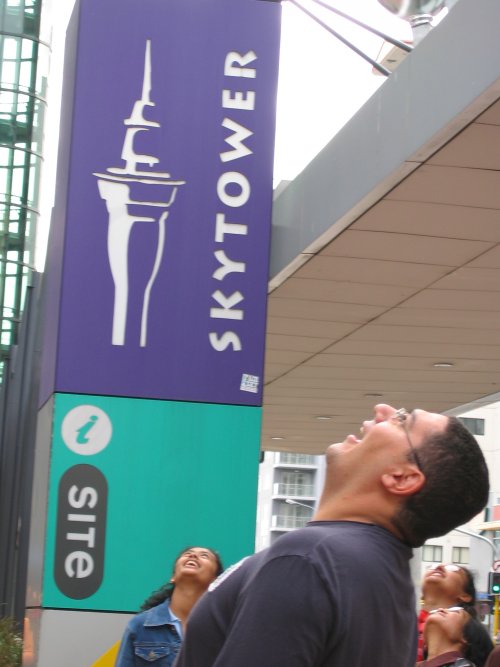
So nursing my Sunday hangover (I had a lot of sorrows to drown on Saturday evening – but let’s not talk about the Rugby, I’ve heard enough already) and seeing from under the covers that it was a nice day I thought I’d go and see what the view was like. As with all really-tall-landmarks-in-big-cities-that-you-have-to-go-up-to-see-what-the-view-is-like, and because you’re always noting it from afar, when you get to the bottom you HAVE to look UP. Case in point;


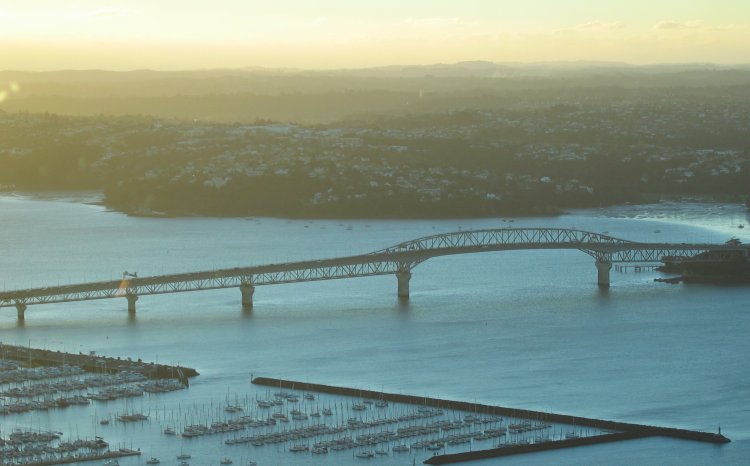
As you’ve paid your money and climbed all the way to the top (well actually you took the lift didn’t you?) you may as well check out the view. A prime here, as Auckland’s Harbour bridge basks in the evening sun and a flotilla of sailing boats bob in the foreground (Auckland is the “city of sails” doncha know?). Very pretty.


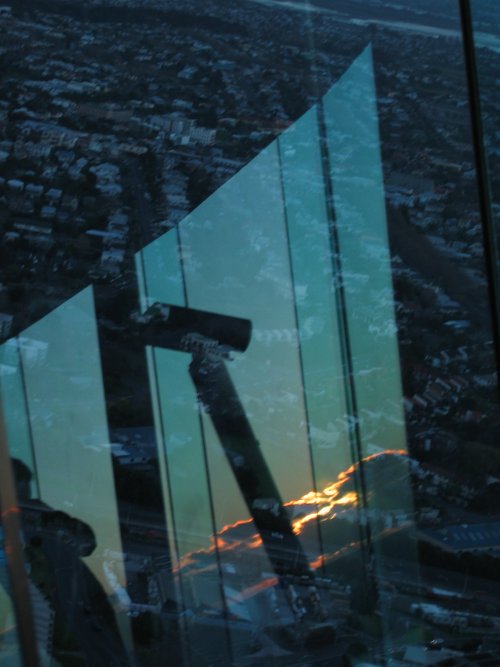
Then you think, “Doesn’t Auckland sprawl an awful lot” (sorry to go on about it). The harbour’s nice, you can see for miles ‘cos its a nice day and you can see a couple of old volcanoes hanging out in the background. Then you start daydreaming ‘cos you really can’t think straight after last night and you try to take some fancy reflexive-type photos to reflect how really spaced out everything feels. But there’s something missing…


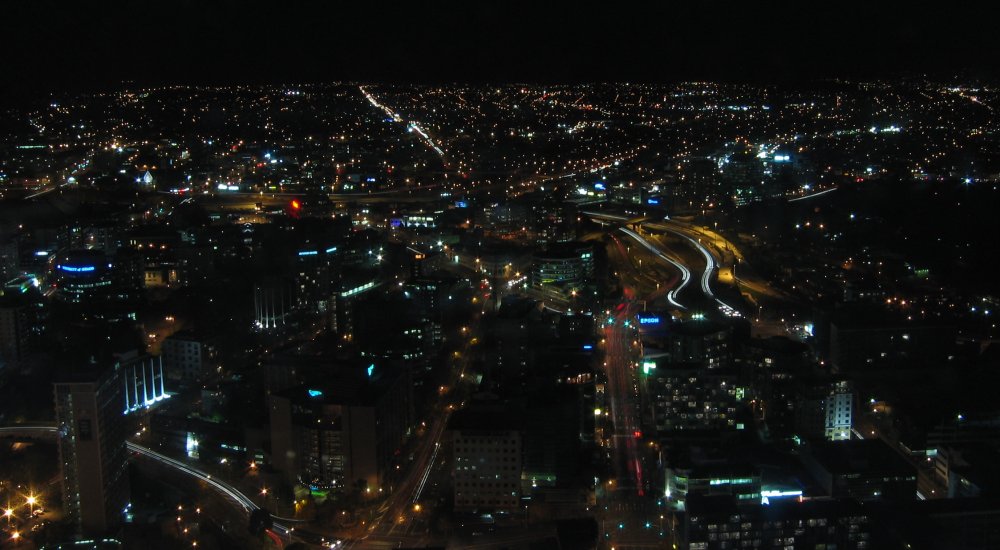
No matter, lets mess aroung taking some night shots. You’re no Hannes Opelz; but who’d want to be? you chuckle to yourself.


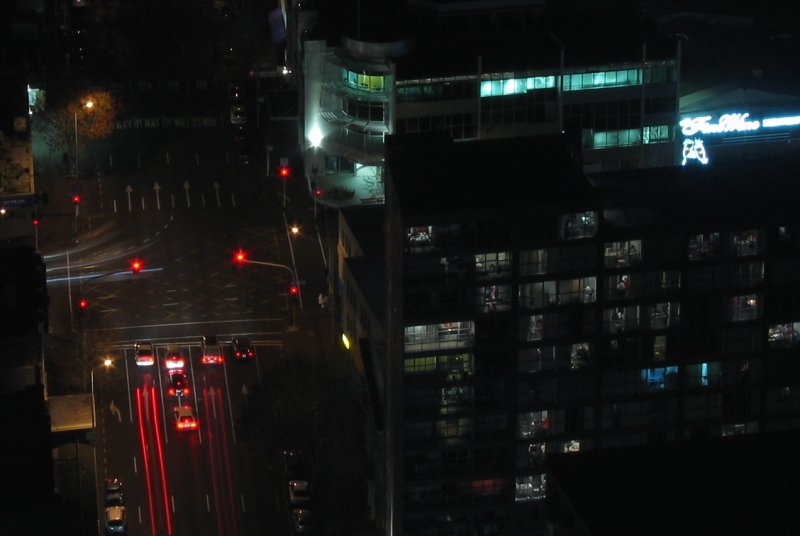
Jeez this is a bad hangover. Not as bad as we played last night though. What are those people doing in that window?


So in the lift on way back down I got chatting to the girl who clearly saw my photographic prowes when she asked me to take her photo with Auckland as backdrop (“OK, where’s the loser wandering aimlessly around in a daze and won’t mind taking my photo” she was more likely to be thinking to herself; she knew she’d struck gold when she saw me). She asked me what I thought of the view; the sound of cogs grinding echoed around the lift as I struggled to string a sentence together (we really did play badly didn’t we? But those sorrows didn’t have an chance even in the “city of sails” and its many life-bouys). And then it dawned. It’s a good view from the top. Auckland looks nice in the sunset on a nice day. And the city-scape at night is cool.

But the thing that is missing is the thing you’re stood in. The Skytower is nowhere to be seen and you’re free of that feeling that there’s someone looking over your shoulder. At least that’s what I thought. I’m not sure what the noises coming out of my mouth sounded like…

Categories: , , , , ,

Naveh’s Holistic Landscape Ecology

(or “One of the reasons I’ve ended up doing what I’m doing“)

I don’t know if he was the first to come up with the term, but I first read about holistic landscape ecology in a couple of papers by Prof. Zev Naveh (in 2001 during my third year undergrad course at King’s, ‘Landscape Ecology’ run by Dr. George Perry). Whilst reading today I came across some old notes I made from one of those papers (not terribly critical as you can see!?). Distinguished Professors of a Certain Age are allowed licence to run riot with their accumulated wisdom as you can see. I’m not being facetious – they can write bigger ‘blue skies’, ‘call to arms’ pieces than other (more lowly) academics.

These are the two papers that really got me interested anwyay (as well as my Disertation; finally, as a 3rd year undergrad!?). I think I thought something along the lines of, “there are problems here that we should be thinking about now and this guy is suggesting a paradigm of how we might start approaching them scientifically“. I think they’re one of the reasons I started a MSc (“I can’t stop now I’ve only just found this stuff“), and then later continued onto this ‘ere PhD (“this is interesting – I want to keep going“).

Later I got to these questions;

  • What sort of scientific tools and methods will we need to address problems that we have in our socio-environmental systems now?
  • How do we integrate tools and methods from different scientific disciplines? (i.e. how do we really become ‘inter-disciplinary’?)
  • What sort of science will this be? Normal? Post-Normal? Something else?

It could take a while to answer these – but it doesn’t seem like we’ve got that long. We’ll have to work them out as we go along I think…

Refs

Categories: , , , , , ,