The Wilderness Ideal

One evening whilst sitting on a deck overlooking a tranquil lake in the wilds of the UP’s northern hardwood forests, I began reading William Cronon’s contributions to the volume he edited himself; Uncommon Ground. The book has been around for a decade and more but it is only recently that I came across a copy in a secondhand book store. It seems apt that I considered what it had to say about the ‘social construction’ of nature in a setting of the type that has long intrigued me. Maybe the view of a landscape which confronted me is another of the reasons I am doing what I am right now. I have had pictures of these large wilderness landscapes on the walls of my mind, and elsewhere, for a while.
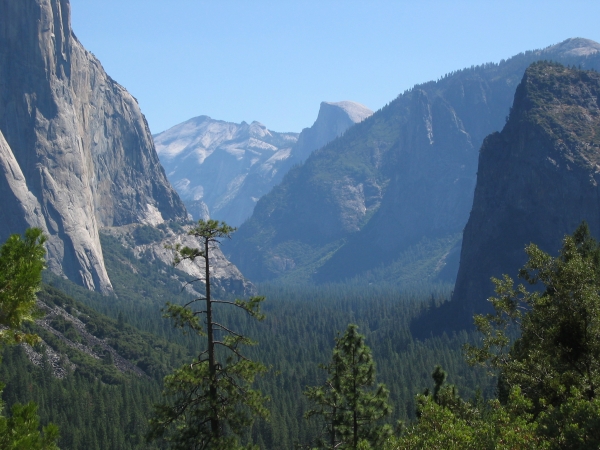
Cronon examines “the trouble with wilderness” with reference to the Edenic ideal that underlay it from the beginning. Wordsworth and Thoreau were in bewildered or lost awe of the sublime landscapes they travelled, but by the time John Muir came to the Sierra Nevada the landscape was an ecstasy. Whilst Adam and Eve may have been driven from the garden out into the wilderness, the myth was now ‘the mountain as cathedral’ and sacred wilderness was a place to worship God’s natural world. Furthermore, as the American frontier diminished with time and technology,

“wilderness came to embody the national frontier myth, standing for the wild freedom of America’s past and and seeming to represent a highly attractive natural alternative to the ugly artificiality of modern civilization. … Ever since the nineteenth century, celebrating wilderness has been an activity mainly for well-to-do city folks. Country people generally know far too much about working the land to regard unworked land as their ideal.” (p.78)

Cronon suggests that there is a paradox at the heart of the Wilderness ideal, this conception that true nature must also be wild and that humans must set aside areas of the world for it to remain pristine. As Cronon puts it, this paradox is that “The place where we are is the place where nature is not”. Taking this logic to its extreme results in the need for humans to kill themselves in order to preserve the natural world;

“The absurdity of this proposition flows from the underlying dualism it expresses. … The tautology gives us no way out: if wild nature is the only thing worth saving, and if our mere presence destroys it, then the sole solution to our own unnaturalness, the only way to protect sacred wilderness from profane humanity, would seem to be suicide. It is not a proposition that seems likely to produce very positive or practical results.” (p.83)

I’ll say. But Cronon is not saying that protected wilderness areas are themselves undesirable things, of course not. His point is about the idea of Wilderness. As a response he suggests that rather than thinking of nature as ‘out there’, we need to learn how to bring the wonder we feel when in the wilderness closer to home. We need to abandon the idea of the tree in the garden as artificial and the tree in the wilderness as natural. If we see both trees as natural, as wild, then we will be able to see nature and wildness everywhere; in the fields of the countryside, between the cracks in the city pavement, and even in our own cells.

“If wildness can stop being (just) out there and start being (also) in here, if it can start being as humane as it is natural, then perhaps we can get on with the unending task of struggling to live rightly in the world – not just in the garden, not just in the wilderness, but in the home that encompasses both” (p.90)

Sitting on that deck looking out over the lake it was clear that landscapes such as the one I was in aren’t the idealised, pristine, wilderness that they may be portrayed as in books, photographs and travel brochures. Just as in studying its nature I have come to understand a little better the uncertainties of the scientific method that is supposed to bring facts and truth, so I think have come to better understand the place of human needs within these ‘wild’ landscapes. As naive as it is to think that science might offer the absolute truth (it can’t, but it is still the best game in town to understand the world around us), thinking humans are inseparable from nature seems equally foolish.

In the introduction to a book on natural resource economics (which has mysteriously vanished from my bookshelf), an author describes a similar situation. As a young man he wanted to study the environment in order that he might save it from destructive hands of humans. But in time he came to realise this was unrealistic and that better would be to study the means by which humans use the ‘natural world’ to harvest and produce the resources we need to live. Economics is concerned with the means by which we allocate, and create value from, resources. Just as it is important to understand how ‘nature’ works, it is also important to understand how a world in which humans are a natural component works, and how it can continue to function indefinitely.

Landscape Ecology and Ecological Economics have grown out of this understanding. Whilst theories and models about the natural world independent of humans remain necessary, increasingly important are theories and models that consider the interaction between the social, economic and biophysical components of the natural world. These tools might help us get on with the task of living sustainably in the place which humans should naturally call home.
Buy on Amazon

Stakeholder Participation and Expertise

The problems of equifinality and affirming the consequent suggest alternative criteria by which to validate or evaluate socio-ecological simulation models (SESMs) will be useful. In my last post in this series I suggested that trust and practical adequacy might be useful additional criteria. In light of the ‘risk society’-type problems facing the systems that SESMs represent, and the proposed post-normal science approaches to examine and resolve them, the participation of local stakeholders in the model validation process seems an important and useful approach to ensure and improve model quality. If local stakeholders are to accept decisions and policies made based upon results from simulation models they will need to trust a model and, by consequence, the modeller(s).

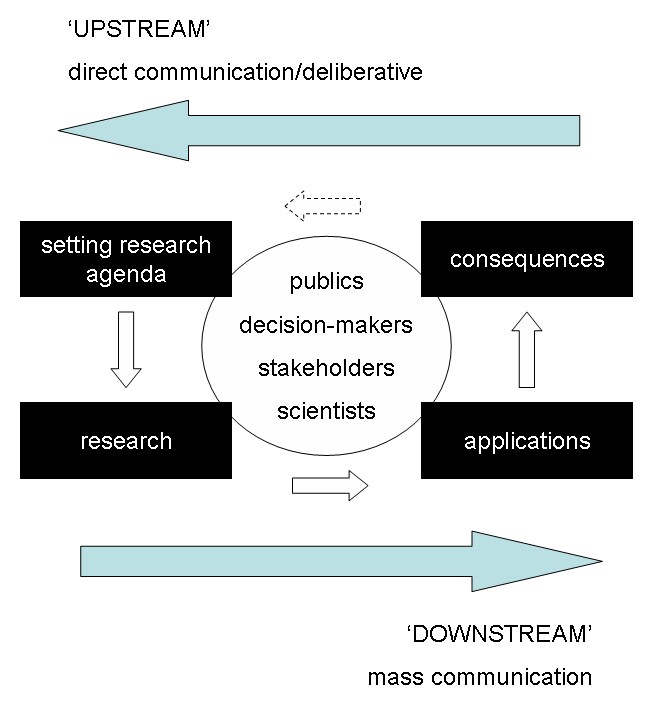
Due to a perceived ‘crisis of trust’ in science over the last 20 years, Wilsdon and Willis suggest “scientists have been slowly inching their way towards involving the public in their work” and that we are now on the cusp of a new phase of public engagement that takes it ‘upstream’. This widely used, but somewhat vague term, is used to refer to the early involvement of the lay public in the processes of scientific investigation. As such, engagement is ‘upstream’ nearer the point at which the research and development agenda is set, as opposed to the ‘downstream’ end at which research results are applied and the consequences examined (see Figure 1).

Figure 1 Public participation in the scientific research process. Recently it has been suggested that public engagement with the scientific process needs to move ‘upstream’ nearer the point at which the research agenda is set. After Jackson et al

Whereas previously the theory of the ‘public understanding of science’ was a deficit model suggesting that the public would trust science ‘if only they understood it’, the contemporary shift is towards and engagement and dialogue between science and society. The implication of this new turn is that the public will trust science ‘if only they are involved in the process itself’. Recently, Lane et al. advocated this move upstream for forms of environmental modelling that address issues and concerns of rural populations. This position has been criticised as devaluing the worth of science, for patronising the public, and being a mask for political face-saving or insurance.

Regardless of other areas of science, in the case of developing simulation models for socio-ecological systems the participation of the public does not result in the first two of these criticisms. Engaging with local stakeholders to ensure a model is both built on a logically and factually coherent foundation and to ensure it examines the appropriate questions and scenarios is of great value to the modelling process and should improve representation of the empirical system. Contributing to successful iterations of this process, local stakeholders will gain both trust and understanding. However, the inclusion of local stakeholders in the modelling process does raise the issue of expertise.

With parallels in the three phases Wilsdon and Willis have suggested, Collins and Evans have suggested we are entering a third wave in the sociology of science. This third wave demands a shift from an emphasis on technical decision-making and truth to expertise and experience. Collins and Evans suggest there are three types of expert in technical decision-making (i.e. decision-making at the intersection of science and politics); ‘No Expertise’, ‘Interactional Expertise’, and ‘Contributory Expertise’.

Individuals possessing interactional expertise are able to interact ‘interestingly’ with individuals undertaking the science, but not to contribute to the activities of science itself (contributory expertise). Brian Wynne’s well-known study of the (inadequate) interaction between Cumbrian sheep farmers and UK government scientists investigating the ecological impacts of the Chernobyl disaster is a prime example of a situation in which two parties possessed contributory expertise, but neither interactional expertise. As a result, the ‘certified’ expertise of the government scientists was given vastly more weight than the ‘non-certified’ expertise of the farmers (to the detriment of the accuracy of knowledge produced). Such non-certified expertise might also be termed ‘experience-based’ expertise, arising as it does from the day-to-day experiences of particular individuals.

The importance of considering non-certified, contributory experience is particularly acute for SESMs. Specifically, local stakeholders are likely to be an important, if not the primary, source of knowledge and understanding regarding socio-economic processes and decision-making within the study area. Furthermore, the particular nature of the interactions between human activity and ecological (and other biophysical) processes within the study area will be best understood and incorporated into the simulation model via engagement with stakeholders. This local knowledge will be vital to ensure the logical and factual foundations of the model are as sound as possible.

Furthermore, engagement with local stakeholders will highlight model omissions, areas for improved representation, and guide application of the model. It provides an opportunity to enlighten experts as to the ‘blind spots’ in their knowledge and questions. As such, the local stakeholders become an ‘extended peer community’, lending alternative forms of knowledge and expertise to the model (and research) validation process than that of the scientific peer community. This knowledge and expertise may be less technical and objective than that of the scientific community, but this nature does not necessarily reduce its relevance or utility to the modelling of a system that contains human values and subjects.

I pursued this idea of stakeholder participation in the modelling I undertook for my PhD. Early in the development of my agent-based model of land use decision-making, local stakeholders were interviewed with regards to how they made decisions and their understanding about landscape dynamics. Upon completion of model construction I went to talk with stakeholders about the model as they offered the prime source of criticism about the model representation of their decision-making activities. By engaging with these stakeholders a form of qualitative, reflexive model validation was performed that overcame some of the problems of a more deductive approach.

Alternative Model Assessment Criteria

Given the discussion in the previous posts regarding the nature of socio-ecological systems, equifinality and relativism in environmental modelling, how should we go about assessing the worth and performance of our simulation models of human-environment systems?

Simulation models are tangible manifestations of a modellers’ ‘mental model’ of the structure of the system being examined. Socio-Ecological Simulation Models (SESMs) may be thought of as logical and factual arguments made by a modeller, based on their mental model. If the model assumptions hold, these arguments should provide a cogent and persuasive indication of how system states may change under different scenarios of environmental, economic and social conditions. However, the resulting simulation model, based upon a logical and factually coherent mental model, is unlikely to be validated on these two criteria (logic and fact) alone.

First, the problems of equifinality suggest that there are multiple logical model structures that could be implemented for any particular system. Second, accurate mimetic reproduction of an empirical system state by a model may be the most persuasive form of the factual proof of a model in many eyes, but the dangers of affirming the consequent make it impossible to prove temporal predictions in models of open systems are truly accurate. Simulation models may be based on facts about empirical systems, but their results cannot be taken as facts about the modelled empirical system.

Thus, some other criteria alongside the logical and factual criteria will be useful to evaluate or validate a SESM. A third and fourth criteria, for environmental simulation models that consider the interaction of social and ecological systems at least, are available by specifically considering the user(s) of a model and its output. These criteria are closely linked.

My third proposed criterion is the establishment of user trust in the model. Trust is used here in the sense of ‘confidence in the model’. If a person using a model or its results does not trust the model it will likely not be deemed fit for its intended purpose. If confidence is lacking in the model or its results, confidence will consequently be lacking in any knowledge derived, decision made, or policy recommended based upon the model. Thus, the use of trust as a criterion for validation is a form of ‘social validation’, ensuring that user(s) agree the model is a legitimate representation of the system.

The fourth criteria by which a model might achieve legitimacy and receive a favourable evaluation (i.e. be validated), is the provision of some form of utility to the user. This utility will be termed ‘practical adequacy’. If a model is not trusted then it will not be practically adequate for its purpose. However, regardless of trust, if the model is not able to address the problems or questions set by the user then the model is equally practically inadequate.

The addition of these two criteria, centred on the model user rather than the model itself, suggests a shift away from falsification and deduction as model validation techniques, toward more reflexive approaches. The shift in emphasis is away from establishing the truth and mimetic accuracy of a model and toward ensuring trust and practical adequacy. By considering trust and practical adequacy, validation becomes an exercise in model evaluation and reclaims its more appropriate meaning of ‘establising a model’s legitimacy’.

From his observation of experimental physicists and work on the ‘experimenter’s regress’, Collins has arrived at the view that there is no distinction between epistemological criteria and social forces to resolve a scientific dispute. The position outlined previously seems to imply a similar situation for models of open, middle-numbered systems where modellers are required to resort to social criteria to justify their models due the inability to do so convincingly epistemologically. This is not necessarily an idea that many natural scientists will sit comfortably with. However, the shift away from truth and mimetic accuracy should not necessarily be something modellers would object to.

First, all modellers know that their models are not true, exact replications of reality. A model is an approximation of reality – there is no need to create a model system if experimentation on the existing empirical system is possible. Furthermore, accepting the results of a model are not ‘true’ (i.e. in the sense that they are perfect predictions of the future) in no way requires the model be built on incorrect logic or facts. As Hesse notes in criticism of Collins, whilst the resolution of scientific disputes might result from a social decision that is not forced by the facts, “it does not follow that social decision has nothing to do with objective fact”.

Second, regardless of truth and mimetic accuracy, modellers have several options to build trust and ensure practical adequacy scientifically. Ensuring models are logically coherent and not factually invalid (i.e. criteria one and two) will already have come some way to make a scientific case. Furthermore, the traditions of scientific methodological and theoretical simplicity and elegance can be observed, and the important unifying potential across theories and between disciplines that modelling offers can be emphasised. Thus, regardless of the failures of epistemological methods for justifying them, socio-ecological and other environmental simulation models must be built upon solid logical and factual foundations;

“The postmodern world may be a nightmare for … normal science (Kuhn 1962), but science still deserves to be privileged, because it is still the best game in town. … [Scientists] need to continue to be meticulous and quantitative. But more than this, we need scientific models that can inform policy and action at the larger scales that matter. Simple questions with one right answer cannot deliver on that front. The myth of science approaching singular truth is no longer tenable, if science is to be useful in the coming age.”
(Allen et al. p.484)

Post-normal science highlights the importance of finding alternative ways for science to engage with both the problems faced in the contemporary world and the people living in that world. As they have been defined here, SESMs will inherently address questions that will be of concern to more than just scientists, including problems of the ‘risk society’. From a modelling perspective, a post-normal science approach highlights the need to build trust in the eyes of non-scientists such that understanding is fostered.

Further, it emphasises the need for SESMs to be practically adequate such that good decisions can be made promptly. It also implies that the manner in which a ‘normal’ scientist will go about assessing the trustworthiness or practical adequacy of a model (such as the methods described above) will differ markedly from that of a non-scientist. For example, scientific model users will often, but not always, have also been the person to develop and construct the model. In such a case the model will be constructed to ensure the model is practically adequate to address their particular scientific problems and questions.

When the model is to be used by other parties the issue of ensuring practical adequacy will not be so straight-forward, and particularly so when the user is a non-scientist. In such situations, the modeller needs to ask the question ‘practically adequate for what’? The inhabitants of the study areas investigated will have a vested interest in the processes being examined and will themselves have questions that could be addressed by the model. In all probability many of these questions will be ones that the modeller themselves has not considered or, if they have, may not have considered relevant. Further, the questions asked by local stakeholders may be non-scientific – or at least may be questions that environmental scientists are not used to attempting to answer.

The use and improvements in technical approaches (such a spatial error matrices from pixel-by-pixel model assessment) will remain useful and necessary in the future. Here however, I have emphasised potential alternative methods for model validation (assessment) might be useful to utilise the additional information and knowledge which is available from those actors driving change in a socio-ecological system. In other words, there is information within the system of study that is not utilised for model assessment by simply comparing observed and predicted system states. This information is present in the form of local stakeholders’ knowledge and experience.

let’s go nuts!


Let’s go Lansing Lugnuts that is. Last night I went to my first Minor League Baseball game. I’ve been to a couple of Major League games before, but on a nice summers’ evening it was about time to find out more about what goes on in the lower echelons of the game that has always intrigued me. When I was about 8 my uncle brought me back a Red Socks baseball and pennant from a business trip. Maybe that got it started. One of my favourite writers Stephen Jay Gould was a huge baseball fan and used the apparent extinction of the .400 batting average as an adroit metaphor in one of his books to discount the idea of evolutionary progress with humans at the pinnacle in. And of course there are the parallels with cricket.

The lower levels of professional sport rarely get heard above the din and clamour for the biggest and best teams. The FA Premiership is now the richest football league in the world and followed avidly by many fans around the world. Its transition from a league with a reputation of violence and hooliganism to one of the most marketable sporting brands in the world has come via a change in attitude and facilities. I have a vivid memory from one of my first trips to a Bristol City game in the late 1980’s (again, I must have been about 8 – I hasten to add City are not, unfortunately, in the Premiership). I needed to use a bathroom so Dad took me to the ‘Gents’ where I was confronted simply by a 10 foot wall painted black with a gutter of urine running along the bottom. The smell was ‘colourful’ as was the language around me. It was intense to say the least. How this experience has effected me later personal development I can only guess – Mum certainly didn’t approve of me going along. But the violent and abusive behaviour that once embodied watching the game is no longer tolerated and the terraces have been replaced by more manageable and comfortable rows of covered seating (and more hygienic toilets).

Apparently a similar change has occurred in the minor leagues of baseball. In the game programme was a piece about the rise in popularity of Minor League games. Season attendances in every season since 2000 have been placed in the top 10 since the leagues began and in 2006 the current record was set at 41.7 million fans. That’s more than the NBA, and more than the NFL and NHL combined, each year. Fifth Third Field in Dayton Ohio has sold out every game since it opened in 2000. But the continuing growth has come since the 1990’s and a similar attitude toward the game as has changed football in the UK. And the programme article described a lady faced by a similar toilet experience as my childhood one – it’s certainly not like that now. The emphasis has shifted toward entertainment and whilst the minor league game hasn’t changed, the crowds have. In family-friendly America this means kids. And lots of ’em.

So whilst the high pitched screaming wasn’t so good for my ears, the $9 seat in the third row along the first base line was good for my wallet and got me close to those 90 mph pitches. I have got to say though, even with my uneducated eye, the quality of play wasn’t quite up there with, say, the SF Giants. The Lugnuts gave up 4 runs in the first inning and it wasn’t looking good. But then South Bend gave up 5 in the second and from there on we cruised to victory (8-5). Highlights from ‘the game’ for me included a Lugnuts batter snapping his bat over his knee (golfer style) after he struck out with the bases loaded, and the genius sack race ‘run’ by some ‘hefty’ women from the crowd between 8th and 9th innings. I was less impressed that they wouldn’t refill my plastic beer glass when buying a second and that I HAD to have a new one. Grrr…


Regardless of the quality of play it was a good night. And seemingly the growth of Minor League Baseball is good for the cities in which the teams are located. Oldsmobile Park is leading the much needed regeneration of the waterfront area of downtown Lansing. After the game, the fireworks reflected in the windows of the old Ottawa Power Station (above) that has lain empty for over a decade. Regeneration is needed in Michigan of all places in the States, where the decline of the American auto industry has hit hard. With manufacturing in sharp decline the state and the city need to turn to alternative industries for income and regeneration. The dollars spent in the stadium are now helping to boost the local economy, and give this part of town something to build around for the future. So, let’s go nuts!

Interactive vs. Indifferent Kinds

Models that consider human activity are particularly difficult to ‘close’ because of their consideration of ‘interactive’ kinds. Ian Hacking highlights the distinction between the classification of ‘interactive’ and ‘indifferent’ kinds. Different kinds of people are ‘interactive kinds’ because people are aware and can respond to how they are being classified. Hacking contrasts the interactive kinds that are often studied in the social sciences with the indifferent kinds of the natural sciences. Indifferent kinds – such as trees, rocks, or fish – are not aware that they are being classified by an observer. This indifference to classification means their behaviour does not change because of it [but see my point at the end of this post].

The representation of interactive kinds potentially results in a ‘looping effect’ that has implications for model closure and validation – socioecological simulation models have the potential to feedback into, and therefore transform, the systems they represent via the conscious awareness of local stakeholders using the model or its results (or participating in the modelling process). If this transformation occurs it is likely that the model will be a less accurate representation of the empirical system than previously. Such a situation implies that a simulation model of a socioecological system may never truly represent that system (if it used by those it represents). Therefore in the case where a model is to be used by those being represented (for decision-making for example) I’d suggest that an iterative modelling process would be most appropriate to ensure continued utility.

[If anyone has any thoughts on how Hacking’s kinds relate to the whole Schrödinger’s Cat problem I’m all ears – interactive or indifferent?]

notes from sri lanka


Erin (AKA travelorphan) has been offline for a while, but on her return from the field she’s made several posts to her blog detailing some of her recent work and the events in Sri Lanka.

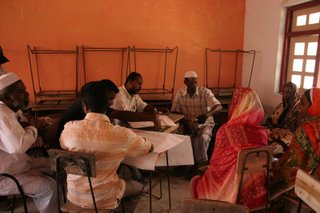
Many people are still trying to rebuild their lives following the devastation of the 2005 tsunami and Erin has had the opportunity to assist local evacuation and disaster management using activities such as community-led vulnerability mapping. However, much of this recovery goes on in the midst of an ongoing conflict, which is endangering those offering aid and diverting resources away from civilian and toward military uses.

Check out some of her notes and pictures. Stirring stuff.

Agent-Based Modelling for Interdisciplinary Geographical Enquiry

Bruce Rhoads argued that;

“The time has come for geography to fulfil its potential by adopting a position of intellectual leadership in the realm of interconnections between human and biophysical systems.”

Many areas of scientific endeavour are currently attempting to do the same and interdisciplinarity has become a big buzzword. Modelling has become a common tool for this interdisciplinary study (for example ecological-economic models), with several different approaches available. Increases in computing power and the arrival of object-oriented programming have led to the rise of agent-based modelling (also termed individual-based and discrete element).

In their latest paper in Geoforum, Bithell et al. propose this form of modelling, with its “rich diversity of approaches”, as an opportune way to explore the interactions of social and environmental processes in Geography. The authors illustrate the potential of this form of modelling by providing outlines of individual-based models from hydrology, geomorphology, ecology and land-use change (the latter of which I have tried to turn my hand to). The advantages of agent-based modelling, the authors suggest, include the ability to represent

  1. agents as embedded within their environment,
  2. agents as able to perceive both their internal state and the state of their environment
  3. agents that may interact with one another in a non-homogeneous manner
  4. agents that can take action to change both their relationships with other agents and their environment
  5. agents that can retain a ‘memory’ of a history of past events.

However the development of these representation can be a challenging task as I found during my PhD modelling exploits, and requires a ‘diversity of resources’. When representing human agents these resources include past population censuses, surveys and interviews of contemporary populations, and theoretical understanding of social, cultural and economic behaviour from the literature. In my modelling of a contemporary population I used interviews and theoretical understanding from the literature and found that, whilst more resource intensive, actually going to speak with those being represented in the model was by far more useful (and actually revealed the deficiencies of accepted theories).

In their discussion, Bithell et al. consider the problems of representing social structures within and an individual-based model suggesting that;

“simulation of social structure may be a case of equipping model agents with the right set of tools to allow perception of, and interaction with, dynamic structures both social and environmental at scales much larger than individual agents”.

Thus, the suggestion is that individually-based models of this type may need some form of hierarchical representation.

Importantly I think, the authors also briefly highlight the reflexive nature of agent-based models of human populations. This reflexivity occurs of the model is embedded within the society which it represents, thus potentially modifying the structure of system it represents. This situation has parallels with Hacking’s ‘looping effect’ that I’ll write about more another time. Bithell et al. suggest that this reflexive nature may, in the end, limit the questions that such models can hope meaningfully address. However, this does not prevent them from concluding;

“The complex intertwined networks of physical, ecological and social systems that govern human attachment to, and exploitation of, particular places (including, perhaps, the Earth itself) may seem an intractable problem to study, but these methods have the potential to throw some light on the obscurity; and, indeed, to permit geographers to renew their exploration of space–time geographies.”

The Importance of Land Tenure

The Economist today highlighted some recent work by Dr Thomas Elmqvist of Stockholm University. Using a combination of Landsat satellite imagery and interviews and surveys with locals in Madagascar, they examined whether human population densities or land tenure systems were more important for determining patters of tropical deforestation.

“From the Landsat images they were able to distinguish areas of forest loss, forest gain and stable cover. Different parts of Androy exhibited different patterns. The west showed a continuous loss. The north showed continuous increase. The centre and the south appeared stable. Damagingly for the population-density theory, the western part of the region, the one area of serious deforestation, had a low population density.

This is not to say that a thin population is bad for forests; the north, where forest cover is increasing, is also sparsely populated. But what is clear is that lots of people do not necessarily harm the forest, since cover was stable in the most highly populated area, the south.

The difference between the two sparsely populated regions was that in the west, where forest cover has dwindled, neither formal nor customary tenure was enforced. In the north—only about 20km away—land rights were well defined and forest cover increased. As with ocean fisheries, so with tropical forests, everybody’s business is nobody’s business.”

Land tenure (spatial) structure was one of the variables I examined in my agent-based model of agricultural land-use decision-making in Spain. I found that whilst the neighbourhood effects were evident in patterns of land-use due to land tenure, market conditions were the primary driver of change (NB land-use/cover change in the traditional Mediterranean landscape I examined is of a markedly different type).

memories of a British coastal landscape


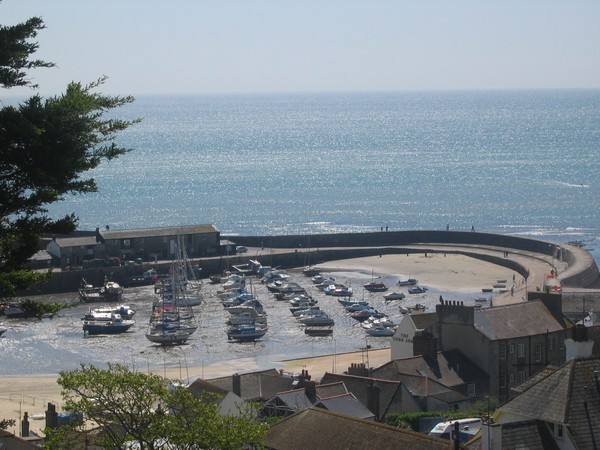
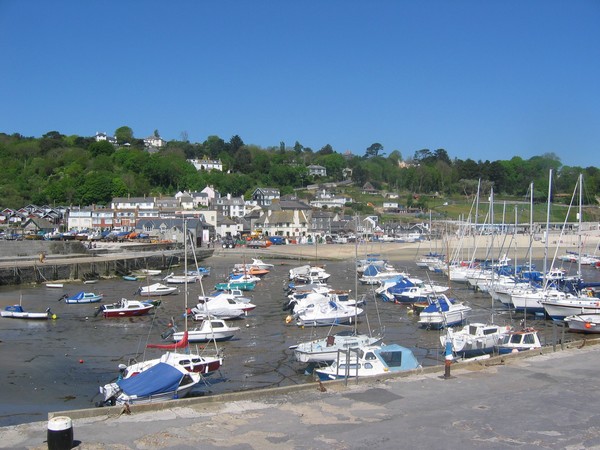
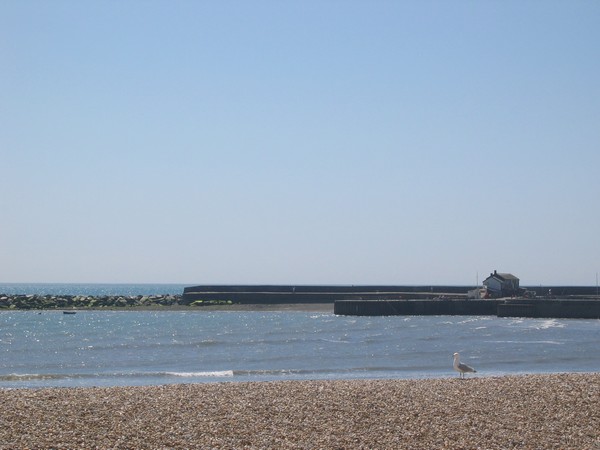
Before my impending departure to the States I’ve been out and about visiting a few places that I won’t see for a while. This week, I took my Grandmother back to the town where she grew up on the English south coast – Lyme Regis in Dorset. I’d never been and she hadn’t been back for a while so it was a trip down both new and old memory lanes.


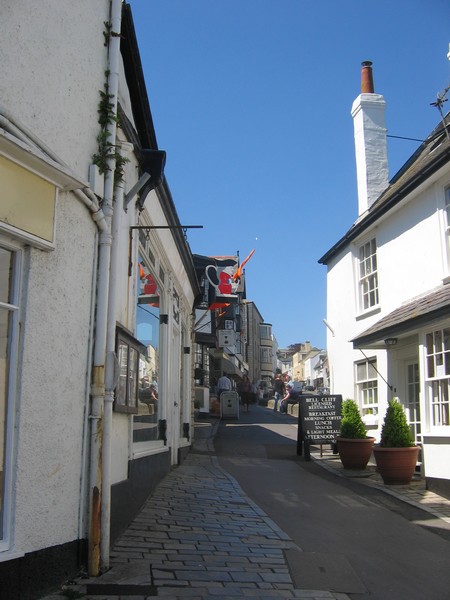
And what steep lanes. Apparently they used drag cargo up Cobb Road from ships docked in ‘the Cobb’. They realised it was a bit much like hard work up these steepled slopes and stopped a fair while ago. But there were other war-time stories about the inclines; run-away trucks with failed breaks, careening down narrow lanes toward the sea-front, their landings cushioned not by a sandy beach but by the solid walls of the old coal merchants (it seems it’s still happening these days too). Line upon line of American soldiers snaking up and down Broad Street outside the old Regent Cinema (then The New Thing In town). Apparently it remains quintessentially British today – tea and biscuits from a china cups and saucers before taking your seats (aside the fact it shows the latest Hollywood block-busters of course).


The vertiginous topography has not only caused rapid runaway of trucks, but also the rapid (and creeping) runaway of the soil. Efforts to manage and reduce land slippage are being undertaken in parallel with a £17 million coastal defence and harbour improvement scheme. Whilst understanding that it is necessary if they want to save their sea-front industry (which has changed from sea-trading and fishing to sea-swimming and tourism), locals aren’t happy about the large new shingle banks that provide the needed protection. Sand has accumulated in the harbour over recent years and has now been joined by a nice sandy beach imported from France.


Alongside visiting the sea-side we had tea and cake at some old friend’s house – all in all a good day stocking up on memories of the British coastal landscape before I jet off across the pond.

‘What I Want’ versus ‘What Is Best’

When ‘what is best’ doesn’t align with ‘what I want’, making the right decision is hard. We need to find ways of working out how make these options align as closely as possible.

Jared Diamond’s point in Collapse is that the fate of contemporary society is in our own hands. I read and wrote about the introductory chapter to a while ago. Eventually I did read the whole book, though as Michael Kavanagh points out;

“You could read the introduction and the last few chapters and get the point. But then you’d miss out on what Jared Diamond does best: tell stories.”

Kavanagh is right; as I’ve talked about before here storytelling is an important way of understanding the world. William Cronon has suggested narratives of global change that offer hope are needed for us to tackle the (potential) problems that contemporary society faces. Most of Diamond’s stories about the fate of previous societies don’t offer much hope however – most collapsed and the only modern example of positive action on the environment is Iceland. Diamond’s identifies five contributing factors to societal collapse:

“… climate change, hostile neighbours, trade partners (that is, alternative sources of essential goods), environmental problems, and, finally, a society’s response to its environmental problems. The first four may or may not prove significant in each society’s demise, Diamond claims, but the fifth always does. The salient point, of course, is that a society’s response to environmental problems is completely within its control, which is not always true of the other factors. In other words, as his subtitle puts it, a society can “choose to fail.”

Diamond emphasises the need for individual action – for a bottom-up approach to make sure that we choose not to fail. Kavanagh suggests the implications is that

“in a world where public companies are legally required to maximize their profits, the burden is on citizens to make it unprofitable to ruin the environment — for an individual, a company, or a society as a whole.”

Others suggest more dramatic action is needed however. Richard Smith suggests that this ‘market meliorist strategy’ won’t be enough. Smith contrasts the bottom-up decision-making of the New Guinea villages that Diamond uses as a potential model for contemporary decision-making with that of contemporary capitalist society. Whereas the New Guinea villages’ decision-making process takes into account everyone’s input:

“…we do not live in such a ‘bottom-up’ democratic society. We live in a capitalist society in which ownership and control of the economy is largely in the hands of private corporations who do not answer to society. In this system, democracy is limited to the political sphere. …under capitalism, economic power is effectively monopolized by corporate boards whose day-to-day requirements for reproduction compel their officers to systematically make ‘wrong’ decisions, to favour the particular interests of shareholders against the general interests of society.”

Smith’s solution? As the global issues contemporary society faces are so interconnected and international, international governance by a “global citizenry” is required. Critics to this approach are likely to be many, but whether it will be enough for individual consumers to “make it unprofitable to ruin the environment”, or whether the we develop a “global citizenry”, the ultimate question here seems to be ‘Are we prepared to change our lifestyles to ensure the survival of our contemporary (global) society’?

With the “End of Tradition” in western societies (i.e. life is no longer lived as fate in these societies) maybe the future of society really is in our hands as Diamond suggests. On the other hand, as Beck points out, as contemporary problems are due to dispersed causes (e.g. individuals driving their car to work everyday) responsibility is rather easily evaded and some form of global decision-making would be useful. To me the latter seems unlikely – those with power are unlikely to give it up easily. The ‘global’ institutions we currently have are frequently undermined by the actions of individual states and leaders. The power to change society and lifestyles (in the west at least) now lies with individuals. But with power comes a responsibly which, on the whole, currently we individuals are shirking.

The changes my and the next generation will need to make will have to go further than simply throwing our glass, paper and plastic in different boxes. There are small ways in which we can save ourselves money whilst helping the environment and they all add up. But sea changes in lifestyle are likely to be required. Governments will not make people do that, and have no right in a democracy. They can cajole via taxation (if they do it right) but they can’t force people to change their lifestyles. People must make those changes themselves because they want to make it profitable to sustain contemporary society. The problem is it’s very difficult to do what’s best when it doesn’t align with what you want. It can hurt. Findings ways of making the two align will become increasingly important. Often the two will not align and it will be necessary to take individual responsibility by accepting there will be a degree of pain. But once this responsibility has been accepted, the next step can be taken – working to minimise the pain whilst ensuring people get as close to what they want as possible.

Inevitably, I think modelling may have something to offer here. Just as Diamond uses evidence of historical environmental, technological and social change to discuss and tell stories about past problems we might use models to discuss and tell stories about potential problems we might face in the future. Simulation models, if appropriately constructed, offer us a tool to reconstruct and examine uncertain landscape change due to environmental, technological and social change in the future. Further, simulation models offer the opportunity to examine alternative futures, to investigate traps that might lie in wait. Just as we should learn from past histories of landscape change (as Diamond suggests), we should be able to use simulation models to construct future histories of change in our contemporary landscapes.

These alternative ‘model futures’ are unlikely to be realised exactly as the model says (that’s the nature of modelling complex open systems), and may not contain the details some people might like, but if they are useful to get people around a table discussing the most sustainable ways of managing their consumption of natural resources then they can’t be a bad thing. Modelling offers insight into states of potential future environmental systems given different scenarios of human activity. At the very least, models will provide a common focus for debate on, and offer a muse to inspire reflection about, how to align ‘what I want’ with ,‘what is best’.