Staying Together… for the Sake of the Environment?

I may be a little behind the times but I have finally begun to digg stuff. From now on if I digg something that I really like or think it is relevant to what I talk about on this blog I’ll post it directly from digg. Given the media interest in the most recent paper to come out of CSIS it seems appropriate that this be the first blog from digg:

“A married household actually uses resources more efficiently than a divorced household,” said Jianguo Liu, a sustainability expert with Michigan State University. He and fellow researcher Eunice Yu concluded that in 2005, in the United States alone, divorced households could have saved 38 million rooms, 73 billion kilowatt-hours of electricity and 627 billion gallons of water if their “resource-use efficiency” had been comparable to that of married households. Liu’s analysis of the environmental impact of divorce appears in this week’s online edition of Proceedings of the National Academy of Sciences. Besides the United States, Liu looked at 11 other countries, including Brazil, Costa Rica, Ecuador, Greece, Mexico and South Africa between 1998 and 2002. In the 11, if divorced households had combined to have the same average household size as married households, there could have been a million fewer households using energy and water in these countries. “People have been talking about how to protect the environment and combat climate change, but divorce is an overlooked factor that needs to be considered,” Liu said.

read more | digg story

sponsor a (s)mile

I’ve been watching Ewan McGregor and Charlie Boorman on their epic motorcycle adventure all the Long Way Down from John O’Groats in Scotland through Europe and Africa to Cape Town, South Africa. It’s like a 21st century lads version of Michael Palin’s jolly jaunts around the world and follows on from their last trip from London to New York the (wrong) Long Way Round. Another inspirational set of characters to give one itchy feet…

One of the charities they’re associated with and raising money for on their trip is UNICEF. On their way through Africa the boys visited places where UNICEF are working, like in Ethiopia where they are still clearing land mines from previous wars and educating local children and families about the dangers that remain.

You can support this work by sponsoring a mile of Ewan and Charlie’s route. All of the money raised supports the UNICEF Long Way Down Fund to help children affected by conflict, poverty and HIV/AIDS in Africa. For example, £1 will buy six sachets of peanut butter paste that is used to treat children with malnutrition. Checkout the map – I’ve sponsored mile 114.

What does it mean to ‘be’ an expert? at RGS-IBG 2008

That man James Porter is busy at the Geography conferences these days. Alongside organising a session at the 2008 AAG on Private Science & Environmental Governance, he’s also organising a session at the 2008 RGS-IBG Annual Meeting on expertise and what it means to be an expert. Details below, abstract submissions are due by 16th January 2008.

I didn’t make it to the meeting last year but hope to in 2008…

Call for Papers:
(Re)Thinking Expertise: Spaces of Production, Performance and the Politics of Representation
RGS-IBG, Annual Meeting, 27 – 29 August 2008
London

What does it mean to ‘be’ an expert? Although social constructionism has identified similarities between science and other social practices, recently a controversial call for a “Third Wave” of science studies (Collins & Evans, 2002) has drawn attention to the problem of Extension – the infinite regress encountered when looking for techno-scientific advice if we can no-longer tell the difference between expert and lay-knowledge. Expertise has previously been understood to be the unyielding pursuit of authoritative knowledge that is honed through practice and enforced by political and academic institutions. In this sense, the professional identities presented to the outside world are carefully crafted so as to conform and exhibit ideological norms not dissimilar to Merton’s ideals. Such readings, however, arguably present an overly romantic, simplistic, and homogenous rendering of experts and their expertise. What is needed is examination of how experts’ identities are constructed (when and by whom), how they are negotiated between actors and institutions, the historical context in which they are played out, and ultimately how they function (or don’t) instrumentally to serve or suppress certain realities.

Expertise is arguably played out more visibly today than ever before, particularly with reference to the environment. Floods, hurricanes, infectious animal diseases, and a myriad of other concerns are captured graphically and broadcasted nightly into homes across the world. Each event and the subsequent response depicts the experts involved as either heroes or villains of these dramatised pieces – in both cases thrust into the limelight as representatives of their respective fields. Geographers are uniquely positioned to comment on this. They can provide theoretical depth and empirical evidence to shed light on the way expert identities are shaped, the role they serve, the impact on the democratization of knowledge, and the barriers they present to tackling environmental problems. We therefore invite papers addressing (though not limited to) the following questions:

  • Who constructs the image of environmental experts? How / where are these constructions enacted (i.e. technological, sociocultural, artefacts, etc.)?
  • Can representations be negotiated? If so, what role have academics played in shaping past perceptions and might hope to play in the future? What agency do these representations have?
  • What is the effect of these representations? Do they ever coincide or clash with the needs, understandings and views of actors (public, political, etc.)? Where are they successful and unsuccessful?
  • Do the representations come to in turn alter the landscape and shape an environment which conforms to the possible misguided representation itself? Does this lead to a snowballing of representations and hence crisis where ‘reality’ breaks?

Abstracts should be sent to James Porter (james.porter at kcl.ac.uk) and Joseph Hillier (joseph.hillier at ucl.ac.uk) by 16th January 2008.

More conference information here.

friends

There’s been some moving and shaking on my friends’ websites recently (see the full list in the sidebar), so here’s a quick update.

Nicky has added some new t-shirts and hoodies for sale at Creative Current. For the discerning geek… “There are 10 types of people in the world, those who know binary and those who don’t”.

Dom Daher has updated his website and added some of his award-winning extreme sports photos as slideshows. Check the new slideshow at 20millimetre too.

Jamie and Helen and are still on the road but they’ve stopped off in Kyrgyzstan for a while where they’ve been volunteering for The Alpine Fund, “a small, non-profit, non-governmental organization using the incredible mountain resources of Kyrgyzstan to help the country’s most vulnerable youth.” Jamie worked on setting up their fancy new website and blog.

Olivia has still been doing her musical thing – watch out for her on the circuit in London and check out some of her tunes at myspace. Finally, travelorphan has been offline for a while but I’m assured she’ll be back to blogging soon enough…

Rachel Carson Distinguished Lecture by William C. Clark

Professor William C. Clark, of Harvard University, will be giving the forthcoming Rachel Carson Distinguished Lecture “Sustainability Science: An Emerging Interdisciplinary Frontier”. The lecture is on Thursday December 6 2007 at 3:30 PM (with a reception to follow) in the Radiology Auditorium (on Service Road) at Michigan State University (for directions, visit the CSIS home page). The lecture is free and open to the public.

I’ll be there and will try to write something about it here in the future…

Dr. William C. Clark is the Harvey Brooks Professor of International Science, Public Policy, and Human Development in the John F. Kennedy School of Government at Harvard University. He is an international leader in Sustainability Sciences, co-chaired the National Research Council’s study “Our Common Journey: A Transition toward Sustainability”, and is editor of the Section on Sustainability Science for the Proceedings of U.S. National Academy of Sciences. His exceptional interdisciplinary research and other activities have been recognized by many prestigious honors and awards, such as membership in the National Academy of Sciences and the MacArthur Prize. Additional information about Dr. Clark, including representative publications, can be found at the CSIS home page.

Presented by the Center for Systems Integration and Sustainability, Department of Fisheries and Wildlife with support from the Office of the President; Office of the Provost; Office of the Vice President for Research and Graduate Studies; Graduate School; Environmental Science and Policy Program; College of Agricultural and Natural Resources; Michigan Agricultural Experimental Station; Center for Water Sciences; Sustainable Michigan Endowed Project; Science, Technology, Environment, and Public Policy Specialization; and Elton R. Smith Endowment.

25 Years of Landscape Ecology


This year marks the 25th anniversary of the establishment of the International Association for Landscape Ecology and the 20th anniversary of the first publication of the journal Landscape Ecology. To highlight these landmarks several guest editorials appear in the latest edition of the journal (which has swelled from around 250 pages per year to almost 1,400).

Jianguo Wu briefly describes how the field of landscape ecology was first envisioned by Carl Troll as the integration of geographic and ecological disciplines, defining it as:

“the study of the main complex causal relationships between the life communities and their environment” which “are expressed regionally in a definite distribution pattern (landscape mosaic, landscape pattern)” (Troll 1971).


As such, the other invited Editorials discuss the need to remain holistic. As I’ve mentioned before, reading about the vision of a holistic landscape ecology is one of the reasons I’ve ended taking the route I have. Zev Naveh emphasises the need for landscape ecology to be a ‘transdisciplinary science of landscape sustainability’, providing pragmatic information for decision-making and becoming become a ‘post-normal’ prognostic and normative science.

Paul Opdam continues this discussion, highlighting the need for landscape ecologists to develop skills and techniques for transferring knowledge from science to the world of the actors in policy, planning, design and management. This knowledge transfer will be most successful if based on a science that provides credibility, saliency and legitimacy by considering the integrations of landscape systems as a whole. Thus holistic nature will then contribute to decisions based on principles of sustainable management of our landscapes.

However, Marc Antrop highlights that this potential has yet to be fully realised. The practical applications of landscape ecology in planning and policy making remain inadequate, the main problem lying in the (poor) communication to non-landscape ecologists. Landscape ecology will continue to provide insight into the functioning of interacting social, ecological, economic, and environmental systems at the landscape level. If it does become more prescriptive, as these Editorials suggest it must, it will also begin to contribute more obviously directly to the sustainable management of the landscapes in which we live.

Seeing the Wood for the Trees: Pattern-Oriented Modelling

A while back I wrote about the potentially misplaced preoccupation with statistical power in species distribution models. Our attempts at drawing out some relationships between our deer distribution data and descriptors of land cover is proving taxing – the relationships evident at a more coarse spatial resolution (e.g. county level) than we are considering aren’t found in our stand-level data. As a result we moving toward taking a modelling approach that is driven less by our empirical data and more by inferences based on multiple information sources. Particularly I’m drawn toward emphasising an approach I first encountered in my undergraduate landscape ecology class taught by George Perry – ‘Pattern-Oriented Modelling‘.

A prime example of the POM approach is its use to model the spread of rabies through central Europe. The rabies virus has been observed to spread in a wave-like manner, carried by foxes. Grimm et al. (1996) describe how they developed a cellular automate-type model that considers cells (of fox territory) to be in either a healthy, infected or empty state. Through an iterative model development process, their model was gradually refined (i.e. its assumptions and parameters modified) by comparing model results with empirical patterns.

The idea underpinning this iterative POM approach is

“… if we decide to use a pattern for model construction because we believe this pattern contains information about essential structures and processes, we have to provide a model structure which in principle allows the pattern observed to emerge Whether it does emerge depends on the hypotheses we have built into the model.”

This approach has been found particularly useful for the development of ‘bottom-up’ agent-based models. Often understanding of the fine-scale processes driving broad-scale system dynamics and patterns is poor, making it difficult to both structure and parameterise mechanistic models. However, whilst the logical fallacy of affirming the consequent remains, if a model of low-level interactions is able to reproduce higher-level patterns, we can be confident that our model is a better representation of the system mechanics than one that doesn’t. Furthermore, the more patterns at different scales that the model reproduces, the mode confident we can be in it. Thus, in POM

“multiple patterns observed in real systems at different hierarchical levels and scales are used systematically to optimize model complexity and to reduce uncertainty.”Grimm et al. (2005)

Grimm and Berger outline the general protocol of a pattern-oriented modelling approach (whilst reminding us that there is no standard recipe for model development):

  1. Formulate the question or problem
  2. Assemble hypotheses about essential processes and structures
  3. Assemble (observed) patterns
  4. Choose state variables, parameters and structures
  5. Construct the model
  6. Analyse, test and revise the model
  7. Use patterns for parameterisation
  8. Search for independent predictions

Several iterations of this process will be required to refine the model. In initial iterations, steps 2 and 4 may need to be largely inferential if the state of knowledge about the system is poor. However, by moving iteratively back through these steps, and in particular exploiting steps 6 and 7 to inform us about model performance relative to system behaviour, we can improve our knowledge about the system whilst simultaneously ensuring our model recreates observed patterns. For example, during the development of the landscape fire-succession model in my PhD, I compared the landscape-level model results of different sets of (unknown) flammability probabilities (parameters) of each vegetation type required by the model with empirically observed wildfire regime behaviour. By modifying parameters for individual vegetation types I was able to reproduce the appropriate wildfire frequency-area distribution for Mediterranean-type environments that had previously been found (I’m currently writing this up for publications – more soon).

But what does this all have to do with our model of the relationship between deer browse and timber harvest in Michigan’s Upper Pensinsula? Well, right now I think we’re at steps 2,3 and 4 (all at the same time). As our deer and land cover relationships are weak at the stand-level (which is the level we are considering so that we can integrate the model with an economic module), I am currently developing hypotheses (i.e. assumptions) about the structure of the system from previous research on different specific aspects of similar systems. Furthermore, we’re continuing to look for spatial patterns in both vegetation and deer distribution so that we can compare the results of our hypothetical model.

For example, one thing I’m struggling with right now is is how to establish the probability of which individual trees (or saplings) will be removed from a stand due to a given level of deer browse (which in turn is dependent upon a deer density). This is not something that has been explicitly studied (and would be very difficult to study at the landscape level). Therefore we need to parameterise this process in order for the model to function. We should be able to do this by comparing several different parameterisations to empirically observed patterns such as spatial configuration of forest types classified by age class or age/species distributions at the stand-level. That’s the idea anyway – we’ll see how it goes over the next months…

In the meantime, next week I head back to the study area for the first stage of our seedling experiment. We’re planting seedlings now across a gradient of browse and site conditions with the intention of returning in the spring to see what has been browsed and count deer pellets. This should improve our understanding of the link between pellet counts and browse pressure and provide us with some more empirical patterns which we can use in our ongoing model development.

Call for Abstracts: Wildfires session at EGU 2008

As in previous years, I’m a co-convener of the Wildfires session at the 2008 European Geophysics Union General Assembly (along with Rosa Lasaponara, Luciano Telesca and Don McKenzie). We hope this year’s session will be as successful as ever, and are expecting the best papers presented to compose a special issue of Ecological Modelling. The call for abstracts is now open (copied below). Abstracts should be submitted at the conference website. Important deadlines are:

Abstract Submission: 14 January 2008
Financial Applications 07 December 2007
Pre-registration: 31 March 2008

Subject: Call for Abstracts: Wildfires session at EGU 2008

5 November 2007

Dear Colleagues [Apologies for cross-posting],

The European Geosciences Union (EGU) General Assembly 2008 is to be help from 13-18 April 2008 in Vienna, Austria. We invite you to participate in the session ‘Spatial and temporal patterns of wildfires: models, theory, and reality’ (NH8.4/BG2.16 – co-organized by the Natural Hazards & Biogeosciences divisions).

Session description:
Wildfires are the result of a large variety and number of interacting components, producing patterns that vary significantly both spatially and temporally. This session will examine models, theory, and empirical studies in wildfire research. We encourage submissions in any one or combination of these three main areas, and envision bringing together wildfire hazard managers, applied researchers, and theoreticians. Posters are also very much encouraged, as we plan to have both lively
oral and poster sessions.

The best papers will be considered for publication in a Special Issue of Ecological Modelling

ABSTRACT DEADLINE: 14 January 2008
Web site for submission: http://meetings.copernicus.org/egu2008/

Please note that the deadline for financial applications is 07 December 2007, and for pre-registration is 31 March 2008. We look forward to seeing you in Vienna. Please forward this message also to your colleagues.

With best regards,

Lasaponara, R. (Convener)
Telesca, L.; McKenzie, D.; Millington, J. (Co-conveners)

Lasaponara Rosa, PhD
Research on Remote Sensing and Signal Processing
CNR-IMAA
Italy
lasaponara at imaa.cnr.it

Luciano Telesca
Research on geoscience and Signal Processing
CNR-IMAA
Italy
luciano.telesca at imaa.cnr.it

Don McKenzie
Research Ecologist
Pacific WIldland Fire Sciences Lab
US Forest Service

Affiliate Professor
College of Forest Resources
CSES Climate Impacts Group
University of Washington

dmck at u.washington.edu
donaldmckenzie at fs.fed.us

James D.A. Millington, PhD
Research Associate
Center for Systems Integration and Sustainability
Michigan State University
jmil at msu.edu

W1: http://csis.msu.edu
W2: http://www.landscapemodelling.net

UP Deer Browse Experiment Recce

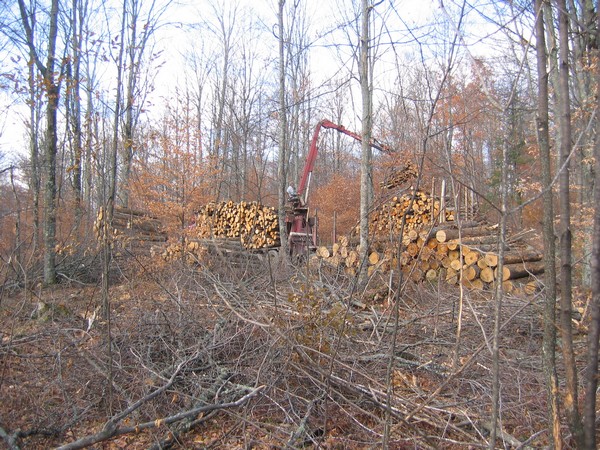
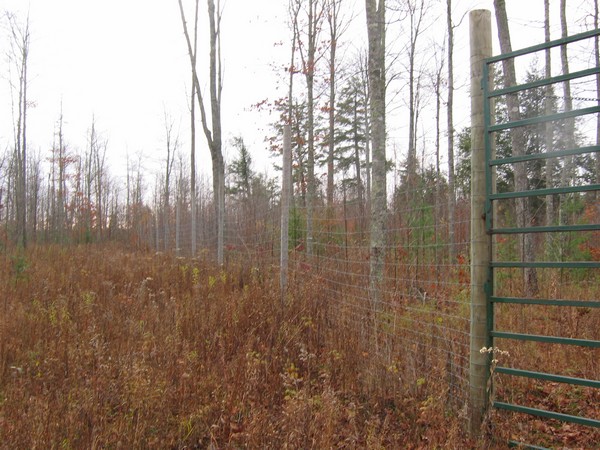
A few pictures from our trip to the UP study area this past week.

The fall was almost over. We were out on a recce to find sites for an experiment we’re setting up over the next couple of weeks to examine the impact of deer browse on seedlings of various conifer species.

We want to locate our seedling planting on both state and commercial lands – cutting had recently finished at this commercial site.

We also visited a deer exclosure set up to examine tree regeneration in the absence of deer browse (similar in many ways to our experiment). It’s not the best picture, but the effects of 12 years of protection can be seen – very little regeneration on the left of the fence but evidence of green juveniles on the right. These effects haven’t been quantified at this site but by sight alone there’s clearly difference outside s inside the exclosure.

Finally, not all the leaves had fallen. We were a couple of weeks late for the real colours, but some remained down on the Lake Michigan coastline.

Engaging the Future

The book review I wrote for Environment and Planning A appears in the latest issue (39:11). View the pdf here or read on below…

Engaging the Future: Forecasts, Scenarios, Plans, and Projects (2007) edited by Hopkins, L.D. and Zapata, M.A.

The future is inherently uncertain. In accepting this we should not be fatalistic suggest the authors of Engaging the Future. Rather, as the title of the book suggests, scholars, planners, public officials, and citizens alike should endeavour to engage the future, creating and shaping it via a continuing process of regional and urban planning. The tools available for us to advance this process are forecasts, scenarios, plans, and projects.

The opening chapter by the editors Hopkins and Zapata sets the tone for the volume, highlighting that these tools are ways of representing, manipulating, and assessing ideas about the future. They allow us not simply to think about the future but also to influence it. Predictions, however, are conspicuous by their absence from Hopkins and Zapata’s putative toolbox. This, as Moore discusses in chapter 2, is because of an all too frequent over-reliance on quantitative output from models. Moore complains that the emphasis on using numerical predictions about populations, transport demands, and other regional trends can inhibit creativity, stifle debate, and limit policy alternatives, when predicted futures are regarded as inevitable ones. Thus, numerical predictions can suppress uncertainty rather than engaging and dealing with it effectively.

The alternative approach, developed and explored throughout the remaining chapters, is one that is increasingly reflexive, collaborative, democratic, and consensual. Both the tools that will facilitate this approach and their use in (predominantly American) case studies are presented and discussed. In chapter 3 Grant discusses the use of visioning to improve participation in the planning process, highlighting both the advantages (democratic inclusion) and drawbacks (potential munipulation) of such an approach. Myers (chapter 4) introduces the idea of narratives to examine how individual choices will influence future communities, and stresses that, if quantitative data about the future are to be used, they must be embedded within a story that describes community transformations through time. Narratives are also discussed as tools by which to engage and generate ‘reflective conversations’ between diverse parts of the public (Cummings, chapter 12) and to highlight multiple views and expectations about the future rather than suppressing them (Zapata, chapter 13).

Chapters 5 (Smith), 6 (Avin), 7 (Harwood), and 11 (Deal and Pallathucheril) all focus on the use of scenarios in planning in business, industrial, regional, and local community contexts. In these contexts, scenarios differ from forecasts as they do not assign any probability or likelihood estimates to their feasibility, and so better able to explore nonstationary processes and their normative implications. By generating scenarios using the input from local stakeholders these authors suggest community concerns, perceptions, and values can be integrated into a formal description of possible futures, helping to build the capacity of a community to plan via education, dialogue, and empowerment.

Isserman, Klosterman, and Hopkins (chapters 9, 10, and 14, respectively) continue the emphasis on the continued need for a shift away from a ‘technocratic, mystified’ approach toward an ‘open, participatory’ one. Such a philosophy is consistent with the attitude of the need to ‘democratise science’ that has been forwarded recently in the United Kingdom, particularly by organisations such as the think tank DEMOS. Echoing those debates about experts and the politics of expertise, Klosterman argues that, despite their technical skills, planners cannot claim any special knowledge about the desirability of given futures, or arguably even their probability of occurring, than ordinary citizens with their lived ‘experience expertise’ about the changing nature of the region. In turn, Hopkins suggests plans should become `living documents’ that are negotiated and support continued deliberation by multiple

This broad message of the book – to accept uncertainty and embrace participatory approaches – resonates with contemporary attitudes across other areas of environmental science and management. Adaptive resource management, for example, is a process of ‘learning by experimenting’, updating policies and management strategies as more is learnt about the system in hand. Likewise, Funtowicz and Ravetz (1993) have argued that a new form of `postnormal’ science that embraces uncertainty, individuals’ personal values, and dialogue amongst multiple stakeholders is required to solve the environmental problems arising from applications of ‘normal’, reductionist science.

However, uncertainty is politically undesirable and participation is not a panacea. Accepting uncertainty is disquieting – embracing it is even more of a challenge. Policy makers are often loathe to accept advice based on uncertainty, and where uncertainty is accepted it is often used to delay (tough) decision making. A pertinent example is political unwillingness to address the suggested causes of potential anthropogenic climate change in certain quarters because of the scientific uncertainty in those processes. Participatory approaches demand both the will and the skill to engage with non-planners. Making the planning process more inclusive is likely to slow it, potentially leading to unforeseen (and unwanted) demands on the planning process and remit. Participatory approaches will demand that planners expand their skill set to learn how to incorporate a variety of perspectives and views into their planning process.

The case studies presented in each chapter show how this might be done, offering practical ways to engage this multiplicity of demands and perspectives. In this light, Engaging the Future will be most useful for, or have most impact upon, students and junior planners. Given the emphasis of the book on wider participation in the planning process it should be read by more than just planners and students however. Well-produced with uncomplicated language, useful figures, and a glossary of planning terms, this book will be accessible and valuable both to the policy makers calling upon the services of planners and to the citizens and stakeholders who will be influenced by the outcomes of their actions.

Buy at Amazon