The Role for Landscape Ecology in Poverty Relief

In the latest issue of Landscape Ecology, Louis Iverson suggests landscape ecologists have a role in poverty relief. Reviewing SachsThe End of Poverty: Economic Possibilities for our Time, Iverson believes the book ‘should motivate additional research and implementation of principles within landscape ecology into this critical arena’ and argues that landscape ecologists‘can provide expertise to efficiently use funds to the greatest value and to research sustainable, integrated pathways to development’. After discussing several aspects of the current state of the global poverty problem (poverty statistics, water scarcity, Millennium Development Goals, environmental constraints on development), Iverson suggests landscape ecologists can contribute to these issues by;

  1. Modelling the impacts and possible mitigation of climate change on water and agricultural production, especially in the most vulnerable zones with high levels of extreme poverty
  2. Creating innovative, landscape-level systems for efficient water use, agricultural production, and infrastructure in the zones of extreme poverty
  3. Working towards sustainable management of ecosystems, especially fragile ecosystems, that are deteriorating due to human pressures
  4. Assisting in planning for urban growth that also sustains agriculture productivity using appropriate water, soil, and food management systems
  5. Building models of low-cost but sustainable means of protection against natural or technological disasters, especially storms, floods, and droughts (climate-related disasters)
  6. Designing infrastructure and energy improvements in developing countries with maximum positive human impact and minimum negative environmental impact
  7. Working to better understand the diseases of the poor and spatial and temporal relationships of these diseases
  8. Working to understand how over-consumption and excessive wealth contributes to environmental degradation and poverty elsewhere in the global landscape, and propose/model remedial solutions
  9. Developing partnerships with ecologists, economists, landscape architects, wildlife managers, and land managers in developing countries that make a difference
  10. Seeking out students from poor countries who can provide direct linkages to projects back in their home countries
  11. Assisting in land-use and urban planning efforts where practical and feasible, focusing on improving conditions for slum dwellers
  12. Working to help influence decision-makers to realize that investments toward the goals outlined above are well spent and the right thing to do


More inspiration, if it were needed, to continue this field of research…

nyc

Top of the Rock

“I began to like New York, the racy, adventurous feel of it at night, and the satisfaction that the constant flicker of men and women and machines gives to the restless eye.” F. Scott Fitzgerald

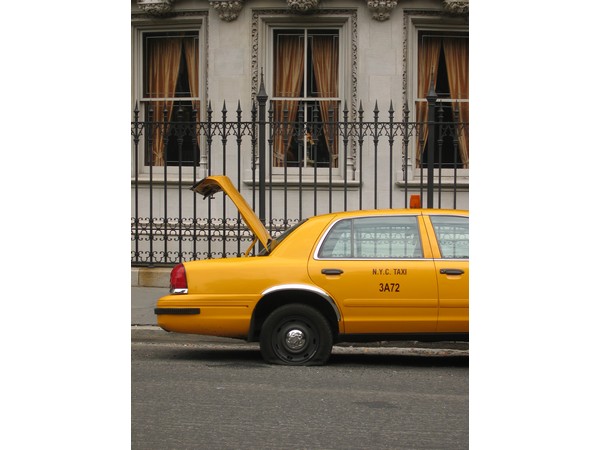
I, on the other hand, liked it immediately. Like London, it just has that energy that gets mind and body moving. I arrived the day after the tornado and the transport network was just getting back to normal. There were still a few problems though…

So, my highlights: Top of the Rock (the usual tourist thing of going to the top of something tall and checking the view – above); the UN HQ (below); Brooklyn Bridge (another US bridge about to collapse by the look of things); generally just hangin’ out with old friends enjoying the atmosphere with a few beers (Brooklyn Lager was pretty good); and learning to play wiffle ball in the street at 3am (not the easiest whilst half cut…) All good!

Oekologie #8

Welcome to the 8th issue of Oekologie, the travelling blog carnival of the best ecology and environmental science blog posts from the past month. Although the summer is often the time that ecologists and environmental scientists are out in the field doing what they love most (fieldwork) this didn’t stop some of us from posting stories that grabbed our attention.

Several of posts this month discussed the ecology of mammals, some more positive than others. Talking about Yellowstone’s Ecology of Fear, Jeremy at The Voltage Gate highlighted the benefits of the re-introduction of wolves to the National Park and that the restoration of historic ecosystems is possible. GrrlScientist notes that the egg-laying mammal Attenborough’s long-beaked echidna (named after Sir David Attenborough) is not extinct as was previously thought, and Tim at Walking the Berkshires emphasised the successes of the Khoadi Hôas Conservancy in Namibia for the conservation of elephant populations. Though problems remain, Tim suggests that it is possible for humans and elephants to exist side-by-side. In a great post over at Laelaps, Brian is less optimistic however about the management and survival prospects for the Saiga antelope (Saiga tatarica).

More concerned with the The Other 95%, Kevin discusses the benefits for crabs moulting their exoskeleton (other than simply allowing them to grow). Concerning the plant world, Jennifer at The Infinite Sphere presents the invasive Purple Loosestrife and the trade-offs associated with controlling the plants with herbicides, and at Seeds Aside Laurent suggests a game for the next time you’re strolling through a meadow.

Lorne at Geek Counterpoint presents a review of the Storm World by Chris Mooney, pointing out the social aspects of the scientific study of the climate and hurricanes;

“Mooney also takes a long, critical look at how scientists communicate (or don’t) to the public, and how the media handles what information they can get their hands on.”

Finally, considering some of the larger issues, Mike at 10,000 Birds examines the ecological basis for conservation. Part of a larger series called Protect the Commons, he highlights the need to remember the fragile connections between things and to understand that “all is of a part”

That’s it for this month – check Oekologie #9 at Fish Feet next month. Remember to submit your best posts here.

bristol balloon fiesta

I just spotted that this weekend is Bristol’s Annual International Balloon Fiesta, Europe’s biggest. The night glows are always good fun – check the video below from last year:


If the wind is in the right direction the balloons drift across the city and land somewhere between Bristol and Bath. Sometimes they don’t make it – I remember when I was about 7 or 8 a balloon landed on my primary school field as we were walking to school in the morning (they take off twice a day, the first at dawn). Pretty exciting! I’ve never taken a hot air balloon ride but I think I’ll have to one day. It looks like graceful way to travel, looking out over the West Country landscape.

Fuel Efficient Collaboration

In a current thread on the <a href="
https://listserv.umd.edu/cgi-bin/wa?A0=ecolog-l&#8221; target=”_blank” class=”regular”>ECOLOG-L listserv there’s a debate going on about the environmental impacts of academics travelling to conferences in far-off places to discuss the environmental state of the world (the current case being this week’s ESA conference in San Jose). On correspondent suggested we might be better off taking better advantage of the internet and teleconferencing, as suggested by E.O. Wilson. Several people have responded noting the virtues of physically attending meetings including the opportunities to meet face-to-face with potential collaborators, funders and students and to see presentations of data that may not be published for a couple of years hence.

Another correspondent suggested that delegates consider the form of transport they take to reach the meeting – trains are commonly held as being more fuel efficient than planes for example. This led me to the Fuel Efficiency in Transportation page on the ubiquitous wikipedia. Assuming this page is correct, it suggests that generally;

  1. Cycling (653 mpg) is more efficient than walking (235 mpg)
  2. European trains (500 mpg) are considerably more fuel efficient than planes (67 mpg)
  3. Planes (67 mpg) are actually more fuel efficient than the average US car (36 mpg), but less efficient than a hyprid such as the Toyota Prius (77 mpg)
  4. Travel by the average US car (36 mpg) is of comparable efficiency to travel on an Amtrak intercity train (39 mpg)
  5. Travel by Steamboat (12 mpg) or Helicopter (4 mpg) is only for those who don’t give a jot about carbon emissions

Here mpg = miles per gallon of gasoline, and these are rough comparisons for the average occupancy of the vehicle which don’t really consider things like the distance travelled. There are many other considerations that need to be taken in these comparisons as James Strickland shows in his examination of the numbers.

Of course, the problem with this discussion is that the two most important factors that people consider when deciding how to travel are not accounted for: Time and Money. Flying internationally (and in many cases on short-haul too) is, in general, more efficient in both time and money than travelling by train (though some would say less fun). I can see currently that the advantages mentioned above for attending a conference in person do make it preferable to teleconferencing or online conferences. Maybe if ecologists really want to be environmentally friendly when meeting to discuss how the natural environment works they’ll need to go that one step further and embrace meetings in virtual words such as Second Life. Businesses are now experimenting with virtual spaces where remote workers come together to collaborate, and whilst it may take time to perfect and get used to this way of ‘meeting’ it seems like an option for the future. Whilst ESA 2007 is held in sunny a San Jose, maybe ESA 2010 be held in a sunny simulated city…

One year of meandering, One award


Today is the first anniversary of Direction not Destination, a year since I wrote this. Since then I’ve relocated from the OC to East Lansing with few other trips for work (Poland, Spain, USA), and otherwise (India, Dorset), in between. I was offered a couple of jobs, awarded a PhD and generally the good times have outweighed the bad.

Initially I didn’t really know how this blog would turn out or what I would do with it. It seems to have become a place for me to write some thoughts with a little more freedom than I’m afforded with work stuff, a place to keep track of what I am actually doing at work, a place to post some of my favourite pics, and of course at place just to have a quick rant every-now-and-then.

I’ve contributed to Just Science Week and Oekologie and generally some people seem to be finding my meandering thoughts interesting. So much so that recently I was awarded a Thinking Blogger Award! What a nice birthday pressie. Thanks to Jeremy at the Voltage Gate for the nod. Having been awarded this it is now upon my shoulders to nominate the five blogs that make me think. To be honest, and as I implied in the other post I made a year ago, I don’t go checking other individuals’ blogs directly that often. Instead, I usually stick to my favourite blog aggregator 3quarks and the Guardian’s excellent Comment is Free. Anyway, here are my five:

  1. 3quarksdaily“a daily must-read for intellectuals of all stripes”
  2. Prometheus – mainly for the havoc Roger Pielke Jr causes – he’s now blogging for Nature
  3. Resilience Science – overseen by Garry Peterson at McGill University
  4. Ecological Economics – a variety of authors from several disciplines
  5. World Changing – building the future ourselves

Here to the next year’s meanderings!

Cheers,

j|m

Fire Danger Very High Across Michigan – Aug 2007

Currently on the MDNR homepage:

“Increasing drought conditions across Michigan have increased the fire danger to very high. Department of Natural Resources wildfire officials are asking outdoor enthusiasts to use caution with outdoor fires.”

Over the weekend erratic winds have fanned a fire to greater than 12,000 acres in the UP, just north of Tahquamenon Falls State Park. More here.

Update – 4th January 2008
On 29th August 2007 Michigan DNR reported the Sleeper Lake fire was 95% contained and at ~18,000 acres was the third largest fire in Michigan history.

The Wilderness Ideal

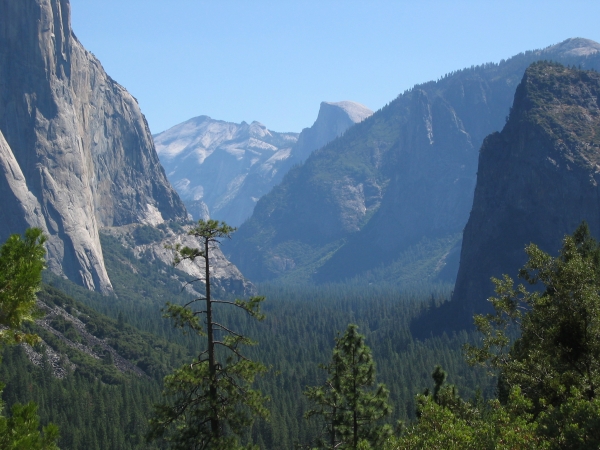
One evening whilst sitting on a deck overlooking a tranquil lake in the wilds of the UP’s northern hardwood forests, I began reading William Cronon’s contributions to the volume he edited himself; Uncommon Ground. The book has been around for a decade and more but it is only recently that I came across a copy in a secondhand book store. It seems apt that I considered what it had to say about the ‘social construction’ of nature in a setting of the type that has long intrigued me. Maybe the view of a landscape which confronted me is another of the reasons I am doing what I am right now. I have had pictures of these large wilderness landscapes on the walls of my mind, and elsewhere, for a while.

Cronon examines “the trouble with wilderness” with reference to the Edenic ideal that underlay it from the beginning. Wordsworth and Thoreau were in bewildered or lost awe of the sublime landscapes they travelled, but by the time John Muir came to the Sierra Nevada the landscape was an ecstasy. Whilst Adam and Eve may have been driven from the garden out into the wilderness, the myth was now ‘the mountain as cathedral’ and sacred wilderness was a place to worship God’s natural world. Furthermore, as the American frontier diminished with time and technology,

“wilderness came to embody the national frontier myth, standing for the wild freedom of America’s past and and seeming to represent a highly attractive natural alternative to the ugly artificiality of modern civilization. … Ever since the nineteenth century, celebrating wilderness has been an activity mainly for well-to-do city folks. Country people generally know far too much about working the land to regard unworked land as their ideal.” (p.78)

Cronon suggests that there is a paradox at the heart of the Wilderness ideal, this conception that true nature must also be wild and that humans must set aside areas of the world for it to remain pristine. As Cronon puts it, this paradox is that “The place where we are is the place where nature is not”. Taking this logic to its extreme results in the need for humans to kill themselves in order to preserve the natural world;

“The absurdity of this proposition flows from the underlying dualism it expresses. … The tautology gives us no way out: if wild nature is the only thing worth saving, and if our mere presence destroys it, then the sole solution to our own unnaturalness, the only way to protect sacred wilderness from profane humanity, would seem to be suicide. It is not a proposition that seems likely to produce very positive or practical results.” (p.83)

I’ll say. But Cronon is not saying that protected wilderness areas are themselves undesirable things, of course not. His point is about the idea of Wilderness. As a response he suggests that rather than thinking of nature as ‘out there’, we need to learn how to bring the wonder we feel when in the wilderness closer to home. We need to abandon the idea of the tree in the garden as artificial and the tree in the wilderness as natural. If we see both trees as natural, as wild, then we will be able to see nature and wildness everywhere; in the fields of the countryside, between the cracks in the city pavement, and even in our own cells.

“If wildness can stop being (just) out there and start being (also) in here, if it can start being as humane as it is natural, then perhaps we can get on with the unending task of struggling to live rightly in the world – not just in the garden, not just in the wilderness, but in the home that encompasses both” (p.90)

Sitting on that deck looking out over the lake it was clear that landscapes such as the one I was in aren’t the idealised, pristine, wilderness that they may be portrayed as in books, photographs and travel brochures. Just as in studying its nature I have come to understand a little better the uncertainties of the scientific method that is supposed to bring facts and truth, so I think have come to better understand the place of human needs within these ‘wild’ landscapes. As naive as it is to think that science might offer the absolute truth (it can’t, but it is still the best game in town to understand the world around us), thinking humans are inseparable from nature seems equally foolish.

In the introduction to a book on natural resource economics (which has mysteriously vanished from my bookshelf), an author describes a similar situation. As a young man he wanted to study the environment in order that he might save it from destructive hands of humans. But in time he came to realise this was unrealistic and that better would be to study the means by which humans use the ‘natural world’ to harvest and produce the resources we need to live. Economics is concerned with the means by which we allocate, and create value from, resources. Just as it is important to understand how ‘nature’ works, it is also important to understand how a world in which humans are a natural component works, and how it can continue to function indefinitely.

Landscape Ecology and Ecological Economics have grown out of this understanding. Whilst theories and models about the natural world independent of humans remain necessary, increasingly important are theories and models that consider the interaction between the social, economic and biophysical components of the natural world. These tools might help us get on with the task of living sustainably in the place which humans should naturally call home.

Buy on Amazon

Modeling Disturbance Spatially using the FVS

We plan to use the Forest Vegetation Simulator (FVS), developed by the USFS over the previous couple of decades, in our ecological-economic model of a managed forest landscape. This week I’ve been thinking a lot about how best to link a representation of white-tailed deer browse with the FVS.

Two good examples I’ve found of the modelling of forest disturbance using FVS are the Fire and Fuels Extension (FFE) developed at the USFS Rocky Mountain Research Station in collaboration with other parties, and the Westwide Pine Beetle Model developed by the Forest Health Technology Enterprise Team (FHTET).

The Fire and Fuels Extension to the Forest Vegetation Simulator (FFE-FVS) links the existing FVS, models that represent fire and fire-effects, and fuel dynamics and crowning submodels. The overall model is currently calibrated for northern Idaho, western Montana, and northeastern Washington. More details on the FFE-FVS can be found here, where you can also download this video about the extension:


The Westwide Pine Beetle Model simulates impacts of mountain beetle (Dendroctonus ponderosae Hokpins), western pine beetle (D. brevicomis Leconte), and Ips species for which western pines are a host. The model simulates the movement of beetles between the forest stands in the landscape using the Parallel Processor Extension (PPE) to represent multiple forest stands in FVS.

A recent paper by Ager and colleagues in Landscape and Urban Planning presents work that links both the FFE and the WPBM to FVS using the PPE:

We simulated management scenarios with and without thinning over 60 years, coupled with a mountain pine beetle outbreak (at 30 years) to examine how thinning might affect bark beetle impacts, potential fire behavior, and their interactions on a 16,000-ha landscape in northeastern Oregon. We employed the Forest Vegetation Simulator, along with sub-models including the Parallel Processing Extension, Fire and Fuels Extension, and Westwide Pine Beetle Model (WPBM). We also compared responses to treatment scenarios of two bark beetle-caused tree mortality susceptibility rating systems. As hypothesized, thinning treatments led to substantial reduction in potential wildfire severity over time. However, contrary to expectations, the WPBM predicted higher bark beetle-caused mortality from an outbreak in thinned versus unthinned scenarios. Likewise, susceptibility ratings were also higher for thinned stands. Thinning treatments favored retention of early seral species such as ponderosa pine, leading to increases in proportion and average diameter of host trees. Increased surface fuel loadings and incidence of potential crown fire behavior were predicted post-outbreak; however, these effects on potential wildfire behavior were minor relative to effects of thinning. We discuss apparent inconsistencies between simulation outputs and literature, and identify improvements needed in the modeling framework to better address bark beetle-wildfire interactions.

Whilst I’m still in the early stages of working out how our model will all fit together, it seems like an approach that takes a similar approach will be suitable for our purposes. We’ll need to develop a model that is able to represent the spatial distribution of the deer population across the landscape and that can specify the impact of those deer densities on the vegetation for given age-height classes (for each veg species). This model would likely then be linked with FVS via the the PPE. So concurrently over the next few months I’m going to be working on developing a model of deer density and browse impacts, coding this model into a structure that will link with FVS-PPE, and acquiring and developing data for model initialization.

Reference
Ager, A.A., McMahan, A., Hayes, J.L. and Smith, E.L. (2007) Modeling the effects of thinning on bark beetle impacts and wildfire potential in the Blue Mountains of eastern Oregon Landscape and Urban Planning 80:3 p.301-311