Equifinality

One of the problems of determining the appropriateness of model structure is caused by the presence of equifinality. In order to model open, middle-numbered systems, boundaries need to be drawn on the system to delineate what will be considered in the model and what will not. This positioning of model boundaries, dictating what processes will be represented at which spatial and temporal scales, is known as model ‘closure’.

Model closure is not a problem for metaphor models described previously, as the very formulation of those model systems of study ensures they are closed (i.e. they are logically self-contained). But the systems examined and modelled by geographers, ecologists and environmental scientists are inherently open and at scales on the order of the human observer – model closure of the these systems has been in an important point of discussion in these disciplines.

Equifinality is the characteristic of all open systems that a final system state may be reached from multiple initial conditions and via different sequences of system state. In modelling terms, equifinality implies that there are multiple (closed) model structures that may adequately reproduce empirically observed behaviour of an open system. Choosing between these two models then becomes a matter of judgement based on an analysis of the process of model construction – How was the model constructed? What variables were included/excluded? Why? Why not?. Alternatively, the two models might be used in tandem to reflect on what the assumption of each implies for the other and to highlight deficiencies in system understanding.

Thus, equifinality generates uncertainty in the appropriateness of model structure and emphasises that evaluation of the modelling process is as important as evaluation of the model itself.

Critical Realism for Environmental Modelling?

As I’ve discussed before, Critical Realism has been suggested as a useful framework for understanding the nature of reality (ontology) for scientists studying both the environmental and social sciences. The recognition of the ‘open’ and middle-numbered nature of real world systems has led to a growing acceptance of both realist (and relativist – more on that in a few posts time) perspectives toward the modelling of these systems in the environmental and geographical sciences.

To re-cap, the critical realist ontology states that reality exits independently of our knowledge, and that it is structured into three levels: real natural generating mechanisms; actual events generated by those mechanisms; and empirical observations of actual events. Whilst mechanisms are time and space invariant (i.e are universal), actual events are not because they are realisations of the real generating mechanisms acting in particular conditions and contingent circumstances. This view seems to fit well with the previous discussion on the nature of ‘open’ systems – identical mechanisms will not necessarily produce identical events at different locations in space and time in the real world.

Richards initiated debate on the possibility of adopting a critical realist perspective toward research in the environmental sciences by criticising emphasis on rationalist (hypothetico-deductive) methods. The hypothetico-deductive method states that claims to knowledge (i.e. theories or hypotheses) should be subjected to tests that are able to falsify those claims. Once a theory has been produced (based on empirical observations) a consequence of that theory is deduced (i.e. a prediction is made) and an experiment constructed to examine whether the predicted consequences are observed. By replicating experiments credence is given to the theory and knowledge based upon it (i.e. laws and facts) is held as provisional until evidence is found to disprove the theory.

However, critical realism does not value regularity and replication as highly as rationalism. The separation of real mechanisms from empirical observations, via actual events, means that “What causes something to happen has nothing to do with the number of times we have observed it happening”. Thus, in the search for the laws of nature, a rationalist approach leaves open the possibility of the creation of laws as artefacts of the experimental (or model) ‘closure’ of the inherently open system it seeks to represent (more on model ‘closure’ next time).

The separation of the three levels of reality means that whilst reality exists objectively and independently, we cannot observe it. This separation causes a problem – how can science progress toward understanding the true nature of reality if the real world is unobservable? How do critical realists assess whether they have reached the real underlying mechanisms of a system and can stop studying it?

Whilst critical realism offers reasons for why the nature of reality makes the modelling of ‘open’ systems tricky for scientists, it doesn’t seem to provide a useful method by which to overcome the remaining epistemological problem of knowing whether a given (simulation) model structure is appropriate. In the next few posts I’ll examine some of these epistemological issues (equifinality, looping effects, and affirming the consequent) before switching to examine some potential responses.

Validating Models of Open Systems

A simulation model is an internally logically-consistent theory of how a system functions. Simulation models are currently recognised by environmental scientists as powerful tools, but the ways in which these tools should be used, the questions they should be used to examine, and the ways in which they can be ‘validated’ are still much debated. Whether a model aims to represent an ‘open’ or ‘closed’ systems has implications for the process of validation.

Issues of validation and model assessment are largely absent in discussions of abstract models that purport to represent the fundamental underlying processes of ‘real world’ phenomena such as wildfire, social preferences and human intelligence. These ‘metaphor models’ do not require empirical validation in the sense that environmental and earth systems modellers use it, as the very formulation of the system of study ensures it is ‘closed’. That is, the system the model examines is logically self-contained and uninfluenced by, nor interactive with, outside statements or phenomena. The modellers do not claim to know much about the real world system which their model is purported to represent, and do not claim their model is the best representation of it. Rather, the modelled system is related to the empirical phenomena via ‘rich analogy’ and investigators aim to elucidate the essential system properties that emerge from the simplest model structure and starting conditions.

In contrast to these virtual, logically closed systems, empirically observed systems in the real world are ‘open’. That is, they are in a state of disequilibrium with flows of mass and energy both into and out of them. Examples in environmental systems are flows of water and sediment into and out of watersheds and flows of energy into (via photosynthesis) and out of (via respiration and movement) ecological systems. Real world systems containing humans and human activity are open not only in terms of conservation of energy and mass, but also in terms of information, meaning and value. Political, economic, social, cultural and scientific flows of information across the boundaries of the system cause changes in the meanings, values and states of the processes, patterns and entities of each of the above social structures and knowledge systems. Thus, system behaviour is open to modification by events and phenomena outside the system of study.

Alongside being ‘open’, these systems are also ‘middle-numbered’. Middle-numbered systems differ from small-numbered systems (controlled situations with few interacting components, e.g. two billiard balls colliding) that can be described and studied well using Cartesian methods, and large-numbered systems (many, many interacting components, e.g. air molecules in a room) that can be described and studied using techniques from statistical physics. Rather, middle-numbered systems have many components, the nature of interactions between which is not homogenous and is often dictated or influenced by the condition of other variables, themselves changing (and potentially distant) in time and space. Such a situation might be termed complex (though many perspectives on complexity exist). Systems at the landscape scale in the real world are complex and middle-numbered. They exist in a unique time and place. In these systems history and location are important and their study is necessarily a <a href="http://dx.doi.org/10.1130/0016-7606(1995)1072.3.CO;2&#8243; target=”_blank” class=”regular”>‘historical science’ that recognises the difficulty of analysing unique events scientifically through formal, laboratory-type testing and the hypothetico-deductive method. Most real-world systems possess these properties, and coupled human-environment systems are a prime example.

Traditionally laboratory science has attempted to isolate real world systems such that they become closed and amenable to the hypothetico-eductive method. The hypothetico-deductive method is based upon logical prediction of phenomena independent of time and place and is therefore useful for generating knowledge about logically, energetically and materially ‘closed’ systems. However, the ‘open’ nature of many real-world, environmental systems (which cannot be taken into the laboratory and instead must be studies in situ) is such that the hypothetico-deductive method is often problematic to implement in order to generate knowledge about environmental systems from simulation models. Any conclusions draw using the hypothetico-deductive method for open systems using a simulation model will implicitly be about the model rather than the open system it represents. Validation has also frequently been used, incorrectly, as synonymous with demonstrating that the model is a truly accurate representation of the real world. By contrast, validation in the discussion presented in this series of blog posts refers to the process by which a model constructed to represent a real-world system has been shown to represent that system well enough to serve that model’s intended purpose. That is, validation is taken to mean the establishment of model legitimacy – usually of arguments and methods.

In the next few posts I’ll examine the rise of (critical) realist philosophies in the environmental sciences and environmental modelling and will explore the philosophy underlying these problems of model validation in more detail.

Validating and Interpreting Socio-Ecological Simulation Models

Over the next 9 posts I’ll discuss the validation, evaluation and interpretation of environmental simulation modelling. Much of this discussion is taken from chapter seven of my PhD thesis, arising out of my efforts to model the impacts of agricultural land use change on wildfire regimes in Spain. Specifically, the discussion and argument are focused on simulation models that represent socio-ecological systems. Socio-Ecological Simulation Models (SESMs), as I will refer to them, are those that represent explicitly the feedbacks between the activities and decisions of individual actors and their social, economic and ecological environments.

To represent such real-world behaviour, models of this type are usually spatially explicit and agent-based (e.g. Evans et al., Moss et al., Evans and Kelley, An et al., Matthews and Selman) – the model I developed is an example of a SESM. One motivating question for the discussion that follows is, considering the nature of the systems and issues they are used to examine, how we should go about approaching model evaluation or ‘validation’. That is, how do we identify the level of confidence that can be placed in the knowledge produced by the use of a SESM? A second question is, given the nature of SESMs, what approaches and tools are available and should be used to ensure models of this type provide the most useful knowledge to address contemporary environmental problems?

The discussion that follows adopts a (pragmatic) realist perspective (in the tradition of Richards and Sayer) and recognises and the importance of the open, historically and geographically contingent nature of socio-ecological systems. The difficulties of attempting to use general rules and theories (i.e. a model) to investigate and understand a unique place in time are addressed. As increasingly acknowledged in environmental simulation modelling (e.g. Sarewitz et al.), socio-ecological simulation modelling is a process in itself in which human decisions come to the fore – both because human decision-making is being modelled but also, importantly, because modellers’ decisions during model construction are a vital component of the process.

If these models intended to inform policy-makers and stakeholders about potential impacts of human activity, the uncertainty inherent in them needs to be managed to ensure their effective use. Fostering trust and understanding via a model that is practically adequate for purpose may aid traditional scientific forms of model validation and evaluation. The list below gives the titles of the posts that will follow over the next couple of weeks (and will become links when the post is online).

The Nature of Open Systems
Realist Philosophy in the Environmental Sciences
Equifinality
Interactive vs. Indifferent Kinds
Affirming the Consequent
Relativism in Modelling
Alternative Model Assessment Criteria
Stakeholder Participation and Expertise
Summary

getting my head round things

Now that I’m into my second week at MSU, things have calmed down a little. I’ve ploughed through most of the necessary admin, met many of the people I’ll be working with here at CSIS and throughout MSU (although being summer campus is quiet right now – the undergrads are gone and the postgrads are away on their fieldwork), and finally got my apartment into a liveable state. The next few weeks will no doubt be spent really getting my head around what we’re aiming to achieve with this integrated ecological-economic modelling project. For example, during the next month or two I’ll take a trip up to our study area to get a feel for the landscape, see the experimental plots that have been put in place previously, and gain a better understanding regarding the subsequent effects of timber harvesting. Also I plan on meeting and interviewing several key management stakeholders from organisations such as Michigan’s Department of Natural Resources and The Nature Conservancy to get their perspective on the landscape and what they might gain from our work. I’ve also been examining some of the tools that we hope to utilise and build upon, such as the USFS’ Forest Vegetation Simulator.

So whilst I get my head around exactly what this new project is all about, I’ll continue to blog about some of the work coming out of my Phd thesis. I’ve been threatening to do this for a while, and now I really mean it. Specifically, I’ll walk through the later stages of my thesis where I explored the potential of more reflexive forms of model validation – seeing the modelling process as an end in itself, a learning process, rather than a means to an end (i.e. the model) which is then used to ‘predict’ the future. I’ll discuss the philosophy underlying this perspective before re-examining my efforts to engage the model I produced with local stakeholders after the model had been ‘completed’ with their minimal input.

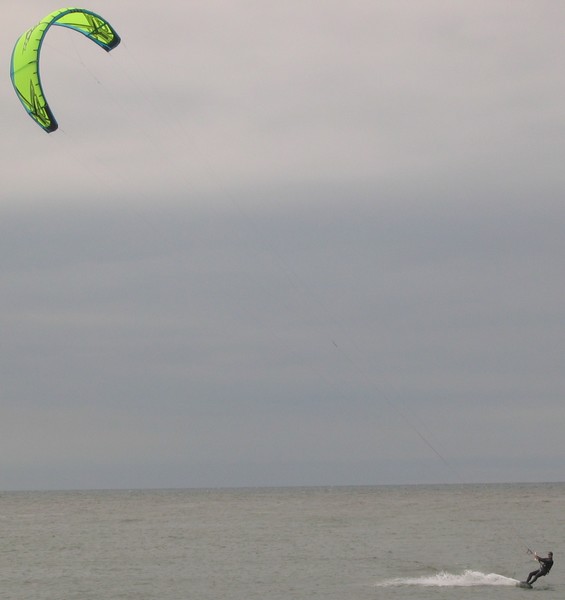
And of course, I’ll throw in the odd comment to let you know how things are going here in this new world I’ve recently landed in. Like my trip to the grey and windswept Lake Michigan at the weekend – I’m going to have to look into this kite-surfing stuff…

kitesurfer

MSU arrival

So here I am in sunny East Lansing, settling into my new office at the Center for System Integration & Sustainability at MSU. As you’d expect It’s pretty much been all admin thus far, but I’m beginning to find my way around and the first real meeting in the job tomorrow should help me get to grips with the task in hand – a project to integrate ecology and economics by developing a systems model of a managed forest landscape in Michigan’s Upper Peninsula that has been experiencing low tree regeneration due to overabundant deer, and declines in habitat for songbirds of conservation concern due to deer impacts and timber harvest.

Things are pretty crazy right now as you might expect having moved to a new job in a new country so I haven’t got much time to say much else right now. Rest assured I’ll keep you up-to-date on the progress of the project in the future. In the meantime why not go and check out some of the excellent articles highlighted in the fifth edition of Oekologie, this month hosted by Jeremy at The Voltage Gate.

PhD pass!

After a gruelling three-and-a-half hour examination yesterday, my examiners Prof. Keith Richards and Prof. Eric Lambin are satisfied that I should be awarded the degree of PhD, subject to three minor amendments!

Thanks to everyone that helped me celebrate in London last night. Also, thanks to all those that helped me along the way on my PhD journey: George, Raul, David, John, David, Bruce, Shatish, Margaret, Rob, Alison, Isobel, Erin, Kat, Andreas, Ben, Chris, Gareth, Isobel, Helen, Nick, Pete, Chris, Mark, Laura, Jamie, Helen, Neil, Nicky, Javier, Livs, Mum, Dad, Michael and Mark… and anyone else I’ve forgotten! Stay in touch everyone.

I’m off across the pond to start my postdoc at MSU tomorrow. Eight great years in London at King’s over, hopefully many more to come elsewhere…

Agent-Based Modelling for Interdisciplinary Geographical Enquiry

Bruce Rhoads argued that;

“The time has come for geography to fulfil its potential by adopting a position of intellectual leadership in the realm of interconnections between human and biophysical systems.”

Many areas of scientific endeavour are currently attempting to do the same and interdisciplinarity has become a big buzzword. Modelling has become a common tool for this interdisciplinary study (for example ecological-economic models), with several different approaches available. Increases in computing power and the arrival of object-oriented programming have led to the rise of agent-based modelling (also termed individual-based and discrete element).

In their latest paper in Geoforum, Bithell et al. propose this form of modelling, with its “rich diversity of approaches”, as an opportune way to explore the interactions of social and environmental processes in Geography. The authors illustrate the potential of this form of modelling by providing outlines of individual-based models from hydrology, geomorphology, ecology and land-use change (the latter of which I have tried to turn my hand to). The advantages of agent-based modelling, the authors suggest, include the ability to represent

  1. agents as embedded within their environment,
  2. agents as able to perceive both their internal state and the state of their environment
  3. agents that may interact with one another in a non-homogeneous manner
  4. agents that can take action to change both their relationships with other agents and their environment
  5. agents that can retain a ‘memory’ of a history of past events.

However the development of these representation can be a challenging task as I found during my PhD modelling exploits, and requires a ‘diversity of resources’. When representing human agents these resources include past population censuses, surveys and interviews of contemporary populations, and theoretical understanding of social, cultural and economic behaviour from the literature. In my modelling of a contemporary population I used interviews and theoretical understanding from the literature and found that, whilst more resource intensive, actually going to speak with those being represented in the model was by far more useful (and actually revealed the deficiencies of accepted theories).

In their discussion, Bithell et al. consider the problems of representing social structures within and an individual-based model suggesting that;

“simulation of social structure may be a case of equipping model agents with the right set of tools to allow perception of, and interaction with, dynamic structures both social and environmental at scales much larger than individual agents”.

Thus, the suggestion is that individually-based models of this type may need some form of hierarchical representation.

Importantly I think, the authors also briefly highlight the reflexive nature of agent-based models of human populations. This reflexivity occurs of the model is embedded within the society which it represents, thus potentially modifying the structure of system it represents. This situation has parallels with Hacking’s ‘looping effect’ that I’ll write about more another time. Bithell et al. suggest that this reflexive nature may, in the end, limit the questions that such models can hope meaningfully address. However, this does not prevent them from concluding;

“The complex intertwined networks of physical, ecological and social systems that govern human attachment to, and exploitation of, particular places (including, perhaps, the Earth itself) may seem an intractable problem to study, but these methods have the potential to throw some light on the obscurity; and, indeed, to permit geographers to renew their exploration of space–time geographies.”