golden valley


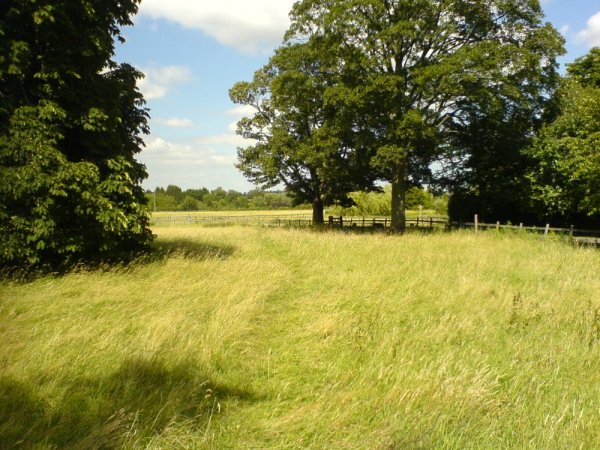
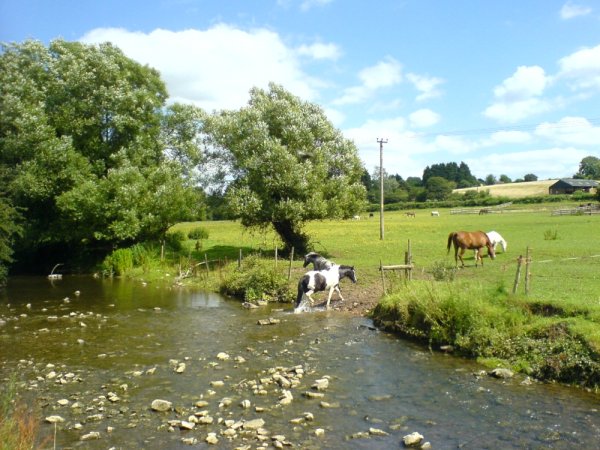
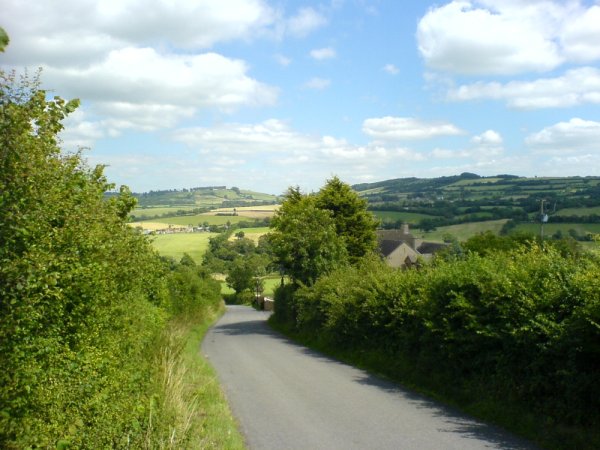
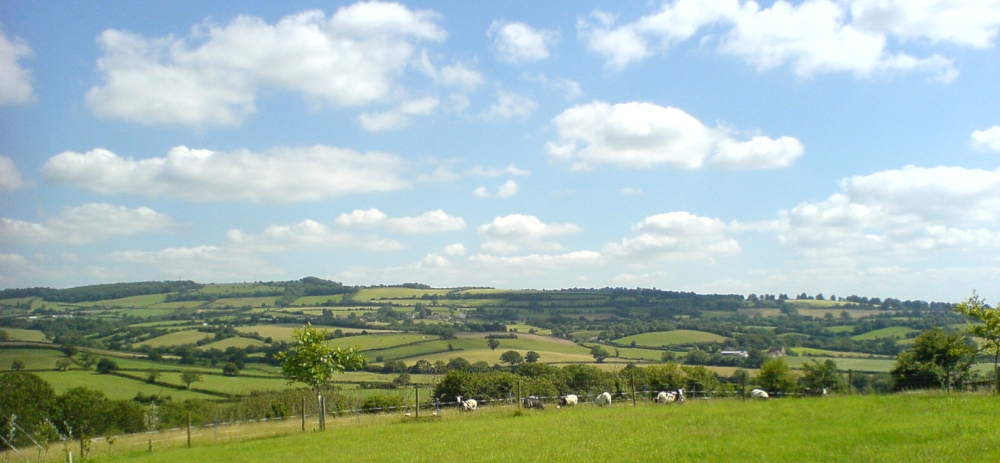
Yesterday’s post got me thinking I should post a few more pics every-now-and-then (especially until I get the photos page of the website sorted). I took these in July whilst out running in South Gloucestershire. They got critical claim from someone in the media when I sent them out by email:

“…almost as if you’d found Constable’s digital camera lying there in the ditch and sent us a few of the sunny ones”.


photoBlogs

I’ve just discovered a couple of photoBlog directories:


Check them out – there are some cool sites out there. I’ve linked to a few of my newly found favourites.

Fanning the Flames

Two articles caught my eye today, (one in Science and the other in PNAS) both suggesting future climates are going to send the world up in flames (or drown it in seawater, or starve it of rainwater).

Westerling et al. find that changes in the timing of snowpack melt in the mountains of the western US, due to changes in climate, has led to an increased number of wildfires and a higher large-fire frequency across the period 1970 – 2003. They suggest this is due to a longer fire season (i.e. spring snow-melt is occuring earler in the year and the onset of winter freezing is occurring later) and that, generally, wildfire regimes at broad scales across this region are more senstive to climate change than human land-use histories.

I find this interesting for two reasons:

  1. In work I’ve done with others we found that for a similar time period (1970 – 2000) and across similar broad space scales there was no significant change in the frequency-area distribution of wildfire through time (i.e. decadal scale). I’d like to extend on this empirical work and examine causal factors as Westerling et al. have
  2. I plan to examine the influence of both land-use and climate change on wildfire regimes using the simulation model I’m currently working; it will be interesting to see which I find is more important…

Today I was also thinking about the importance of vegetation flammability on the frequency-area scaling of wildfires in a region. Which is most important;

  1. total flammability of all vegetation in a region (related to broad scale climate)
  2. distributed of risk between different vegetation species (composition of the landscape)
  3. spatial distribution of risk across a landscape (configuration of the landscape)?

Something to examine with a CA model in the future maybe…

Fire Ignition by Arson

It seems many of the fires that have been burning in Spain recently have been caused by arson. Unfortunately this isn’t uncommon in Spain (or the Med as a whole) where over 95% of fires are human-caused (indirectly or directly).

So, how do we account for this in any model of wildfire regimes? Regarding the location of ignition, is arson more likely near or far from other human activity? What is the frequency of arson ignitions in a region linked to? Economic conditions? High levels of land tenure fragmentation (and therefore more borders across which farmers might conflict)?

As always there’s much work to do on these questions. In large part, accurate assessment of arson ignitions is likely to be dependent upon psychological understanding as much as anything else. For me, I’ll concentrate on the potential influence of increased tourism in rural areas and the consequent ‘accidental’ ignitions.

More fire pictures

Update: More comments on this blog post have been posted here

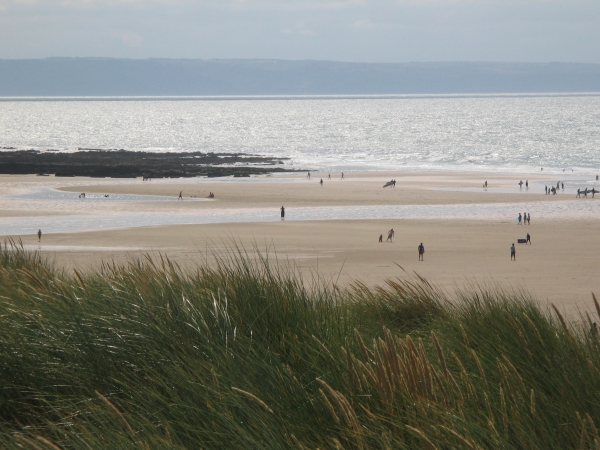
the devon seaside


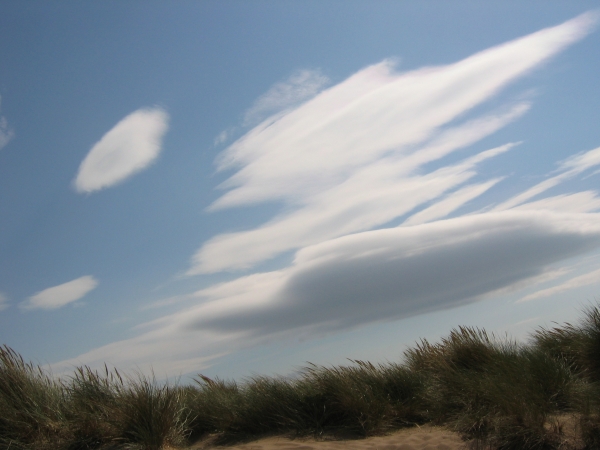
Went to the Devon seaside to go surfing today. Proper surfing on waves propagated through water, not the ususal electronic kind. Not much surf though. Lots of wind. Cool clouds too.

Landscape Influences Human Social Interaction

Scientific American: Landscape Influences Human Social Interaction

Thay know all about this in Spain. One of the presentations at the THEMES Summer School I was at in June was all about the current problems in the Barcelona suburbs as people decide they want nice green lawns like they see on Desperate Housewives.

Domene E., Sauri D., Parés M. 2005, ‘Urbanization and Sustainable
Resource Use: The Case of Garden Watering in the Metropolitan Region of Barcelona’,
Urban Geography, Vol.26, Number 6, pp.520-535.

So maybe it’s “natural” for us to want to live in “unnatural” surroundings…

dreaming code

George said it would happen. Last week I woke up one morning and realised I’d been dreaming code. I can’t say whether I was dreaming in code, or dreaming about code. Hard to tell the difference. I’m not very good at remembering what happens in my dreams – other people seem to be quite good at it though. Either way, it was a mixture of C++ and HTML. A mixture of simulation model and website I guess.

This reminded me of the title of a book that inspired a hollywood movie. “Do Androids Dream of Electric Sheep?” is apparently quite different from the movie Blade Runner, but I haven’t time for that right now so had to settle with watching the director’s cut. No time for post-modernism here (apparently the movie is, like, totally post-modern. I’ll leave Post-Normal Science to another blog) I’ll concentrate on some musings arising from my late night veiwing.

What’s the difference between a dream and a memory?” Dreams can feel immensly real, more real than memories I’d argue. They can feel so real you wake up in a cold sweat. Once you’re awake you realise it’s a dream and remember that bad dreams can happen sometimes and have happened before (but what about if you’re still asleep eh? That film Existenz). So you disregard the dream, relying on your memory that ‘it’s only a dream’. But if the dream can feel more real, why isn’t it trusted as much as the memory? Because we were unconscious when we had the dream? It wasn’t ‘real’?

So how ‘real’ are memories? What’s the relationship between the memory when it happened to the memory when it’s remembered? How has it changed? It can’t be exactly the same memory surely? I’m sure there’s a ton of literature out there on the relationship of dreams, reality, memory but I don’t know anything about that.

What I’m thinking about is the reliability of memories. We use memories to make decisions everyday. We use our memories of the past to make decisions now about the future. For someone trying to understand and simulate the decision-making process, this is quite an interesting question. Do we have some built-in understanding that sits with a memory giving us an idea about how ‘good’ (accurate) it is? If it feels vague, less vivid, if it feels less real, (if it feels less ‘real’ like a dream feels ‘real’) then this it’s not as reliable? Or is it about repetition – if we drive the same route to work everyday we remember it better than one we don’t drive often (but what about the details of that daily journey?).

Anyway, I think that’s all a little too detailed for me. It’s something interesting to think about and seemingly a popular topic for movie-makers. This guy Michel Gondry seems quite interested. Eternal Sunshine of the Spotless Mind was good – memories are more than just in your head, they’re part of you, they and the experiences that produced them make you who you are and that can’t be ignored. He’s got a new one out soon – The Science of Sleep. Looks quite fun.

I doubt it will help answer any of my questions though. I’m not going to be able to represent memories as a part of the decision-making process in my simulation model. I reckon it would be pretty ambitious for anyone to try that for a while. I’ll stick with some more general observations and mechanisms and keep dreaming code for a while longer.

[PS BAWA 1 – 3 Warmley Saints. Millington opened his scoring account in the first pre-season friendly today. A glorious 1 yard tap in, steaming in from central midfield, after the ‘keeper fumbled.]

RGS Programme

The programme for this year’s RGS-IBG Annual Conference was published today. I’m presenting two papers:

  1. ‘A simulation model of vegetation dynamics and
    wildfire for a Mediterranean landscape’ in PGF & QMRG Session ‘Postgraduate research in quantitative geography‘, 9am Friday 1st September
  2. ‘Modelling Feedbacks between land-use decision-making and ecological processes in a Mediterranean landscape‘ in QMRG Session ‘Social simulation & modelling complexity’, 2pm Friday 1st September

Crisis Relief

In the midst of writing a PhD thesis crises of confidence are like those Routemaster buses I was talking about the other day (but on a different temporal scale); days and weeks without a worry and then a couple come along on the same day. Sometimes the end feels infintely far away. Today has been such a day.

However, I’ve found by writing down my specific aims and objectives and then reviewing my progress toward them I can calm myself down before any lasting damage is done. So here’s what I wrote today:

Aim

  1. Examine the impacts of human land use/cover change upon wildfire regimes in a Mediterranean landscape
  2. Explore and evaluate novel methods to ‘validate’ simulation models (and processes of modelling) of environmental change considering human activity

Objectives
To achieve aim i): Develop a spatially-explicit computer simulation model to examine:

  1. impacts of change in land use/cover configuration (specifically fragmentation) on future wildfire regime (spread component)
  2. impacts of change in vegetation (land cover) composition on future wildfire regime (spread and ignition risk components)
  3. impacts of change in human population (size and ‘type’ of inhabitant) on future wildfire regime (ignition risk component)

To achieve aim ii):

  1. Explore ways of using local stakeholder input to ‘validate’ (or assess the ‘warrantability’ of) the construction of the model (emphasis on the ‘realism’ of the model rather than dynamics
  2. Discuss potential uses of narrative approaches to present processes of model construction and interpretation of results
  3. Examine use of ‘table of inductions’ as proposed by W. Whewell
  4. Think about discussion of potential of online tools for collaborative/participatory approaches to environmental modelling

Ahhhh. That’s better…

(And England won the cricket! GET IN!)