Plant Now and Use Sustainably

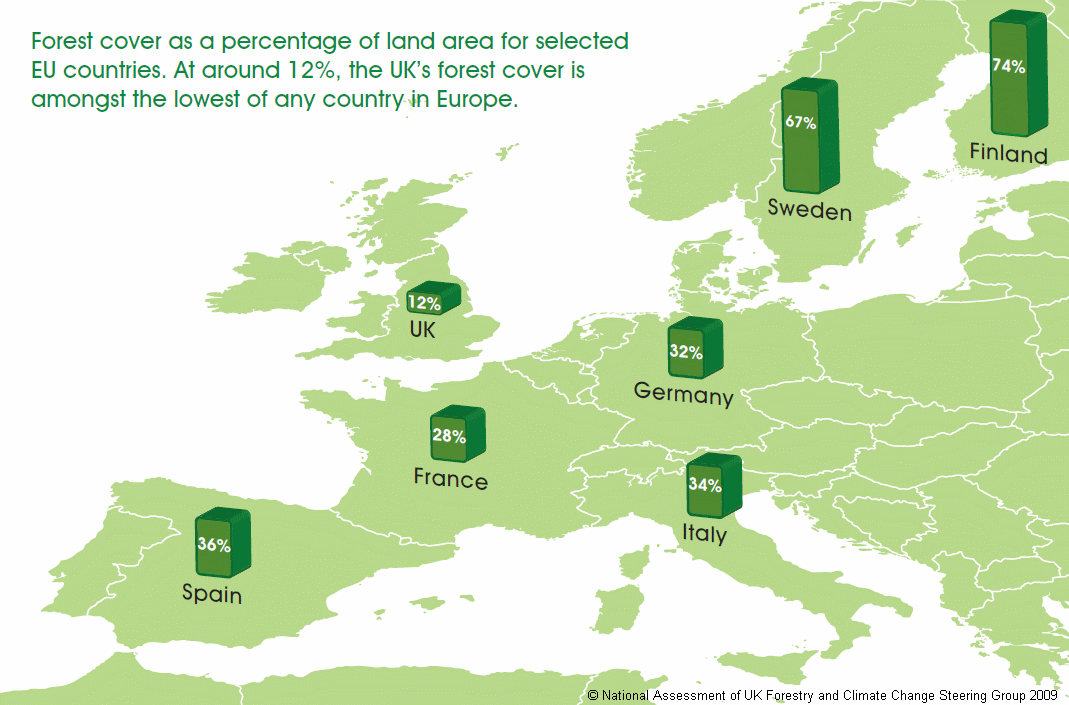
In the climate change debate there’s been a lot of talk about current Amazonian rainforest deforestation, but I’ve heard much less about the role of the UK’s forests for carbon sequestration. Given the relative size of the UK to the Amazonian rainforest that’s not so surprising – The Nature Conservancy suggests the area of rainforest cut down each year (20 million hectares) is the same as the combined area of England, Scotland and Wales. The estimated 5000 years it took [.pdf] to go from 75% of the UK covered by forests and woodlands to the current 12% just doesn’t compare.


Recently, however, the case been made for increasing UK forest and woodland cover as a form of climate change mitigation. This summer the UK Low Carbon Transition Plan identified woodland creation as a cost-effective way of mitigating climate change and recognised the importance of supporting tree-planting initiatives. More recently, the National Assessment of UK Forestry and Climate Change Steering Group has provided its response to the IPCC Fourth Assessment Report and argues there is a clear need for more woodlands.


One of the main findings of this initial assessment was that an increase in woodland area of 23,000 ha per year over the next 40 years could abate 10% of UK 2050 greenhouse gas emissions. With echos of the recommendation from the Stern Review on the Economics of Climate Change to ‘Act now or pay later’, the key message from this assessment is ‘Plant now and use sustainably’. The long maturation times of forest systems means that it may take take 50–100 years for actions to pay off.

Being such a long-standing investment it’s vital that the benefits of planted woodlands and forests are not outweighed by negative impacts on biodiversity, food security, landscape and water supply. From this stand-point there is much to be done and the assessment recommends that “further scientific and socio-economic analysis is required to enable the UK to achieve the full [climate] adaptation and mitigation potential of forestry” and that “clear, robust, research programmes will be needed to underpin the changes of forestry policy and practice which are required to meet the new and challenging circumstances”.

A question that immediately springs to my mind is where these woodlands should be placed to maximise their carbon sequestration payoff while minimising negative impacts on other aspects of the landscape. For example, if arable agricultural land is to be converted, how will biodiversity be affected by the removal of hedgerows? What would this conversion of agricultural land mean for local economies? Which species will benefit in terms of habitat connectivity and which will lose out? Addressing questions like these will be important as forest policy moves toward returning UK forest cover area near levels seen elsewhere in Europe.

Initial Michigan Forest Simulation Output

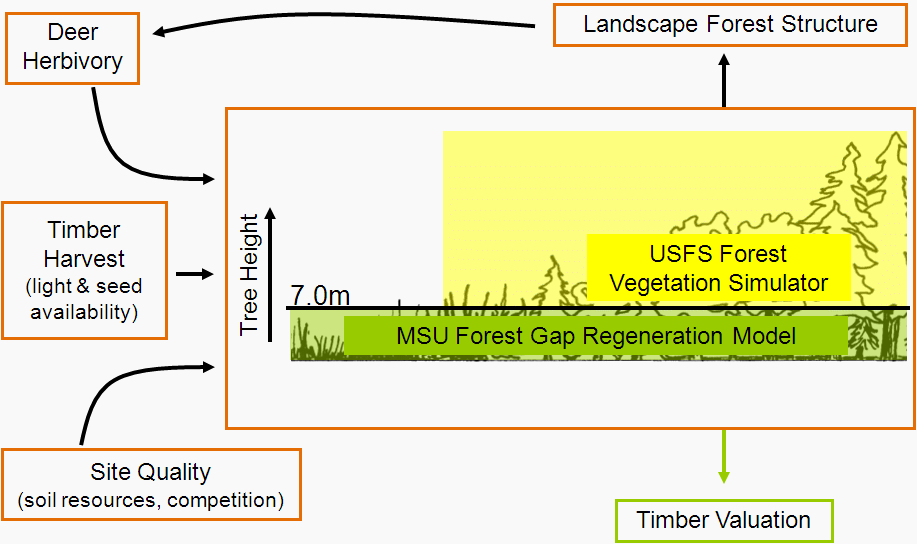
It’s taken a while but finally the model that I came to Michigan State to develop is producing what seems to be sensible output. Just recently we’ve brought all the analyses on the data that were collected in the field into a coherent whole. We’ll use this integrated model to investigate best approaches for forest and wildlife management to ensure ecological and economic sustainability. This post is a quick overview of what we’ve got at the moment and where we might take it. The image below provides a simplified view of the relationship of the primary components the model considers (a more detailed diagram is here).


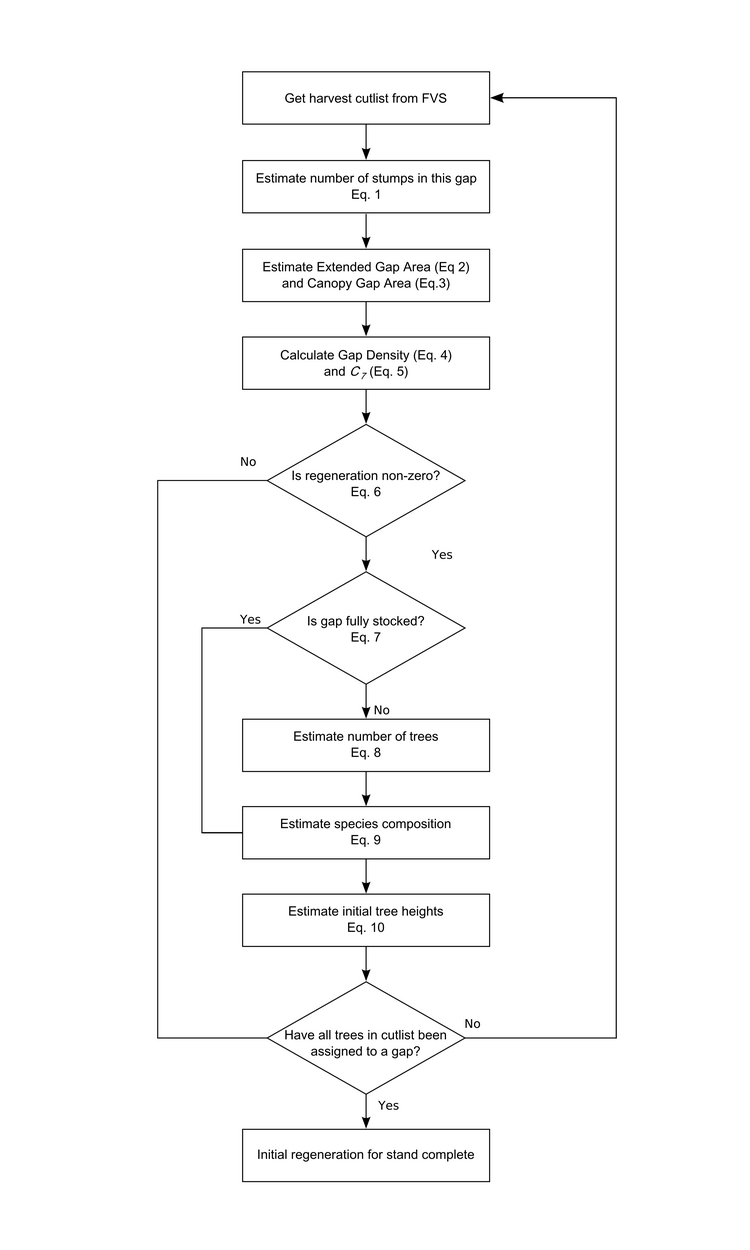
The main model components I’ve been working on are the deer distribution, forest gap regeneration and tree growth and harvest sub-models. Right now we’re still in the model testing and verification stage but soon we hope to be able start putting it to use. Here’s a flow chart representing the current sequence of model execution (click for larger image):


As I’ve posted several times about the deer distribution modelling (here, here, and here for example) and because the integration of FVS with our analyses is more a technical than scientific issue, I’ll focus on the forest gap regeneration sub-model.

Most of the forest gap regeneration analyses used the data Megan Matonis collected during her two summers in the field (i.e., forest). During her fieldwork Megan measured gap and tree regeneration attributes such as gap size, soil and moisture regime, time since harvest, deer density, and sapling heights, density and species composition. Megan is writing up her thesis right now but we’ve also managed to find time to do some extra analyses on her data for the gap regeneration sub-model. Here’s the flow chart representing the model sequence to estimate initial regeneration in gaps created by a selection harvest in a forest stand (click for larger image):


In our gap regeneration sub-model we take a probabilistic approach to estimate the number and species of the first trees to reach 7m (this is the height at which we pass the trees to FVS to grow). The interesting equations for this are Eqs. 6 – 9 as they are responsible for estimating regeneration stocking (i.e. number of trees that regenerate) and the species composition of the regenerating trees. Through time the effects of the results of these equations will drive future forest composition and structure and the amount of standing timber available for harvest.

The probability that any trees regenerate in a gap is modelled using a generalized linear mixed model with a stand-level random intercept drawn from a normal distribution. The probability is a function of canopy gap area and deer browse category (high or low; calculated as a function of deer density in the stand).

If there are some regenerating trees in the gap, we use a logistic regression to calculate the probability that the gap contains as many (or more) trees as could fit in the gap when all the trees are 7m (and is therefore ‘fully stocked’). The probability is a function of canopy openness (calculated as a function of canopy gap area), soil moisture and nutrient conditions and deer density. If the gap is not fully stocked we sample the number of trees using from a uniform distribution.

Finally, we assign each tree to a species by estimating the relative species composition of the gap. We do this by assuming there are four possible species mixes (derived from our empirical data) and we use a logistic regression to calculate the probability that the gap has each of these four mixes. The probability of each mix is a function of soil moisture and nutrient conditions, canopy gap area, and stand-level basal area of Sugar Maple Ironwood. Currently we have parameterised the model to represent five species (Sugar Maple, Red Maple, White Ash, Black Cherry and Ironwood).

As the flow chart suggests, there is a little more to it than these three equations alone but hopefully this gives you a general idea about how we’ve approached this and what the important variables are (look out for publications in the future with all the gory details). For example, at subsequent time-steps in the simulation model we grow the regenerating trees until they reach 7m and also represent the coalescence of the canopy gaps. I haven’t integrated the economic sub-model into the program yet but that’s the next step.

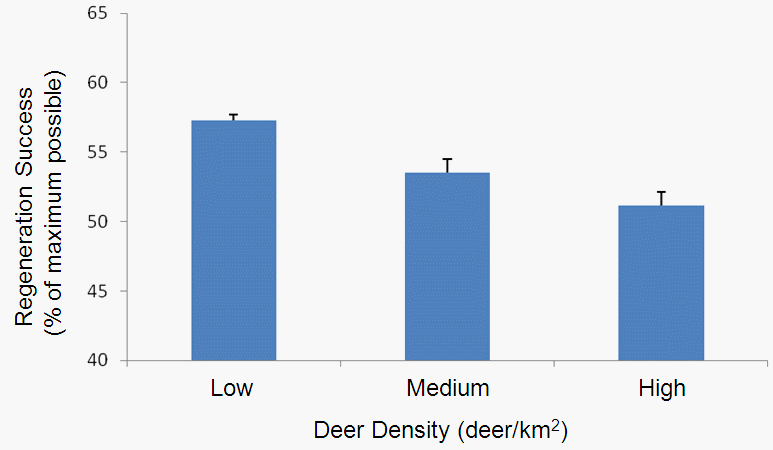
So what can we use the model for? One question we might use the model to address is, ‘how does change in the deer population influence northern hardwood regeneration, timber revenue and deer hunting value?’ For example, in one set of initial model runs I varied the deer population to test how it affects regeneration success (defined as the number of trees that regenerate as a percentage of the maximum possible). Here’s a plot that shows how regeneration success decreases with increasing deer population (as we would expect given the model structure):


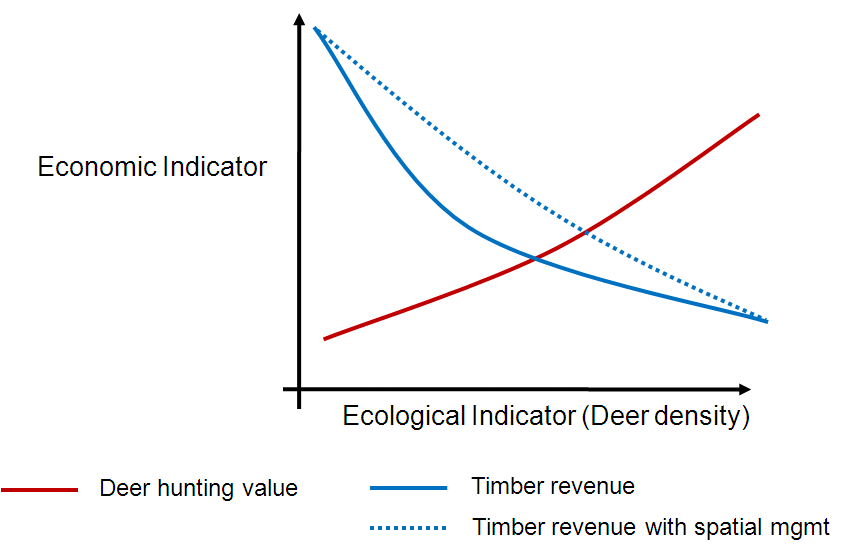
Because we are linking the ecological sub-models with economic analyses we can look at how these differences will play out through time to examine potential tradeoffs between ecological and economic values. For example, because we know (from our analyses) how the spatial arrangement of forest characteristics influences deer distribution we can estimate how different forest management approaches in different locations influences regeneration through time. The idea is that if we can reduce deer numbers in a given area immediately after timber harvest we can give trees a chance to survive and grow above the reach of deer – moving deer spatially does not necessarily mean reducing the total population (which would reduce hunting opportunities, an important part of the local economy). The outcomes may look something like this:


We plan to use our model to examine scenarios like this quantitatively. But first, I need to finish testing the model…

Challenges for Ecological Modelling

Pressing contemporary ecological issues emphasise questions about how we should go about modelling ecological systems. In their preface to the latest volume of Ecological Modelling, Solidoro et al. suggest three main challenges for modellers with regards to applied environmental problems:

“A first challenge is to meet the legitimate expectations of the scientific community and society, providing solid expertise, reliable tools and critical interpretation of model results. Many questions need an answer here and now, and sometime[s] there is no point in saying ‘there are not enough data, information, knowledge’. To ask for more time, or to declare that no rigorous scientific conclusion can be drawn, will simply made those people needing an answer turn and look for someone else – qualified or not – willing to provide a suggestion. We have to be rigorous, to remind of limits and approximations implicit in any model and of uncertainties (and errors) implicit in any prediction. Nevertheless, if a model has to be made and/or used, ‘who if not us’, and ‘when if not now?’

A second challenge is neither generating false expectations, by promising what cannot be achieved, nor permitting others to do that, or to put such expectations on modelling. Within a society which regards magicians more than scientists, sometimes it might seem a good idea to wear a magician hat. However, modellers are not magicians, and models are not crystal bowls. And, once lost, it would be very hard to gain scientific credibility again.

A third point to remember is that the goal is knowledge, and models are only instruments. Even if its role in science is more central than in the past, ecological modelling should keep on staying open to contamination and to interbreeding with other scientific fields. Obviously, this includes confrontation with data and with the knowledge of people who collect them. Surely, it is true that reality is not the data but what data stand for, however experimental observations still remain the only link between theory and reality.”

The first point above is largely consistent with those I highlighted in my recent book review for Landscape Ecology (now in print); when data and understanding are sparse, modellers may just need to scale-back their modeling aims and objectives. When faced with pressing environmental issues we may need to settle for models that work – models that we can use to help make decisions rather than those that ‘prove’ (quantitatively) specific aspects of system function or ecological theory. In such a situation it may well be the case that ‘no rigorous scientific conclusion’ can be made in the short-term (when decisions are required) and, as the second point above implies, we shouldn’t try to disguise that. But that doesn’t mean people ‘needing an answer’ should be forced to look elsewhere (unless of course the answer they are looking for is 42).

Rather than focusing on the scientific results (numbers) of the model as a product, modellers in this situation might seek to captialise on the use of the process of modelling as a means to facilitate consensus-building and decision-making by providing a platform for communication about (potentially complex) systems interactions. Alternatively, they may use a model to foster better understanding about potential outcomes by examining how modelled systems behave qualitatively under different scenarios. Accurate quantitative predictions can be very persuasive, but when resources are in short supply we may not have the luxury of being able to produce them.

Solidoro et al. (2009) Challenges for ecological modelling in a changing world: Global Changes, Sustainability and Ecosystem Based Management Ecological Modelling 220(21) 2825-2827 doi:10.1016/j.ecolmodel.2009.08.018

Interdisciplinarity, Sustainability and Critical Realism

I have a new paper to add to my collection of favourites. Hidden in the somewhat obscure Journal of Critical Realism it touches on several issues that I often find myself thinking about and studying: Interdisciplinarity, Ecology and Scientific Theory.

Karl Høyer and Petter Naess also have plenty to say about sustainability, planning and decision-making and, although they use the case of sustainable urban development, much of what they discuss is relevant to broader issues in the study of coupled human and natural systems. Their perspective resonates with my own.

For example, they outline some of the differences between studying open and closed systems (interestingly with reference to some Nordic writers I have not previously encountered);

… The principle of repetitiveness is crucial in these kinds of [reductionist] science [e.g. atomic physics, chemistry] and their related technologies. But such repetitiveness only takes place in closed systems manipulated by humans, as in laboratories. We will never find it in nature, as strongly emphasised by both Kvaløy and Hägerstrand within the Nordic school. In nature there are always open, complex systems, continuously changing with time. This understanding is in line with key tenets of critical realism. Many of our most serious ecological problems can be explained this way: technologies, their products and substances, developed and tested in closed systems under artificial conditions that generate the illusion of generalised repetitiveness, are released in the real nature of open systems and non-existing repetitiveness. We are always taken by surprise when we experience new, unexpected ecological effects. But this ought not to be surprising at all; under these conditions such effects will necessarily turn up all the time.

At the same time, developing strategies for a sustainable future relies heavily on the possibility of predicting the consequences of alternative solutions with at least some degree of precision. Arguably, a number of socio-technical systems, such as the spatial structures of cities and their relationships with social life and human activities, make up ‘pseudo-closed’ systems where the scope for prediction of outcomes of a proposed intervention is clearly lower than in the closed systems of the experiments of the natural sciences, but nevertheless higher than in entirely open systems. Anticipation of consequences, which is indispensable in planning, is therefore possible and recommendable, although fallible.

The main point of their paper, however, is the important role critical realism [see also] might play as a platform for interdisciplinary research. Although Høyer and Naess do highlight some of the more political reasons for scientific and academic disciplinarity, their main points are philosophical;

…the barriers to interdisciplinary integration may also result from metatheoretical positions explicitly excluding certain types of knowledge and methods necessary for a multidimensional analysis of sustainability policies, or even rejecting the existence of some types of impacts and/or the entities causing these impacts.

These philosophical (metatheoretical) barriers include staunchly positivist and strong social constructionist perspectives;

According to a positivist view, social science research should emulate research within the natural sciences as much as possible. Knowledge based on research where the observations do not lend themselves to mathematical measurement and analysis will then typically be considered less valid and perhaps be dismissed as merely subjective opinions. Needless to say, such a view hardly encourages natural scientists to integrate knowledge based on qualitative social research or from the humanities. Researchers adhering to an empiricist/naive realist metatheory will also tend to dismiss claims of causality in cases where the causal powers do not manifest themselves in strong and regular patterns of events – although such strong regularities are rare in social life.

On the other hand, a strong social constructionist position implies a collapsing of the existence of social objects to the participating agents’ conception or understanding of these objects. …strong social constructionism would typically limit the scope to the cultural processes through which certain phenomena come to be perceived as environmental problems, and neglecting the underlying structural mechanisms creating these phenomena as well as their impacts on the physical environment. At best, strong social constructionism is ambivalent as to whether we can know anything at all about reality beyond the discourses. Such ‘empty realism’, typical of dominant strands of postmodern thought, implies that truth is being completely relativised to discourses on the surface of reality, with the result that one must a priori give up saying anything about what exists outside these discourses. At worst, strong social constructionism may pave the way for the purely idealist view that there is no such reality.

At opposite ends of the positivist-relativist spectrum neither of these perspectives seem to be the most useful for interdisciplinary research. Something that sits between these two extremes – critical realism – might be more useful [I can’t do this next section justice in an abridged version – and this is the main point of the article – so here it is in its entirety];

The above-mentioned examples of shortcomings of reductionist metatheories do not imply that research based on these paradigms is necessarily without value. However, reductionist paradigms tend to function as straitjackets preventing researchers from taking into consideration phenomena and factors of influence not compatible with or ignored in their metatheory. In practice, researchers have often deviated from the limitations prescribed by their espoused metatheoretical positions. Usually, such deviations have tended to improve research rather than the opposite.

However, for interdisciplinary research, there is an obvious need for a more inclusive metatheoretical platform. According to Bhaskar and Danermark, critical realism provides such a platform, as it is ontologically characterised doubly by inclusiveness greater than competing metatheories: it is maximally inclusive in terms of allowing causal powers at different levels of reality to be empirically investigated; and it is maximally inclusive in terms of accommodating insights of other meta-theoretical positions while avoiding their drawbacks.

Arguably, many of the ecologists and ecophilosophers referred to earlier in this paper have implicitly based their work on the same basic assumptions as critical realism. Some critical realist thinkers have also addressed ecological and environmental problems explicitly. Notably, Ted Benton and Peter Dickens have demonstrated the need for an epistemology that recognises social mediation of knowledge but also the social and material dimensions of environmental problems, and how the absence of an interdisciplinary perspective hinders essential understanding of nature/society relationships.

According to critical realism, concrete things or events in open systems must normally be explained ‘in terms of a multiplicity of mechanisms, potentially of radically different kinds (and potentially demarcating the site of distinct disciplines) corresponding to different levels or aspects of reality’. As can be seen from the above, the objects involved in explanations of the (un)sustainability of urban development belong partially to the natural sciences, partially to the social sciences, and are partially of a normative or ethical character. They also belong to different geographical or organisational scales. Thus, similar to (and arguably to an even higher extent than) what Bhaskar and Danermark state about disability research, events and processes influencing the sustainability of urban development must be understood in terms of physical, biological, socioeconomic, cultural and normative kinds of mechanisms, types of contexts and characteristic effects.

According to Bhaskar, social life must be seen in the depiction of human nature as ‘four-planar social being’, which implies that every social event must be understood in terms of four dialectically interdependent planes: (a) material transactions with nature, (b) social interaction between agents, (c) social structure proper, and (d) the stratification of embodied personalities of agents. All these categories of impacts should be addressed in research on sustainable urban development. Impacts along the first dimension, category (a), typically include consequences of urban development for the physical environment. Consequences in terms of changing location of activities and changing travel- ling patterns are examples of impacts within category (b). But this category also includes the social interaction between agents leading to changes in, among others, the spatial and social structures of cities. Relevant mechanisms at the level of social structure proper (category [c]) might include, for exam- ple, impacts of housing market conditions on residential development projects and consequences of residential development projects for the overall urban structure. The stratified personalities of agents (category [d]) include both influences of agents on society and the physical environment and influences of society and the physical environment on the agents. The latter sub-category includes physical impacts of urban development, such as unwholesome noise and air pollution, but also impacts of the way urban planning and decision- making processes are organised, for example, in terms of effects on people’s self esteem, values, opportunities for personal growth and their motivation for participating in democratic processes. The influence of discourses on the population’s beliefs about the changes necessary to bring about sustainable development and the conditions for implementing such changes also belongs to this sub-category. The sub-category of influences of agents on society and the physical environment includes the exercise of power by individual and corporate agents, their participation in political debates, their contribution to knowledge, and their practices in terms of, for example, type and location of residence, mobility, lifestyles more generally, and so on.

Regarding issues of urban sustainability, the categories (a)–(d) are highly interrelated. If this is the case, we are facing what Bhaskar and Danermark characterise as a ‘laminated’ system, in which case explanations involving mechanisms at several or all of these levels could be termed ‘laminated expla- nations’. In such situations, monodisciplinary empirical studies taking into consideration only those factors of influence ‘belonging’ to the researcher’s own discipline run a serious risk of misinterpreting these influences. Examples of such misinterpretations are analyses where increasing car travel in cities is explained purely in terms of prevailing attitudes and lifestyles, addressing neither political-economic structures contributing to consumerism and car-oriented attitudes, nor spatial-structural patterns creating increased needs for individual motorised travel.

Moreover, the different strata of reality and their related mechanisms (that is, physical, biological, socio-economic, cultural and normative kinds of mechanisms) involved in urban development cannot be understood only in terms of categories (a)–(d) above. They are also situated in macroscopic (or overlying) and less macroscopic (or underlying) kinds of structures or mechanisms. For research into sustainable urban development issues, such scale-awareness is crucial. Much of the disagreement between proponents of the ‘green’ and the ‘compact’ models of environmentally sustainable urban development can probably be attributed to their focus on problems and challenges at different geographical scales: whereas the ‘compact city’ model has focused in particular on the impacts of urban development on the surrounding environment (ranging from the nearest countryside to the global level), proponents of the ‘green city’ model have mainly been concerned about the environment within the city itself. A truly environmentally sustainable urban development would require an integration of elements both from the former ‘city within the ecology’ and the latter ‘ecology within the city’ approaches. Similarly, analyses of social aspects of sustainable development need to include both local and global effects, and combine an understanding of practices within particular groups with an analysis of how different measures and traits of development affect the distribution of benefits and burdens across groups.

Acknowledging that reality consists of different strata, that multiple causes are usually influencing events and situations in open systems, and that a pluralism of research methods is recommended as long as they take the ontological status of the research object into due consideration, critical realism appears to be particularly well suited as a metatheoretical platform for interdisciplinary research. This applies not least to research into urban sustainability issues where, as has been illustrated above, other metatheoretical positions tend to limit the scope of analysis in such a way that sub-optimal policies within a particular aspect of sustainability are encouraged at the cost of policies addressing the challenges of sustainable urban development in a comprehensive way.

In conclusion; critical realism can play a very important role as an underlabourer of interdisciplinarity, with its maximal inclusiveness both in terms of allowing causal powers at different levels of reality to be empirically investigated and in terms of accommodating insights of other meta-theoretical positions while avoiding their drawbacks

I’m going to have to spend some time thinking about this but there seems to be plenty to get ones teeth into here with regards the study of coupled human and natural systems and the use of agent-based modelling approaches. For example, agent-based modelling seems to offer a means to represent Bhaskar‘s four planes but there are plenty of questions about how to do this appropriately. I also need to think more carefully about how these four planes are manifested in the systems I study. Generally however, it seems that critical realism offers a useful foundation from which to build interdisciplinary studies of the interaction of humans and their environment for the exploration of potential pathways to ensure sustainable landscapes.

Reference
Høyer, K.G and Naess, P. 2008 Interdisciplinarity, ecology and scientific theory: The case of sustainable urban development Journal of Critical Realism 7(2) 179-207 doi: 10.1558/jocr.v7i2.179

ESA 2009 Agenda

I’ve just arrived in Albuquerque, New Mexico, for the Ecological Society of American meeting. Before heading out to explore town I’ve been putting the final touches to my presentation (Monday, 4.40pm, Sendero Ballroom III) and working out what I’m going to do this week. Here’s what I think I’ll be doing:

i) Importantly, on Monday at 2.30 I’ll be going to support Megan Matonis as she talks about the work she’s been doing on our UP project: ‘Gap-, stand-, and landscape-scale factors affecting tree regeneration in harvest gaps’.

ii) Monday morning I think I’ll attend the special session ‘What is Sustainability Science and Can It Make Us Sustainable?’ [“What is sustainability science and can it make us sustainable? If sustainability science requires interdisciplinarity, how do these diverse disciplines integrate the insights that each brings? How do we reconcile differing basic assumptions to solve an urgent and global problem? How do we ensure that research outputs of ecology and other disciplines lead toward sustainability?”]

iii) Tuesday, amongst other things, I’ll check out the symposium entitled; ‘Global Sustainability in the Face of Uncertainty: How to More Effectively Translate Ecological Knowledge to Policy Makers, Managers, and the Public’. [“The basic nature of science, as well as life, is that there will always be uncertainty. We define uncertainty as a situation in which a decision-maker (scientist, manager, or policy maker) has neither certainty nor reasonable probability estimates available to make a decision. In ecological science we have the added burden of dealing with the inherent complexity of ecological systems. In addition, ecological systems are greatly affected by chance events, further muddying our ability to make predictions based on empirical data. Therefore, one of the most difficult aspects of translating ecological and environmental science into policy is the uncertainty that bounds the interpretation of scientific results.”]

iv) Wednesday I plan on attending the symposium ‘What Should Ecology Education Look Like in the Year 2020?’ [“How should ecology education be structured to meet the needs of the next generation, and to ensure that Americans prioritize sustainability and sound ecological stewardship in their actions? What balance between virtual and hands-on ecology should be taught in a cutting-edge ecological curriculum? How can we tackle the creation versus evolution controversy that is gaining momentum?”]

v) Being a geographer (amongst other things) on Thursday I’d like to participate in the discussion regarding place; ‘The Ecology of Place: Charting a Course for Understanding the Planet’ [“The diversity, complexity, and contingency of ecological systems both bless and challenge ecologists. They bless us with beauty and endless fascination; our subject is never boring. But they also challenge us with a difficult task: to develop general and useful understanding even though the outcomes of our studies typically depend on a host of factors unique to the focal system as well as the particular location and time of the study. Ecologists address this central methodological dilemma in various ways. … Given the pressing environmental challenges facing the planet, it is critical that ecologists develop an arsenal of effective strategies for generating knowledge useful for solving real-world problems. This symposium inaugurates discussion of one such strategy – The Ecology of Place.”]

vi) Also on Thursday I think I’ll see what’s going on in the session; ‘Transcending Tradition to Understand and Model Complex Interactions in Ecology’. [“Ecology intersects with the study of complex systems, and our toolboxes must grow to meet interdisciplinary needs.”]

vii) Not sure about Friday yet…

New Models for Ecosystems Dynamics and Restoration

Recently I’ve been working on a review of the latest contribution to The Science and Practice of Ecological Restoration book series, entitled New Models for Ecosystems Dynamics and Restoration (edited by Hobbs and Suding). Here’s an outline of what I’ve been reading and thinking about – the formal review will appear in print in Landscape Ecology sometime in the future.

The Society for Ecological Restoration defines ecological restoration as an “intentional activity that initiates or accelerates the recovery of an ecosystem with respect to its health, integrity and sustainability”. Restoration ecology is a relatively young academic field of study that addresses problems faced by land managers and other restoration practitioners. Young et al. suggest that models of succession, community assembly and state transitions are an important component of ecological restoration, and that seed and recruitment limitation, soil processes and diversity-function relationships are also important.

The ‘new’ models referenced in the title of the book are ‘threshold’ or ‘regime shift’ ecosystem models. These models are ‘new’, the editors argue, in the sense that they contrast gradual continual models and stochastic models. Gradual continuous models are described as those that assume post-disturbance ecosystem recovery follows a continuous, gradual trajectory and are associated with classical, Clementsian theory that assumes steady, uni-directional change towards some single equilibrium state. Stochastic models assume exogenous drivers dominate the behavior of ecosystems to the extent that non-equilibrium and unstable systems states are the norm. Threshold models assume there are multiple (in contrast to the Clementsian view) stable (in contrast to the stochastic view) ecosystem states and represent changes from one relatively distinct system state to another as the result of small changes in environmental (driving) conditions. Thresholds and regime shifts are important to consider in restoration ecology as there may be thresholds in system states beyond which recovery to the previous (healthy) state is not possible.

Two types of threshold model are considered in New Models;

i) state-and-transition (S-T) models that represent multiple (often qualitative) stable states and the potential transitional relationships between those states (including the rates of transition), and

ii) alternative stable state (ASS) models which are a subset of S-T models and generally represent systems with fewer states and faster transitions (flips) between the alternative states.

For example, S-T models are often used to represent vegetation and land cover dynamics (as I did in the LFSM I developed to examine Mediterranean landscape dynamics), whereas ASS models are more frequently used for aquatic systems (e.g. lake ecosystems) and chemical/nutrient dynamics.

New Models focuses on use of these models in ecological restoration and provides an excellent introduction to key concepts and approaches in this field. Two of the six background chapters in this introduction address models and inference, two introduce transition theory and dynamics in lake and terrestrial ecosystems (respectively), and two discuss issues in social-ecological and rangeland systems. These background chapters are clear and concise, providing accessible and cogent introductions to the systems concepts that arise in the later case studies. The case studies present research and practical examples of threshold models in a range of ecosystems types – from arid, grassland, woodland and savanna ecosystems, though forest and wetland ecosystems, to ‘production landscapes’ (e.g. restoration following mining activities). Although the case study chapters are interesting examples of the current state of the use and practice of threshold modeling for ecological restoration, from my perspective there are certain issues that are insufficiently addressed. Notably, there is limited explicit consideration of spatial interactions or feedbacks between social and ecological systems.

For example, in their background chapter King and Whisenant highlight that many previous studies of thresholds in social-ecological systems have investigated an ecological system driven by a social system, ignoring feedbacks to the social components. Explicitly representing the links between social and ecological components in models does remain a daunting task, and many of the case studies continue in the same vein as the ‘uni-directional’ models King and Whisenant hint at (and I’ve discussed previously). The editors themselves highlight that detailed consideration of social systems is beyond the scope of the book and that such issues are addressed elsewhere (including in other volumes of the Ecological Restoration book series – Aronson et al.). However, representing human-environment feedbacks is becoming increasingly vital to ensure appropriate understanding of many environmental systems and their omission here may prove unsatisfactory to some.

A second shortcoming of the book, from the perspective of a landscape ecologist, is the general lack of consideration for spatial pattern and scaling and their influences on the processes considered in the case studies. In their background chapter on resilience theory and rangelands, Bestelmeyer et al. do highlight the importance of a landscape perspective and considering land as being a ‘state mosaic’, but only a single case study really picks up on these concepts in earnest (Cale and Willoughby). Other case studies do indirectly consider spatial feedbacks and landscape context, but explicit representation of relationships between spatial patterns and ecosystems processes is lacking.

However, these criticisms do need to be considered in light of the objectives of New Models. At the outset, the editors state that the book aims to collectively evaluate threshold modeling approaches as applied to ecological restoration – to examine when and where these models have been used, what evidence is used to derive and apply them, and how effective they are for guiding management. In their synthesis chapter the editors highlight that the models presented in the book have been used heuristically with little testing of their assumptions and ask; “Does this indicate an obvious gap between ecological theory and restoration practice?” For example, in their chapter on conceptual models for Australian wetlands, Sim et al. argue that the primary value of threshold models is to provide a conceptual framework of how ecosystems function relative to a variety of controlling variables. The editors’ suggestion is that restoration practitioners are applying models that work rather than “striving to prove particular elements” (of system function or ecological theory), and that maybe this isn’t such a bad approach given pressing environmental problems.

Potentially, this is a lesson that if landscape ecologists are to provide ecosystem managers and stewards with timely advice they may need to need to scale-back (i.e., reduce the complexity of) their modeling aims and objectives. Alternatively, we could view this situation as an opportunity for landscape ecologists to usefully contribute to advance the field of ecological restoration. Most likely it is indicative that where practical knowledge is needed quickly, simple models using established ecological theory and modelling tools are most useful. But in time, as our theoretical understanding and representation of spatial and human-environment interactions advances, these aspects will be integrated more readily into practical applications of modelling for ecological restoration.

Buy at Amazon

Bayesian Multimodel Inference

The abstract we submitted to the ESA Meeting was accepted a while back. Since we submitted it, Megan and I have been back in the field for some additional data collection and I’ve been doing some new analyses. Some of these new analyses are the result of my attendance at the Bayesian statistics workshop at US-IALE in Snowbird. Since then I’ve been learning more by picking the brain of a former advisor, George Perry, and doing a fair bit of reading (reading list with links at bottom). And of course, using my own data has helped a lot.

One of the main questions I’m facing, as many ecologists often do, is “which variables should be in my regression model?” This question lies at the core of model inference and assumes that it is appropriate to infer ecological process from data by searching for the single model that represents reality most accurately. However, as Link and Barker put it:

“It would be nice if there were no uncertainty about models. In such an ideal world, a single model would be available; the data analyst would be in the enviable position of having only to choose the best method for fitting model parameters based on the available data. The choice would be completely determined by the statistician’s theory, a theory which regards the model as exact depiction of the process that generated the data.

“It is clearly wrong to use the data to choose a model and then to conduct subsequent inference as though the selected model were chosen a priori: to do so is to fail to acknowledge the uncertainties present in the model selection process, and to incestuously use the data for two purposes.”

Thus, it usually more appropriate to undertake a process of multi-model inference and search for the ‘best’ possible model (given current data) rather than a single ‘true’ model. I’ve been looking into the use of Bayesian Model Averaging to address this issue. Bayesian approaches take prior knowledge (i.e., a probability distribution) and data about a system and combine them with a model to produce posterior knowledge (i.e., another probability distribution). This approach differs from the frequentist approach to statistics which calculates probabilities based on the idea of a (hypothetical) long-run of outcomes from a sequence of repeated experiments.

For example, estimating the parameters of a linear regression model using a Bayesian approach differs from a frequentist ordinary least squares (OLS) approach in two ways:

i) a Bayesian approach considers the parameter to be a random variable that might take a range of values each with a given probability, rather than being fixed with unknown probability,

ii) a Bayesian approach conditions the parameter estimate probability on the sample data at hand and not as the result of a set of multiple hypothetical independent samples (as the OLS approach does).

If there is little prior information available about the phenomena being modelled, ‘uninformative priors’ (e.g., a normal distribution with a relatively large variance about a mean of zero) can be used. In this case, the parameter estimates produced by the Bayesian linear regression will be very similar to those produced by regular OLS regression. The difference is in the error estimates and what they represent; a 95% confidence interval produced by a Bayesian analysis specifies that there is a 95% chance that the true value is within that interval given the data analyzed, whereas a 95% confidence interval from a frequentist (OLS) approach implies that if (hypothetical) data were sampled a large number of times, the parameter estimate for those samples would lie within that interval 95% of those times.

There has been debate recently in ecological circles about the merits of Bayesian versus frequentist approaches. Whilst some have strongly advocated the use of Bayesian approaches (e.g., McCarthy 2007), others have suggested a more pluralistic approach (e.g., Stephens et al. 2005). One of the main concerns with the approach of frequentist statistics is related to a broader criticism of the abuse and misuse of the P-value. For example, in linear regression models P-values are often used to examine the hypothesis that the slope of a regression line is not equal to zero (by rejecting the null hypothesis that is equal to zero). Because the slope of a regression line on a two-dimensional plot indicates the rate of change of one measure with respect to the other, a non-zero slope indicates that as one measure changes, so does the other. Consequently it is often inferred that a processes represented by one measure had an effect, or caused, the change in the other). However, as Ben Bolker points out in his excellent book:

“…common sense tells us that the null hypothesis must be false, because [the slope] can’t be exactly zero [due to the inherent variation and error in our data] — which makes the p value into a statement about whether we have enough data to detect a non-zero slope, rather than about whether the slope is actually different from zero.”

This is not to say there’s isn’t a place for null hypothesis testing using P-values in the frequentist approach. As Stephens et al. argue, “marginalizing the use of null-hypothesis testing, ecologists risk rejecting a powerful, informative and well-established analytical tool.” To the pragmatist, using whatever (statistical) tool available seems eminently more sensible than placing all one’s eggs in one basket. The important point is to try to make sure that the hypotheses one tests with P-values are ecologically meaningful.

Back to Bayesian Model Averaging (BMA). BMA provides a method to account for uncertainty in model structure by calculating (approximate) posterior probabilities for each possible model (i.e., combination of variables) that could be constructed from a set of independent variables (see Adrian Raftery’s webpage for details and examples of BMA implementation). The ‘model set’ is all possible combinations of variables (equal to 2n models, where n is the number of variables in the set). The important thing to remember with these probabilities is that it is the probability that the model is the best one from the model set considered – the probability of other models with variables not measured or included in the model set obviously can’t be calculated.

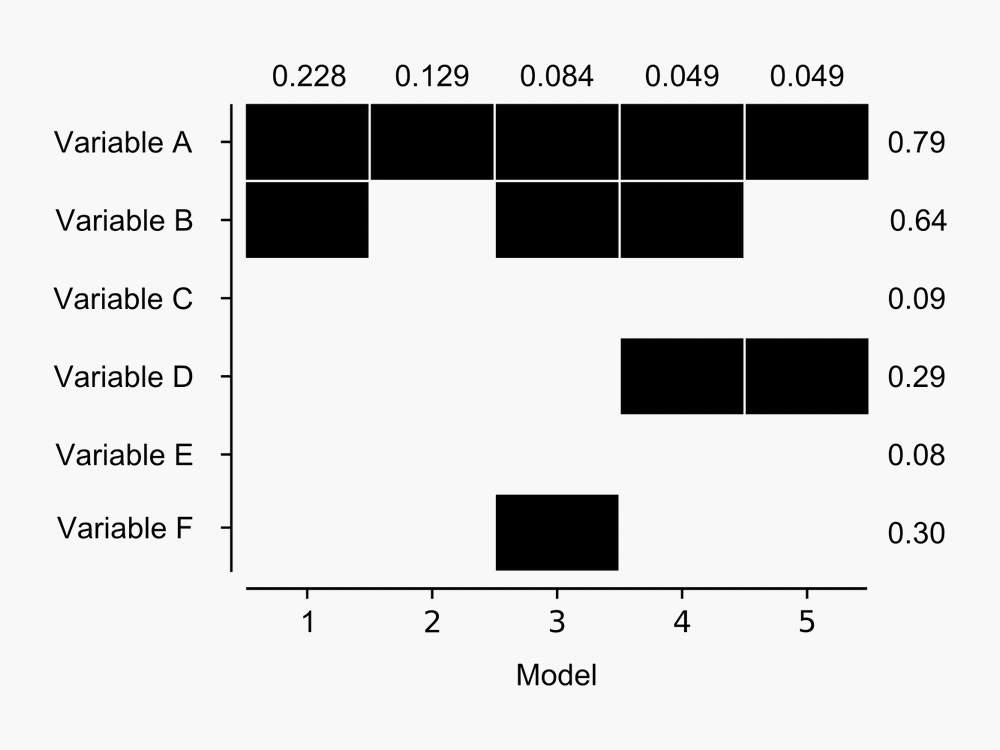
The advantage over other model selection procedures like stepwise regression is that the output provides a measure of the performance of many models, rather than simply providing the single ‘best’ model. For example, here’s a figure I derived from the output BMA provides:

The figure shows BMA results for the five models with highest posterior probability of being the best candidate model from a hypothetical model set. The probability that each model is the best in the model set is shown at top for each model – Model 1 has almost 23% chance that it is the best model given the data available. Dark blocks indicate the corresponding variable (row) is included in a given model – so Model 1 contains variables A and B, whereas Model 2 contains Variable A only. Posterior probabilities of variables being included in the best model (in the model set) are shown to the right of the blocks – as we might expect given that Variable A is present in the five most probable models it has the highest chance of being included in the best model. Click for a larger image.

BMA also provides a posterior probability for each variable being included in the best candidate model. One of the cool things about the variable posterior probability is that it can be used to produce a weighted mean value from all the models for each variable parameter estimate, each with their own Bayesian confidence interval. The weight for each parameter estimate is the probability that variable is present in the ‘best’ model. Thus, the ‘average’ model accounts for uncertainty in variable selection in the best candidate model in the individual parameter estimates.

I’ve been using these approaches to investigate the potential factors influencing local winter white-tailed deer density in in managed forests of Michigan’s Upper Peninsula. One of the most frequently used, and freely available, software packages for Bayesian statistics is WinBUGS. However, because I like to use R I’ve been exploring the packages available in that statistical language environment. Specifically, the BRugs package makes use of many OpenBUGS components (you actually provide R with a script in WinBUGS format to run) and the BMA package provides functionality for model averaging. We’re in the final stages of writing a manuscript incorporating these analyses – once it’s a bit more polished (and submitted) I’ll provide an abstract.

Reading List
Model Inference: Burnham and Anderson 2002, Stephens et al. 2005, Link and Barker 2006, Stephens et al. 2007

Introduction to Bayesian Statistics: Bolker 2007 [webpage with chapter pre-prints and exercises here], McCarthy 2007

Discussion of BMA methods: Hoeting et al. 1999, Adrian Raftery’s Webpage

Examples of BMA application: Wintle et al. 2003, Thomson et al. 2007

Criticisms of Stepwise Regression: James and McCulloch 1990, Whittingham et al. 2006

Developing Sustainable Lifestyles

It can be hard not to abandon hope for a sustainable future when you read about our rapidly growing global population and the hopes of those in the developing world (growing the fastest) to lead more ‘western’ lifestyles. For ‘western’, read ‘consumptive’. Last year Jared Diamond came up with new numbers to make us feel even more hopeless; economically more developed countries are consuming resources and producing waste 32 times faster than less developed countries. That means, Diamond estimates, if everyone on earth were to eat as much meat, drive their cars as far and use electricity as prodigiously as Europeans, Americans and Japanese currently do it would be as if the human population had suddenly ballooned to 72 billion.

In an editorial in the latest issue of Conservation Biology, R. Edward Grumbine and Jianchu Xu use Diamond’s example when discussing the rise of China as a global economic power and consumer and the potential implications for conservation, the environment and the climate debate:

“China’s rapid economic rise has not helped conservation much. The country faces severe environmental challenges as the largest human population in history builds highways, factories, and housing to fully join the modern industrial world. The PRC [People’s Republic of China], however, remains relatively poor. Per capita income in 2007 was a mere one-fifth of the U.S. average; a typical American teenager has more discretionary income than the total annual salary of the average Chinese citizen.

Despite the importance of biodiversity issues, we want to draw attention to less-discussed environmental concerns that involve China at regional and global scales and which will likely transform life for all of us over the rest of the 21st century.”

Focusing on their discussion about issues related to climate change, Grumbine and Xu point out;

“Even if the European Union and the United States magically reduced their greenhouse gas emissions to zero while you are reading this sentence, China’s current pace by itself may keep global emissions rising through 2020.

China should not be blamed for the world’s runaway greenhouse gas emissions; the United States never even ratified the Kyoto Protocol. And we emphasize that China’s development dream is not a vision exclusive to the PRC. Beyond the Middle Kingdom, there are at least 1.2 billion people desiring cars, a decent house attached to a sewer system, potable water, and a fair measure of education and health care.”

The consequences of Chinese, and other poorer nations, realising their hopes of economic development?

“China and the rest of the less-developed world are driving wealthy countries toward a global reckoning with the fossil-fuel-powered, high-consumption, industrial way of life.

… The Tyndall Centre for Climate Change Research in the United Kingdom has estimated that some 23% of China’s total emissions result from net exports to the developed world. The Earth’s atmosphere bears a message: we are all in this together. China and climate change have collapsed us and them into we.”

Grumbine and Xu reckon China is poised to assume a leadership role in solving our international environmental problems despite, or maybe as a consequence of, its rapidly growing population and ecological footprint. The US government also seems to now recognise that we’re all in this together. In February, US Secretary of State Hillary Clinton set out to discuss these issues during her visit to China, and it appears her path may have been previously beaten (behind closed doors) during the preceding administration. In vowing to “restore science to its rightful place” President Obama named Nobel Prize laureate Steven Chu as his Energy Secretary. However, it seems that despite wanting to put science first, domestic political opposition to emissions cuts and to changes in the US energy mix are hindering these moves. Chu said recently to the BBC;

“As someone very concerned about climate I want to be as aggressive as possible but I also want to get started. And if we say we want something much more aggressive on the early timescales that would draw considerable opposition and that would delay the process for several years. … But if I am going to say we need to do much, much better I am afraid the US won’t get started.”

However, Chu went on to discuss his aims for a “massive programme of efficiency for commercial buildings”, vastly improved cost-effectiveness of solar energy, and an interconnected wind power grid. The Obama climate change bill is making progress, but the slow movement on energy policy because of domestic resistance to change has potential global consequences. If the economically more developed countries of the world cannot show that their populations are willing and able to change their lifestyles to be less consumptive, negotiations with developing countries will be hindered.

Pressure from lower levels of government will help push things along. Last week 178 Michigan scientists (including myself) signed a letter to the Michigan Congressional delegation calling for actions to achieve strong and effective federal climate change solutions policies. And scientists can (and need) to do more than just write letters and do their basic (physical) research in their laboratories and at their computers. Reiterating his commitment to science in an address to the National Academy of Science, President Obama asked scientists and academics to engage in society to inspire and enable people “to be makers of things, not just consumers of things”.

A paper by David Pimentel and colleagues, entitled Energy efficiency and conservation for individual Americans, provides some solid numbers and ideas about how we as individual citizens in the economically more developed world can modify our residential energy use, reduce the impact of personal transport, and make informed decisions about what we eat. I’ve listed some of their more interesting suggestions for a sustainable lifestyle below. These are rational and effective ways we can change our lifestyles to live more sustainably and show that we are willing to share the responsibility of mitigating the human impact on the global environment. If we don’t want to be left with mere hope for a sustainable future, we need to show how others in the world can realise their hopes of development whilst conserving energy, water and our other natural resources.

Residential Energy Conservation

  • Improve and upgrade windows – 25% of residential heating and cooling energy is lost directly through single pane windows
  • Plant trees – deciduous on south to shade the house in the summer and allow full-sun in the winter, evergreen trees to the north can act as a wind-break
  • Use the microwave – it’s the most efficient way to steam, boil, and bake vegetables
  • Power-down your computer when it’s not in use – “computers should be turned off if the unit will be left for 2 hours or more and if left for 30 min the machine should be set in standby mode”

Pimentel and colleagues suggest that implementing these, and other, measures around the home would save around 5,600 kWh/year, resulting in savings of about $390/year on home energy costs.

Personal Transport

  • Drive slower – “A reduction in speed from 104 kmph (65 mph) to 86 kmph (55 mph) will reduce fuel consumption 19% (UrbanPlanet). For a 104 km trip, only an additional 11 min would be required if one traveled at 86 kmph. This extra 11 min would repay the person nearly $1.86 in fuel saving, or repay the person $10/h.”
  • Inflate your car tires properly – this will decrease the fuel consumption by up to 3%
  • Get rid of that junk in your trunk – “each 45 kg (100 pounds) of additional load in the car will reduce fuel mileage about 1%”
  • Ride your bike – bicycling uses 25 kcal/km (34 kcal/mile)compared with 938 kcal/km (1,510 kcal/mile) for a mid-sized car

In summary: “[c]urrently, the average American uses about 1,900 l (500 gallons) of fuel/year in personal transport in contrast to the average person in the United Kingdom who consumes 1,700 l (450 gallons) (Renner 2003). If Americans implement the suggestions listed above [and others I haven’t listed] over a 10-year period, it would be possible to reduce fuel oil consumption between 10% and 20% from the current 20 quads of vehicle fuel [approximately 600 billion l or about 16 billion gallons of fuel] consumed in the U.S.”

Food system
The authors highlight several ways in which farmers and policy-makers can aggressively pursue sustainable agricultural practices. They are less precise about what individuals’ can do but offer some general ideas:

  • Eat local products – reduces transport energy costs [and find out where you should buy your wine from here]
  • Eat less (especially less meat) – read more about meat and the environment here
  • “Select aluminum and steel packaging over glass or plastic, for energy conservation. For the same reasons, however, plastic and especially recyclable plastic should be selected instead of glass and/or paper.”

Pimentel et al. summarise: “[w]ell-directed, serious conservation strategies influenced by individuals with supportive state and federal leadership and policies will have an enormous positive impact on transitioning to a sustainable energy future for the United States.”

US-IALE 2009: CHANS Workshop

Coupled Human and Natural Systems (CHANS) research is all about relationships – that seemed to be one of the main conclusions of the Challenges and Opportunities in Research on Complexity of Coupled Human and Natural Systems workshop at the US-IALE meeting in Snowbird, UT. The processes of identifying relationships between system elements and fostering them between researchers are key to realizing successful CHANS research. The workshop followed-up on a symposium in which principle investigators from several NSF-funded CNH projects presented their work, and was an opportunity to ask questions that went unasked during that symposium. The workshop was also the kick-off event for the CHANS-Net website.

In my notes below I have not identified individual workshop participants, both because I may have mis-interpreted their actual opinions or thoughts, but also because in some cases I can’t identify from my notes who said what. The workshop started with a panel discussion (the panel composed of the symposium speakers) followed by break-out groups to continue the discussion.

The first question from the audience asked how the panel approaches the dichotomy between abstract and contextualised research. Just as many dichotomies are false, it seems this one is also not always appropriate. For example, one response was that just because we can explain some characteristic about a specific place does not mean we didn’t use any theory whilst arriving at that explanation. Talking to local people can generate interesting, if contextualised, questions and one panel member highlighted the usefulness of ‘stakeholder steering groups’ (composed of local decision-makers and actors) to identify diverse opinions and direct research in ways that may not have happened otherwise. Another suggestion was that communication tools (such as role-playing, hypothetical scenarios, model output, etc.) are useful as a starting point for discussion, even if the theory underlying those tools is not discussed. To summarise the responses to this question I’ll paraphrase one of the panel members; ‘it was Louis Pasteur that said the question is not about whether the science is abstract or applied, but whether it is good science or bad science’.

A subsequent question along similar lines touched on the interplay of theory and practice; “what happens when your research proposal does not match ‘messy reality’? How do you explain why you ended up doing what you did do [to the people that accepted your proposal]?”. No original research goes entirely to plan – as some famous scientist once said; ‘if we knew what we were doing, it wouldn’t be called research’. In reality, there is always ‘wriggle-room’ in resolving this issue – if you start with a broad question it is easier to stay with a research theme even if the details get modified. Similarly, it is useful to make sure your research question is more important than the place where you will address that question. One panel member described how a research project they worked on needed to change the country in which is was situated. By focusing on the general research question they were able to negotiate this seemingly insurmountable problem. Other respondents from the panel got into more ‘messy’ details about the execution of such research. For example, in a project that involved both social and physical scientists there was initially confusion about how the two different types of scientists perceived and undertook measurements. A useful suggestion was to read your colleagues synthesis/review papers from other disciplines or backgrounds. Through commitment and patience in working together, an objective should be to identify a common language between researchers that can then push the research goals forward. Again, the importance of relationships was stressed.

An issue that came up both in response to this theory versus practice question, and frequently throughout the workshop, was the importance of good project management. One panel member suggested that an individual needs to be designated with the task of keeping the project on timeline, and that this person may need to take tough decisions (e.g. to drop researchers from the project) if deadlines or standards are not met. Finally, changing research can be a healthy thing – there will be frequent opportunities to extend research in new directions because new questions will arise as understanding develops. We shouldn’t be afraid to pursue those new directions.

One participant wanted to talk about fields that remain under-represented in CHANS current projects. They asked; “what about landscape architects and other ‘professional’ individuals?” A variety of missing experts and knowledge were suggested: the built environment, technology, environmental psychology, historians, political scientists, and communications experts (cartographers, public relations consultants, etc.) amongst others. The need for greater engagement and strengthening of relationships with political scientists seemed to be particularly important to several participants: under what conditions does a policy succeed or fail? How do we achieve good governance of the systems being studied? The US EPA (for example) are making decisions all the time – how are CHANS researchers engaging and influencing them?

Another workshop participant suggested that the presentations in the symposium had highlighted several different ways to conceive the relationship of humans with their environment, from ‘invaders’ to ‘managers’ to ‘components’. “How do we cross the boundaries between these different conceptualizations?” The first respondent suggested that researchers tend to pick a perspective (on the relationship between humans and their environment) and stick with it throughout their research – a better approach might be to consider different perspectives within the same project. However, the discussion quickly moved on to address the entire concept of ‘coupled’ human-natural systems. Several panel respondents voiced concerns about the coupling metaphor – one suggested that (human-natural) systems are not coupled, rather there is just one system. Another highlighted how the US perspective [remember this was the US-IALE meeting] on the human-nature relationship is rather unique – Europeans arrived with ideas of wilderness, protection and exploitation which differ from those in other places. Many of our ideas about how humans are related to their environment, one panel member suggested, likely stem from the Judeo-Christian philosophy which states that man was given dominion over nature. During the development of that philosophy humans got separated [in their minds?] from ecosystems and a difference soon emerged between a perspective in which humans rightly dominate nature versus one in which humans are viewed as being part of nature [which might be more consistent with Eastern religions such as Taoism or Buddhism].

To conclude the panel discussion someone asked; “what direction does CHANS research need to go in?” I thought the most interesting response was that CHANS research should be about easing transitions between different environmental conditions, and not trying to stop those transitions. The speaker suggested that CHANS research needs to focus on the sustainability of communities in the face of environmental transitions, adopting a perspective closely aligned with the view that humans are a part of nature rather than a controller of nature. A second respondent (possibly a geographer) identified the problem of scale. Whilst pretty much every presentation in the symposium contained a ‘spider diagram’ depicting a system as arrows linking boxes of elements, scale didn’t figure much. Yet, the respondent argued, all the systems presented were to some degree scale-dependent (but note there are cases where scale-invariant behaviour is manifest [.pdf]).

The workshop then broke up into groups to discuss some the issues outlined above in more detail. Correspondingly, there was plenty of feedback when the groups re-convened. Put in the most simple terms, our group decided that there are four things that characterize CHANS research:

  1. It is hard (e.g. issues of coupling systems, scaling, policy work, management, interdisciplinarity, and many more)
  2. It’s all about relationships (both in the systems of study and between the researchers studying those systems)
  3. Face-to-face interaction is key (between researchers themselves, and between researchers and other stakeholders – policy makers, managers and importantly the people in the systems and places being studied)
  4. It takes time (because of all of the above)

This last point was emphasized in several places; it takes time to generate links between disciplines. And it can be frustrating. For CHANS research to be successful, one of the key steps is to identify individuals that are willing to make the same leap across a disciplinary divide that you want to. CHANS researchers aren’t alone in having these kinds of discussions right now, and there are lessons to be learned from many different groups investigating the web of human-environment relationships. That’s where the workshop ended in Utah, but no doubt the discussion about relationships will continue – possibly in forums like that offered by CHANS-Net.