US-IALE 2009: Coupling Humans and Complex Ecological Landscapes

Coupling Humans and Complex Ecological Landscapes is the theme of the 2009 annual conference of US-IALE (U.S. Regional Association, International Association for Landscape Ecology). The conference will be held in Snowbird, Utah, from April 12-16, 2009. Proposals for symposia and workshops are due September 15, 2008; and abstracts are due November 17, 2008.

Several types of financial support for attending and presenting at the conference are available:

(1) the “Sponsored Student Travel Awards Program” of local sponsors (USGS, Utah State University, and Utah Department of Natural Resources),

(2) US-IALE’s ‘Foreign Scholar Travel Award‘ Program,

(3) the ‘NASA-MSU Professional Enhancement Awards Program‘ (supported by NASA and Michigan State University), and

(4) the ‘CHANS Fellows Program’ of the new International Network of Research on Coupled Human and Natural Systems (CHANS-Net, supported by NSF, see background papers in Science and Ambio).

US-IALE conferences are particularly students-friendly, with two popular programs — Lunch with Mentors and NASA-MSU dinner, and a new program — We’ll “Pick Up The Tab!”.

More information about the conference is available from the web site.

Creating a Genuine Science of Sustainability

Previously, I wrote about Orrin Pilkey and Linda Pilkey-Jarvis’ book, Useless Arithmetic: Why Environmental Scientists Can’t Predict the Future. In a recent issue of the journal Futures, Jerome Ravetz reviews their book alongside David Waltner-Toews’ The Chickens Fight Back: Pandemic Panics and Deadly Diseases That Jump From Animals to Humans. Ravetz himself points out that the subject matter and approaches of the books are rather different, but suggests that “Read together, they provide insights about what needs to be done for the creation of a genuine science of sustainability”.

Ravetz (along with Silvio Funtowicz) has developed the idea of ‘post-normal’ science – a new approach to replace the reductionist, analytic worldview of ‘normal’ science. Post-normal science is a “systemic, synthetic and humanistic” approach, useful in cases where “facts are uncertain, values in dispute, stakes high and decisions urgent”. I used some of these ideas to experiment with some alternative model assessment criteria for the socio-ecological simulation model I developed during my PhD studies. Ravetz’s perspectives toward modelling, and science in general, shone through quite clearly in his review:

“On the philosophical side, the corruption of computer models can be understood as the consequence of a false metaphysics. Following on from the prophetic teachings of Galileo and Descartes, we have been taught to believe that Science is the sole and certain path to truth. And this Science is mathematical, using quantitative data and abstract reasonings. Such a science is not merely necessary for achieving genuine knowledge (an arguable position) but is also sufficient. We are all victims of the fantasy that once we have numerical data and mathematical argument (or computer programs), truth will inevitably follow. The evil consequences of this philosophy are quite familiar in neo-classical economics where partly true banalities about markets are dressed up in the language of the differential calculus to produce justifications for every sort of expropriation of the weak and vulnerable. ‘What you can’t count, doesn’t count’ sums it all up neatly. In the present case, the rule of models extends over nearly all the policy-relevant sciences, including those ostensibly devoted to the protection of the health of people and the environment.

We badly need an effective critical philosophy of mathematical science. … Now science has replaced religion as the foundation of our established order, and in it mathematical science reigns supreme. Systematic philosophical criticism is hard to find. (The late Imre Lakatos did pioneering work in the criticism of the dogmatism of ‘modern’ abstract mathematics but did not focus on the obscurities at the foundations of mathematical thinking.) Up to now, mathematical freethinking is mainly confined to the craftsmen, with their jokes of the ‘Murphy’s Law’ sort, best expressed in the acronym GIGO (Garbage In, Garbage Out). And where criticism is absent, corruption of all sorts, both deliberate and unaware, is bound to follow. Pseudo-mathematical reasonings about the unthinkable helped to bring us to the brink of nuclear annihilation a half-century ago. The GIGO sciences of computer models may well distract us now from a sane approach to coping with the many environmental problems we now face. The Pilkeys have done us a great service in providing cogent examples of the situation, and indicating some practical ways forward.”

Thus, Ravetz finds a little more value in the Useless Arithmetic book than I did. But equally, he highlights that the Pilkeys offer few, rather vague, solutions and instead turns to Waltner-Toews’ book for inspiration for the future:

Pilkey’s analysis of the corruptions of misconceived reductionist science shows us the depth of the problem. Waltner-Toews’ narrative about ourselves in our natural context (not always benign!) indicates the way to a solution.”

Using the outbreak of avian flu as an example of how to tackle complex environmental in the ‘risk society’ in which we now live, Waltner-Toews:

“… makes it very plain that we will never ‘conquer’ disease. Considering just a single sort of disease, the ‘zoonoses’ (deriving from animals), he becomes a raconteur of bio-social-cultural medicine …

What everyone learned, or should have learned, from the avian flu episode is that disease is a very complex entity. Judging from TV adverts for antiseptics, we still believe that the natural state of things is to be germ-free, and all we need to do is to find the germs and kill them. In certain limiting cases, this is a useful approximation to the truth, as in the case of infections of hospitals. But even there complexity intrudes … “

Complexity which demands an alternative perspective that moves beyond the next stage of ‘normal’ science to a post-normal science (to play on Kuhn’s vocabulary of paradigm shifts):

“That old simple ‘kill the germ’ theory may now be derided by medical authorities as something for the uneducated public and their media. But the practice of environmental medicine has not caught up with these new insights.

The complexity of zoonoses reflects the character of our interaction with all those myriads of other species. … the creatures putting us at risk are not always large enough to be fenced off and kept at a safe distance. … We can do all sorts of things to control our interactions with them, but one thing is impossible: to stamp them out, or even to kill the bad ones and keep the good ones.

Waltner-Toews is quite clear about the message, and about the sort of science that will be required, not merely for coexisting with zoonoses but also for sustainable living in general. Playing the philological game, he reminds us that the ancient Indo-European world for earth, dgghem, gave us, along with ‘humus’, all of ‘human’, ‘humane’ and ‘humble’. As he says, community by community, there is a new global vision emerging whose beauty and complexity and mystery we can now explore thanks to all our scientific tools.”

This global vision is a post-normal vision. It applies to far more than just avian flu – from coastal erosion and the disposal of toxic or radioactive waste (as the Pilekys discuss for example) to climate change. This post-normal vision focuses on uncertainty, value loading, and a plurality of legitimate perspectives that demands an “extended peer community” to evaluate the knowledge generated and decisions proposed.

In all fairness, it would not be easy to devise a conventional science-based curriculum in which Waltner-Toews’ insights could be effectively conveyed. For his vision of zoonoses is one of complexity, intimacy and contingency. To grasp it, one needs to have imagination, breadth of vision and humility, not qualities fostered in standard academic training. … “

This post-normal science won’t be easy and won’t be learned or fostered entirely within the esoteric confines of an ivory tower. Science, with its logical rigour, is important. It is still the best game in town. But the knowledge produced by ‘normal’ science is provisional and its march toward truth is seemingly Sisyphean when confronted faced with the immediacy of complex contemporary environmental problems. To contribute to the production a sustainable future, a genuine science of sustainability would do well to adopt a more post-normal stance toward its subject.

Model Types for Ecological Modelling

Sven Erik Jørgensen introduces a recent issue of Ecological Modelling that presents selected papers from the International Conference on Ecological Modelling in Yamaguchi, Japan (28 August – 1 September 2006). The paper provides an overview of the model types available for ecological modelling, briefly highlighting the shift from a dominance of bio-geo-chemical dynamic models and population dynamics models in the 1970s toward the application of a wider spectrum of models. The emergence of new model types has come as a response to questions such as:

  • How can we describe the spatial distribution which is often crucial to understand ecosystem reactions?
  • How do we model middle number systems?
  • How do we model hetergenous populations and databases (e.g. observations from many different ecosystems)?
  • How do we model ecosystems, when our knowledge is mainly based on a number of rules/properties/propositions?

Jørgensen suggests there are at least 10 types of model currently available for modelling ecological systems (purely mathematical and statistical aside):

  1. (Bio-geo-chemical and bio-energetics), dynamic models
  2. Static models
  3. Population dynamic models
  4. Structurally dynamic models
  5. Fuzzy models
  6. Artificial neural networks
  7. Individual-based models and cellular automata
  8. Spatial models
  9. Ecotoxicological models
  10. Stochastic models
  11. Hybrid models

Of these, my particular interest is in spatial models, individual-based models and cellular automata models (with a passing interest in population models). This is largely because of my background in geography and landscape ecology, but also because of the heterogeneity in patterns, processes and behaviour often exhibited in socio-ecological systems.

Jørgensen offers a short description of each type, before listing their advantages and disadvantages. Here are a couple with my comments in italics:

Individual-Based Models (IBMs)and Cellular Automata (CA)
First, counter to Jørgensen, I would argue that CA models should be placed with the ‘spatial models’ – the ability of CA to represent space for me outweighs their potential to represent (limited) heterogeneity between cells. This aside, their grouping does make sense when we consider that these models can be relatively easily combined to represent individuals’ interactions across space and with a heterogeneous environment (via the CA).

Advantages

  • Are able to account for individuality – agreed, especially for IBMs
  • Are able to account for adaptation within the spectrum of properties – yes
  • Software is available; although the choice is more limited than by bio-geo-chemical dynamic models – but excellent free modelling environments such as NetLogo make this type of modelling widely available
  • Spatial distribution can be covered – yes

Disadvantages

  • If many properties are considered, the models get very complex – and may require the adoption and development of new techniques to present/analyse/interpret output (e.g. POM, narratives)
  • Can be used to cover the individuality of populations; but they cannot cover mass and energy transfer based on the conservation principle – I see no reason why the principle of energy and mass conservation could not be achieved by models of these types
  • Require many data to calibrate and validate the models – yes, this often the case, and in some cases (again) may require new approaches and types of data to calibrate and evaluate models

Spatial Models
Advantages

  • Cover spatial distribution, that is often of importance in ecology – yes, particularly Landscape Ecology, an entire discipline that has arisen since the 1970s and ’80s
  • The results can be presented in many informative ways, for instance GIS – GIS is a means to organise and analyse data as well as present data

Disadvantages

  • Require usually a huge database, giving information about the spatial distribution – this can certainly give rise to the issue of ‘model but no data’ and increases the costs of performing ecological research by adding space to time. We have found that our large (~4,000 sq km) Upper Michigan study area demands high time and resources needed for data collection.
  • Calibration and validation are difficult and time-consuming – maybe more so than non-spatial models, but probably not as much as some individual-based models
  • A very complex model is usually needed to give a proper description of the spatial patterns – not necessarily. A model should be only as complex as the patterns and processes it seeks to examine and the inclusion of space does not imply patterns or processes any more complex than a system with less variables or interactions that is non-spatial.

This isn’t a bad review of the types of ecological modelling being done. However, more incisive and useful insight could have been made with respect to landscape ecology and those models that are now beginning to attempt to account for human activity in ecological systems. [And it definitely could have been better written.] Maybe I’ll stop criticising sometime and write one myself eh?

Aldo Leopold Legacy Center – The ‘Greenest Building in the US’

One of the fieldtrips we took during the US-IALE conference in Madison was to Aldo Leopold’s shack and the Aldo Leopold Legacy Center. Aldo Leopold is considered by many to be the ‘father’ of wildlife management. His significant and lasting mark is his book, A Sand County Almanac. I’ll look at the book in later post, but here I’ll talk briefly about what we saw on our excursion from Madison.

After graduating from the Yale Forest School in 1909, Aldo Leopold spent time working in Arizona and New Mexico before moving to Madison, Wisconsin, in 1924. In 1933 he published the first wildlife management textbook and accepted a new chair in game management at the University of Wisconsin – a first for both the university and the nation.

In 1935, Leopold and his family initiated their own ecological restoration experiment on a washed-out sand farm of 120 acres along the Wisconsin River near Baraboo, Wisconsin. Planting thousands of pine trees, restoring prairies, and documenting the ensuing changes in the flora and fauna informed and inspired Leopold. Many of his writings in the initial parts of A Sand County Almanac – the history of the local region as told through the rings of an oak tree, evening shows of sky dancing woodcock, fishing the Alder Fork, hunting ruffled-grouse in smoky gold tamarack – were penned in ‘the shack’ (above) on his farm which we stopped by at on a wet, grey day after visiting The Aldo Leopold Legacy Center (below).

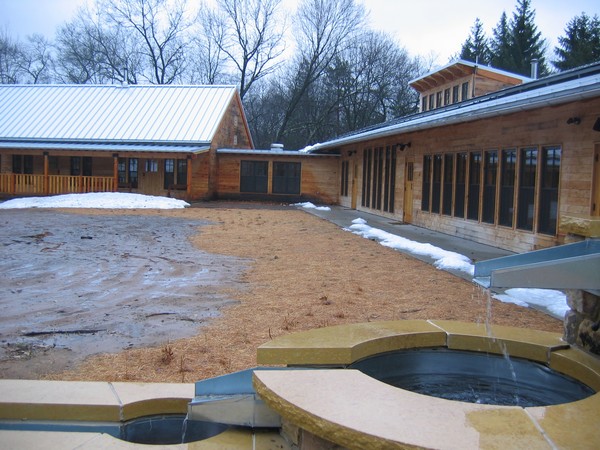
In sharp contrast to ‘the shack’ the Legacy Center feels solid and dry. But consistent with the Land Ethic message of the writing that was done in the old dilapidated building, the new building ‘sustains the health, wildness, and productivity of the land, locally and globally‘. The Legacy Center has received Platinum Leadership in Energy and Environment Design (LEED) Certification from the U.S. Green Building Council and is currently the ‘greenest building in the U.S.’.

The Legacy Center is an example of how we can use energy more efficiently and construct building with a limited impact on our environment. Through energy efficiency, renewable energy, the Legacy Center is the first carbon neutral building certified by LEED — annual operations account for no net gain in carbon dioxide emissions.

The Legacy Center is also a net zero energy building, using 70 percent less energy than a building built just to code and meeting all of its energy needs on site using tools like a roof-mounted solar array and a ‘thermal flux zone’ to reduce heat flow between interior rooms and the outdoors. Many of the structural columns, beams, and trusses, as well as interior panelling and finish work, are from the pine trees Leopold planted himself on his farm between 1935-1948.

This really is a building that embodies Leopold’s Land Ethic – both conceptually through the principles used when designing the building, and physically by using material from Leopold’s own ecological restoration experiment. The Legacy Center contains the offices of the Leopold Foundation, has a small shop and ‘museum’ about Leopold, and can be hired for meetings. The building itself is what is really the attraction – and hopeully there will be more like this appearing more frequently elsewhere. Unless you’re passing by or really want to make a pilgrimage to gain an insight into the area where Leopold’s vision unfolded, there’s really no need to go out of your way to visit. Take a virtual tour instead to save energy and carbon and make the building even greener.

Columbia University Press Sale


Columbia University Press currently has a sale on. They have savings of up to 80% on more than 1,000 titles from several fields of study. I was particularly interested in their books in the Environmental Studies and Ecology section and purchased several:

Previously on this blog I reviewed another book they have on sale, Useless Arithmetic: Why Environmental Scientists Can’t Predict the Future by Orrin H. Pilkey and Linda Pilkey-Jarvis.

When I get round to reading this new batch I’ll review some of these also (at first glance the Wiens et al. book looks particularly useful for any Landscape Ecologist – student, teacher or researcher). You’ve got up until May 31st to order yours.

Michigan UP Seedling Experiment

I’ve been back from our study area in Michigan’s Upper Peninsula for over a week so it’s about time I posted something about what we were doing up there.

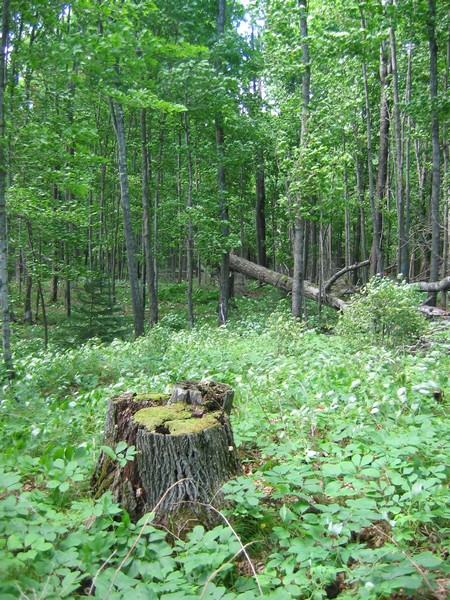
One of the main issues we will study with our integrated ecological-economic landscape model is the impact of whitetail deer (Odocoileus virginianus) herbivory on tree regeneration following cutting. Last November we spent a week planting 2 year-old seedlings in Northern Hardwood forest gaps created by selective timber harvest (like the one in the photo below).

Our plan was to return this spring to examine the impacts of deer browse on these seedlings. In particular, we wanted to examine how herbivory varies across space due to changes in deer population densities (in turn driven by factors such as snow depth).

To this end we selected almost 40 forest sites that would hopefully capture some spatial variation in snowfall and that had recently been selectively harvested. At each site we selected 10 gaps produced by timber harvest in which to plant our seedlings.

In each gap we planted six trees of each of three species: White Spruce (Picea glauca), White Pine (Pinus strobus) and Eastern Hemlock (Tsuga canadensis). We chose these coniferous species as these are examples of the mesic confer species the Michigan DNR are trying to restore across our study area, and because we expected a range of herbivory across these species.

At each site we would also undertake deer pellet counts in the spring to estimate the number of deer in the vicinity of the site during the winter (during which time the browse we were measuring would have occurred).

On returning to the study sites a couple of weeks ago we set about looking for the trees we had planted to measure herbivory and count deer pellets. In some cases, finding the trees we planted was easier said than done. We tried to get our field crews to plant the trees in straight lines with equal spacing between each tree. In general, this was done well but on occasion the line could only be described as crooked at best. Micro-topography, fallen tree trunks and limbs, and slash from previous cutting all contributed to hamper the planned planting system. However, we did pretty well and found well over 90% of the trees.

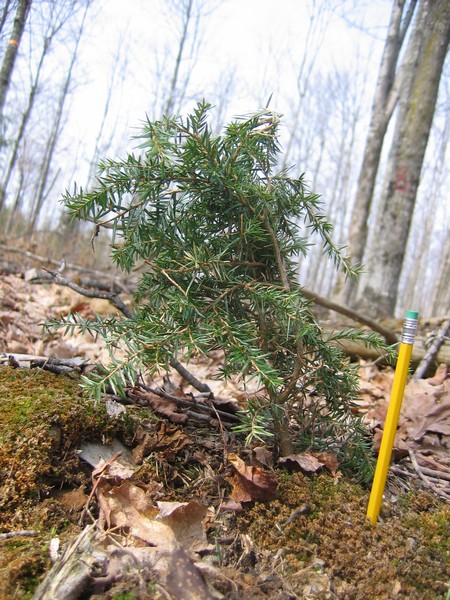
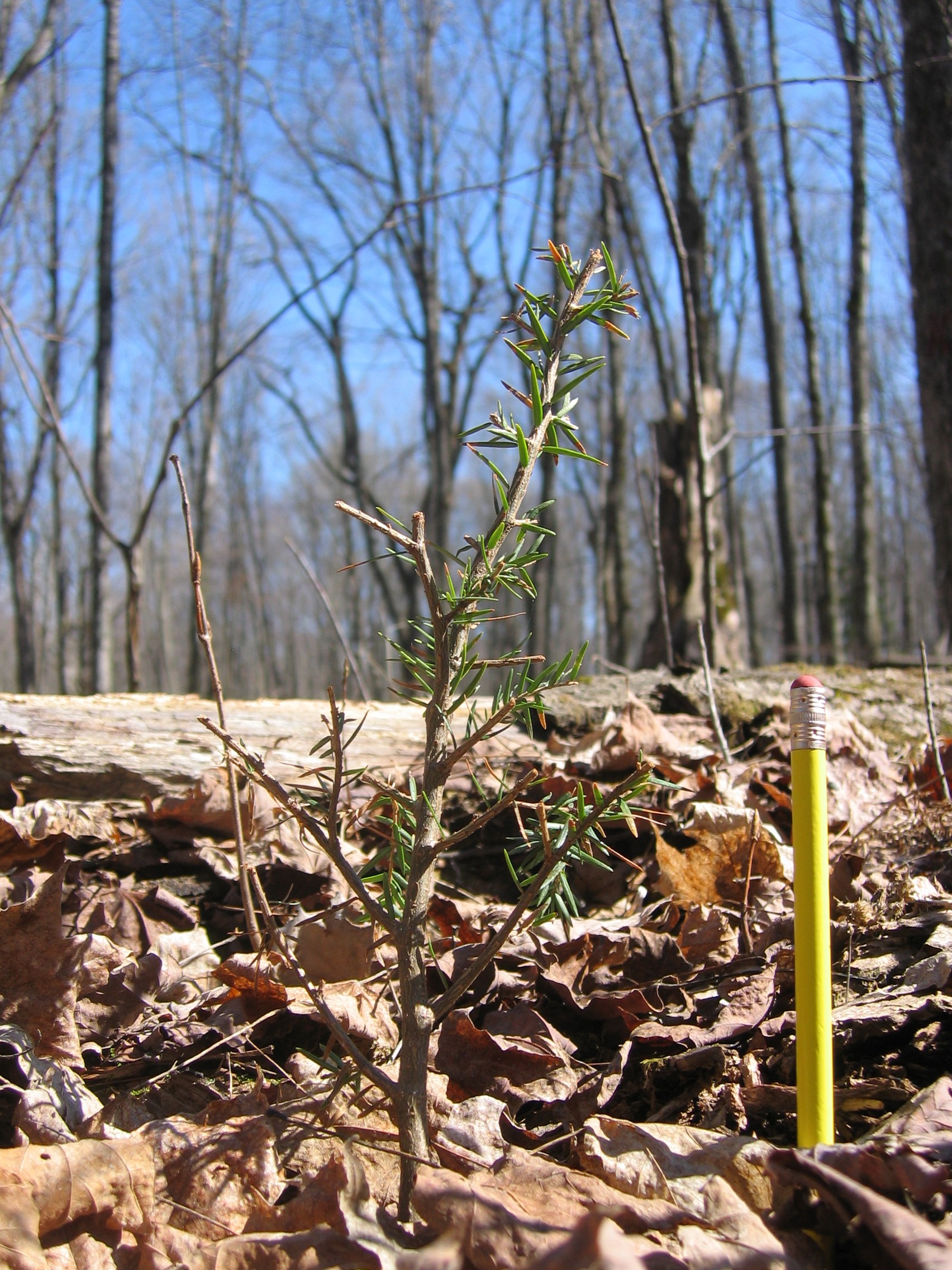
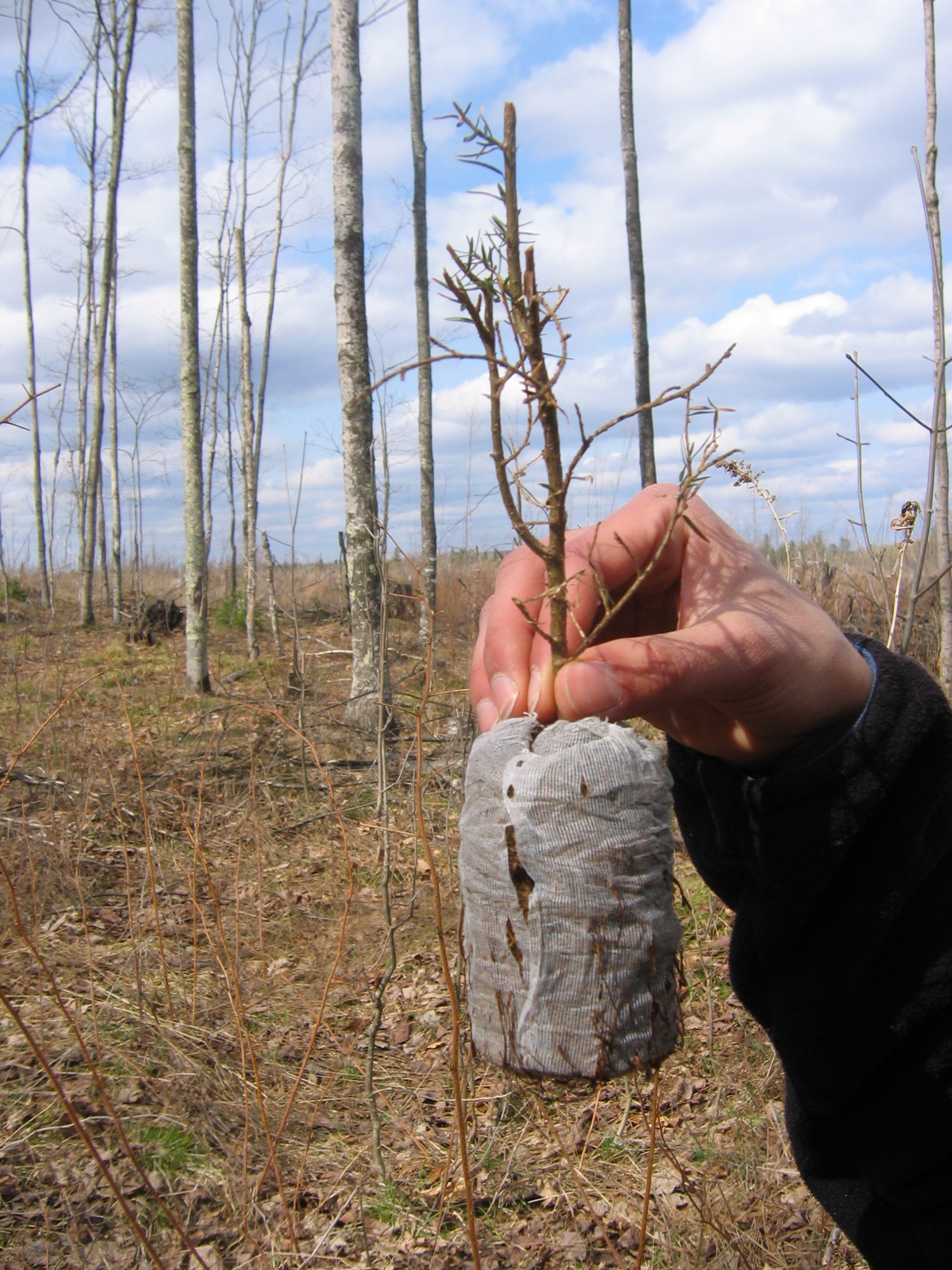
We haven’t begun analyzing our data as yet, but some anecdotal observations stand out. First, the deer preferentially browsed Hemlock over the other species, often removing virtually all non-woody biomass as shown by the ‘before and after’ examples below (NB – these photographs are not of the same tree and this is not a true before/after comparison).

In some cases, the deer not only removed all non-woody biomass but also pulled the tree out of the ground (as shown below).

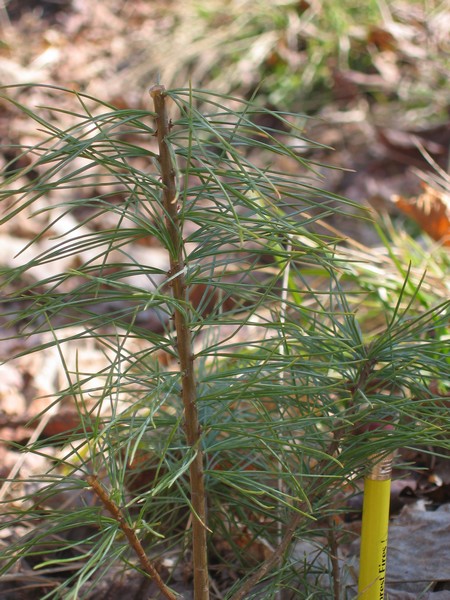
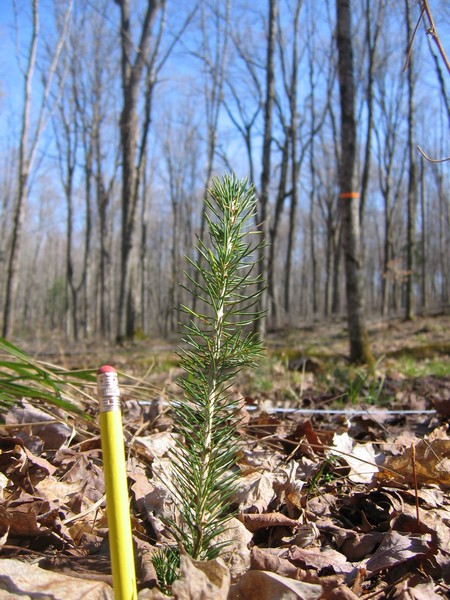
In contrast, White Pine was browsed to a much lesser extent and White Spruce was virtually untouched (as shown below).

Having a species that was unaffected by deer (i.e. spruce) often made our job of finding the other trees much easier. Finding heavily browsed Hemlock that no longer had any green vegetation was often tricky against a background of forest floor litter.

The next step now is to start looking at this variation in browse through a more quantitative lens. Then we can start examining how browse and deer densities vary across space and how these variables are related to one another and other factors (such as snow depth and distance to conifer stands).

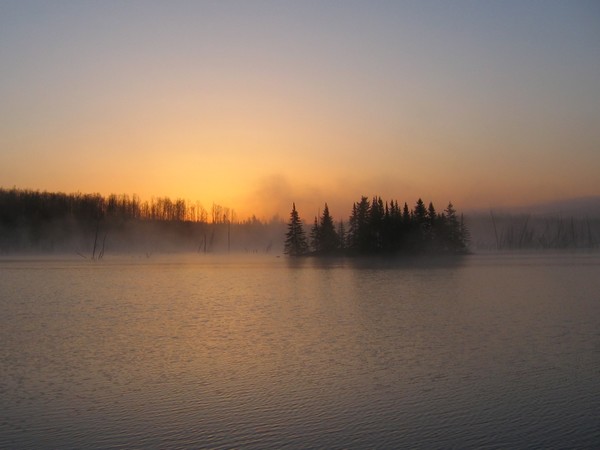
All-in-all the two weeks of work went pretty well. There were some issues with water-logged roads (due to snow melt) meaning we couldn’t get to one or two of the sites we planted at, but generally the weather was pretty good (it only rained heavily one day). I’ll write more once we have done more analysis and stop here with a shot I took at sunrise as I left for home.

Michigan UP Deer Distribution Fieldwork

I’m back in the UP for more fieldwork. Last time I was up here was right before the start of hunting season last year. Since then a hard winter has passed and is now just being replaced by spring. There’s still snow on the ground in the northern areas of our study area, but it’s melting fast. Over the next couple of weeks we’ll be doing deer pellet counts (as a proxy for numbers of deer) to supplement previous data and to try to get a better gauge on how snowfall affects the spatial distribution of deer during the winter. We need to do these as soon after the snow melts before ground level vegetation re-grows and obscures the pellets. We’re also going to count pellets in the stands where we planted tree seedlings last fall. Then we’ll compare the estimated deer numbers in the stands with the browse on the seedlings we planted (if there’s anything left of them at all!) to try to get a more precise handle on how deer density relates to browse impact of different species.

So that’s my next few weeks – counting deer poo in the UP forests. I doubt I’ll be online much so this might be the last blog for a week or two. I’ll take some photos and maybe post them when I’m back in Lansing.

US-IALE 2008 – Summary


A brief and belated summary of the 23rd annual US-IALE symposium in Madison, Wisconsin.

The theme of the meeting was the understanding of patterns, causes, and consequences of spatial heterogeneity for ecosystem function. The three keynote lectures were given by Gary Lovett, Kimberly With and John Foley. I found John Foley’s lecture the most interesting and enjoyable of the three – he’s a great speaker and spoke on a broader topic than the the others; Agriculture, Land Use and the Changing Biosphere. Real wide-ranging, global sustainability stuff. He highlighted the difficulties of studying agricultural landscapes because of the human cultural and institutional factors, but also stressed the importance of tackling these tricky issues because ‘agriculture is the largest disturbance the biosphere has ever seen’ and because of its large contribution to greenhouse gas emissions.

Presentations I was particularly interested in were mainly in the ‘Landscape Patterns and Ecosystem Processes: The Role of Human Societies’, ‘Challenges in Modeling Forest Landscapes under Climate Change’ and ‘Cross-boundary Challenges to the Creation of Multifunctional Agricultural Landscapes’ sessions.

In the ‘human societies’ session, Richard Aspinall discussed the importance of considering human decision-making at a range of scales and Dan Brown again highlighted the importance of human agency in spatial landscape process models. In particular, with regards modelling these systems using agent-based approaches he discussed the difficulty of model calibration at the agent level and stressed that work is still needed on the justification and evaluation phases of agent-based modelling.

The ‘modeling forest landscapes’ session was focused largely around use of the LANDIS and HARVEST models that were developed in and around Wisconsin. In fact, I don’t think I saw any mention of the USFS FVS at the meeting whilst I was there, largely because (I think) FVS has large data demands and is not inherently spatial. LANDIS and HARVEST work at more coarse levels of forest representation (grid cell compared to FVS’ individual tree) allowing them to be spatially explicit and to run over large time and space extents. We’re confident we’ll be able to use FVS in a spatially explicit manner for our study area though, capitalising on the ability of FVS to directly simulate specific timber harvest and economic scenarios.

The ‘multifunctional agricultural landscapes’ session had an interesting talk by Joan Nassauer on stakeholder science and the challenges it presents. Specific issues she highlighted were:
1. the need for a precise, operational definition of ‘stakeholder’
2. ambiguous goals for the use of stakeholders
3. the lack of a canon of replicable methods
4. ambivalence toward the quantification of stakeholder results

Other interesting presentations were given by Richards Hobbs and Carys Swanwick. Richard spoke about the difficulties of ‘integrated research’ and the importance of science and policy in natural resource management. He suggested that policy-makers ‘don’t get’ systems thinking or modelling, and that some of this may be down to the psychological profiles of the types of people that go into policy making. Such a conclusion suggests scientists need to work harder to bridge the gap to policy makers and do a better job of explaining the emergent properties of the complex systems they study. Carys Swanwick talked about the landscape character assessment, which was interesting for me having moved from the UK to the US about a year ago. Whilst ‘wilderness’ is an almost alien concept in the UK (and Europe as a whole), landscape character is something that is distinctly absent in the new world agricultural landscapes. Carys talked about the use of landscape character as a tool for conservation and management (in Europe) and the European Landscape Convention. It was a refreshing change from many of the other presentations about agricultural landscape (possibly just because I enjoyed seeing a few pictures of Blighty!).

Unfortunately the weather during the conference was wet which meant that I didn’t get out to see as much of Madison as I would have liked. Despite the rain we did go on the Biking Fieldtrip. And yes, we did get soaked. It was also pretty miserable weather for the other fieldtrip to and International Crane Foundation center and the Aldo Leopold Foundation (more on that in a future blog), but interesting nevertheless.

Other highlights of the conference for me were meeting the former members of CSIS and eating dinner one night with Monica Turner. I also got to meet up with Don McKenzie and some of the other ‘fire guys’, and a couple of people from the Great Basin Landscape Ecology lab where I visited previously. And now I’m already looking forward to the meeting next year in Snowbird, Utah (where I enjoyed the snow this winter).

XIII World Forestry Congress 2009


The call for papers for the XIII World Forestry Congress is now open. To be held in Buenos Aires, Argentina, in October 2009 the congress will address “the sustainable development of forests from a global and integral perspective”. Authors are invited to submit papers and posters expressing new ideas and providing information on experiences, theoretical models and interesting initiatives. Papers will be published in the Congress Proceedings and on the Congress’ official website.

Forest Landscape Models: A Review

There’s a new forest landscape model classification and review out there, recently published in Forest Ecology and Management by Hong He. The paper assumes greater familiarity with the topic of forest and disturbance modelling than the paper I recently published with my former advisor, George Perry, and discussion focuses largely on models primarily developed for the study of temperate forest systems in the USA (e.g., JABOWA, SORTIE, LANDIS, ZELIG – exceptions include MAQUIS and FORMOSAIC).


Distinction between deterministic models and stochastic models

He suggests that, generally, ecological models fall in two seemingly exclusive categories, deterministic models and stochastic models, and that either category of model can use physical or empirical approaches, or a combination of both (see figure). However, the classification He presents in the paper is developed according to how models represent

  1. spatial processes,
  2. temporal processes,
  3. site-level succession, and
  4. the intended use of the model.

Models are classified by succession based on whether the model uses succession pathways (i.e., a Markov state-and-transition approach), vital attributes (as I utilised in my PhD modelling), or by coupling landscape models with more detailed stand-level vegetation succession models. The fourth classification criteria above highlights that there are numerous applications of forest landscape models, and that design is strongly related to the desired applications. He suggests applications of forest landscape models generally fall into one of three categories:

  1. spatiotemporal patterns of model objects,
  2. sensitivities of model object to input parameters, and
  3. comparisons of model simulation scenarios.

After developing and presenting the classification, the paper goes on to discuss two dilemmas facing those using forest landscape models. The first is the validation of model results, which has been discussed on numerous occasion elsewhere (including this blog). The discussion on circular reasoning is more novel however, (and related in some ways to what I have written with regards models of human agents):

“It is often difficult to separate expected results from emergent results. A caution against circular reasoning is the caveat often encountered in this situation, where researchers discuss biological or environmental forcing (causes) of their modeled results, whereas the forcing (causes) is actually built in the model formulation to derive such results. It should be pointed out that most model simulations do not lead to new understanding of the modeled processes themselves. The primary and subsequent results simply reflect the relationships used in building the models, which in turn reflect current understanding of the processes. The findings of these models are simply the spatiotemporal variations of the spatial process (discussed in Section 5.1), not the mechanisms that drive the potential changes of the spatial process. Emergent results are generally those resulted from the interactions and feedbacks of model objects.”


The paper concludes by summarizing likely development of forest landscape modelling in the future:

  1. Model development will move from the foci of theoretical and exploratory purposes to the foci of strategic and tactical purposes with increasing model realism, responding to the needs of forest management and planning.
  2. Multiple spatial and temporal resolutions will be implemented for different processes
  3. Standardized module components may emerge as handy utilities that are ready to be plugged into other models. Since component-based models provide non-developers or end users with access to model components, a component-based model can be more rigorously tested, evaluated, and modified than before, and thus, model development processes can be driven not solely by original developers, but by the broader scientific community
  4. Synchronization of multiple ecological processes can be made possible with multiple computer processors. This will help deal with the limitation that ecological processes are simulated in a sequential order as determined by the executable program.
  5. Model memorization will be improved so that a forest landscape model not only memorizes vegetation, disturbance, and management status at the current and previous model iteration, but also the entire temporal sequence. This would allow more effective studies of legacies of forested landscapes responding to various disturbance and management activities.


Here’s the full paper citation and abstract:

He (2008) Forest landscape models: Definitions, characterization, and classification Forest Ecology and Management 254 (3) Pages 484-498

Abstract
Previous model classification efforts have led to a broad group of models from site-scale (non-spatial) gap models to continental-scale biogeographical models due to a lack of definition of landscape models. Such classifications become inefficient to compare approaches and techniques that are specifically associated with forest landscape modeling. This paper provides definitions of key terminologies commonly used in forest landscape modeling to classify forest landscape models. It presents a set of qualitative criteria for model classification. These criteria represent model definitions and key model implementation decisions, including the temporal resolution, number of spatial processes simulated, and approaches to simulate site-level succession. Four approaches of simulating site level succession are summarized: (1) no site-level succession (spatial processes as surrogates), (2) successional pathway, (3) vital attribute, and (4) model coupling. Computational load for the first three approaches is calculated using the Big O Notation, a standard method. Classification criteria are organized in a hierarchical order that creates a dichotomous tree with each end node representing a group of models with similar traits. The classified models fall into various groups ranging from theoretical and empirical to strategic and tactical. The paper summarizes the applications of forest landscape models into three categories: (1) spatiotemporal patterns of model objects, (2) sensitivities of model object to input parameters, and (3) scenario analyses. Finally, the paper discusses two dilemmas related to the use of forest landscape models: result validation and circular reasoning.

Keywords Forest landscape models; Spatially explicit; Spatially interactive; Definitions; Model characterization; Model classification