The Wilderness Ideal

One evening whilst sitting on a deck overlooking a tranquil lake in the wilds of the UP’s northern hardwood forests, I began reading William Cronon’s contributions to the volume he edited himself; Uncommon Ground. The book has been around for a decade and more but it is only recently that I came across a copy in a secondhand book store. It seems apt that I considered what it had to say about the ‘social construction’ of nature in a setting of the type that has long intrigued me. Maybe the view of a landscape which confronted me is another of the reasons I am doing what I am right now. I have had pictures of these large wilderness landscapes on the walls of my mind, and elsewhere, for a while.
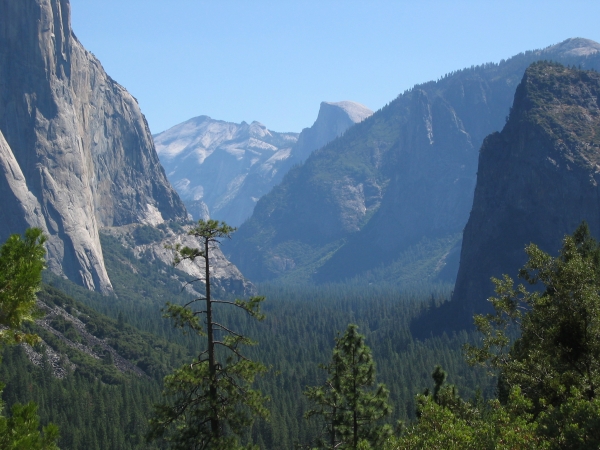
Cronon examines “the trouble with wilderness” with reference to the Edenic ideal that underlay it from the beginning. Wordsworth and Thoreau were in bewildered or lost awe of the sublime landscapes they travelled, but by the time John Muir came to the Sierra Nevada the landscape was an ecstasy. Whilst Adam and Eve may have been driven from the garden out into the wilderness, the myth was now ‘the mountain as cathedral’ and sacred wilderness was a place to worship God’s natural world. Furthermore, as the American frontier diminished with time and technology,

“wilderness came to embody the national frontier myth, standing for the wild freedom of America’s past and and seeming to represent a highly attractive natural alternative to the ugly artificiality of modern civilization. … Ever since the nineteenth century, celebrating wilderness has been an activity mainly for well-to-do city folks. Country people generally know far too much about working the land to regard unworked land as their ideal.” (p.78)

Cronon suggests that there is a paradox at the heart of the Wilderness ideal, this conception that true nature must also be wild and that humans must set aside areas of the world for it to remain pristine. As Cronon puts it, this paradox is that “The place where we are is the place where nature is not”. Taking this logic to its extreme results in the need for humans to kill themselves in order to preserve the natural world;

“The absurdity of this proposition flows from the underlying dualism it expresses. … The tautology gives us no way out: if wild nature is the only thing worth saving, and if our mere presence destroys it, then the sole solution to our own unnaturalness, the only way to protect sacred wilderness from profane humanity, would seem to be suicide. It is not a proposition that seems likely to produce very positive or practical results.” (p.83)

I’ll say. But Cronon is not saying that protected wilderness areas are themselves undesirable things, of course not. His point is about the idea of Wilderness. As a response he suggests that rather than thinking of nature as ‘out there’, we need to learn how to bring the wonder we feel when in the wilderness closer to home. We need to abandon the idea of the tree in the garden as artificial and the tree in the wilderness as natural. If we see both trees as natural, as wild, then we will be able to see nature and wildness everywhere; in the fields of the countryside, between the cracks in the city pavement, and even in our own cells.

“If wildness can stop being (just) out there and start being (also) in here, if it can start being as humane as it is natural, then perhaps we can get on with the unending task of struggling to live rightly in the world – not just in the garden, not just in the wilderness, but in the home that encompasses both” (p.90)

Sitting on that deck looking out over the lake it was clear that landscapes such as the one I was in aren’t the idealised, pristine, wilderness that they may be portrayed as in books, photographs and travel brochures. Just as in studying its nature I have come to understand a little better the uncertainties of the scientific method that is supposed to bring facts and truth, so I think have come to better understand the place of human needs within these ‘wild’ landscapes. As naive as it is to think that science might offer the absolute truth (it can’t, but it is still the best game in town to understand the world around us), thinking humans are inseparable from nature seems equally foolish.

In the introduction to a book on natural resource economics (which has mysteriously vanished from my bookshelf), an author describes a similar situation. As a young man he wanted to study the environment in order that he might save it from destructive hands of humans. But in time he came to realise this was unrealistic and that better would be to study the means by which humans use the ‘natural world’ to harvest and produce the resources we need to live. Economics is concerned with the means by which we allocate, and create value from, resources. Just as it is important to understand how ‘nature’ works, it is also important to understand how a world in which humans are a natural component works, and how it can continue to function indefinitely.

Landscape Ecology and Ecological Economics have grown out of this understanding. Whilst theories and models about the natural world independent of humans remain necessary, increasingly important are theories and models that consider the interaction between the social, economic and biophysical components of the natural world. These tools might help us get on with the task of living sustainably in the place which humans should naturally call home.
Buy on Amazon

Usefulness of Spatial Landscape Models

Turner et al.’s discussion about the usefulness of spatial models in land management is now a bit of a classic (written in 1995) but it had also been a while since I read it. Re-reading it after coming back from a trip to our study area, many of the paper’s points resonated with what people (many of them natural resource managers) I met with were saying.

Turner et al. suggest that (p.13) “Models that integrate ecological and economic components so that the models can be used to explore both sets of consequences simultaneously are even more valuable [than ecological alone]”. This is the driving rationale for our research project. As it was succinctly put by one potential landowner in the study area, models of this kind will contribute to the development of plans that are based on an ecological approach but backed up with economic justification.

Given the hierarchical nature of landscape ecological processes and the importance of human activity on those processes, Turner et al. highlight (p.15) that “Land ownership has a large impact on management decisions, and a useful contribution of spatially explicit models is the ability to explore the effects of management by various owners within a mosaic of public and private lands.” With a range land owners, including the state and private industrial companies, the UP study area is in this position and the model we are developing will be able to directly consider the impacts of different land owner management strategies for the landscape as a wider region. Thus, one of the driving questions of the research is “how should timber be harvested across space and time in multiple land ownerships to ensure a sustainable landscape?”

One of the most striking things I was told on my trip was that the most useful thing our model would be able to do for land managers would be if it could get people to sit down together to come up with a coherent, sustainable management plan. Again, the links with Turner et al. are clear (p.15); “Communication between land managers and ecologists remains an important challenge, and spatially explicit models have the potential to create a common working framework.”

However, not only is the communication and collaboration side of the research a challenge, but so too is the technical side of things. Turner et al. highlight the issue of data quality; the model will only be as good as the data used and the accurate up-to-date spatial data bases required are expensive to produce. Furthermore, the quality of the data will determine the modeller’s ability to parameterizes the model at a given spatial resolution and extent. I’m currently reviewing the data that has been collected over the past few years by the research group at CSIS regarding the interactions between deer density, tree regeneration and bid habitat, but also the data managed and made available by Michigan’s Department of Natural Resources. Producing an accurate representation of deer population dynamics and movement across the landscape is certainly going to be a challenge. Next, the relationships between deer browse pressure and vegetation regeneration need to be specified and parameterized. The estimates of deer population and location can then be combined with these relationships to dynamically represent the interactions across space.

Once the model is up and running we will be able to examine spatial scenarios of forest management to assess both ecological and economic sustainability. For example, with regard to the appropriate location of mesic confer regeneration “…increasing the [mesic confer] component is expected to increase the number of individuals of conifer-associated bird species. And over time reduce productivity of the summer deer range and expand areas potentially suitable for deer during winter, resulting in a smaller deer herd dispersed over a larger wintering area (Doepker et al, 2001) in turn resulting in less browsing pressure in WUP forests. The eventual size, configuration, contiguousness and/or juxtaposition of restored habitats to existing or historical mesic conifer habitats and winter deer-yards on non-MDNR lands (public and private) may affect the success of these outcomes” (DNR 2004). Right now this confer regeneration is not going well and areas of maple forest are increasing.

Economically, the model should be able to show how different harvest rotations and management plans by private industrial land owners can ensure the most productive use of their land whilst ensuring both ecological and economic sustainability of the landscape. And not only for single landowners. The model should be useful to examine how actions of neighbouring land under differing ownership can work in concert. For example, if the private industrial goal is intensive harvest, maybe the primary objective of the state should be to ensure conifer cover. But the question then is what are the spatial implications of this? Is there any point in confer regeneration (which provides thermal cover for deer in the winter) if the distance between state and corporate land is large and deer cannot move from thermal cover to find food?

These are the sorts of questions and challenges to which spatial landscape models can be applied, and which we are aiming to tackle. Right now though, it’s time to concentrate on the technical development of the model and the representation of the spatio-temporal deer-vegetation interactions.

Reference
Turner, M.G., Arthaud, G.J., Engstrom, R.T, Hejl, S.J., Liu, J., Loeb, S. & McKelvey, K. (1995) Usefulness of Spatially Explicit Population Models in Land Management Ecological Applications, 5:1 12-16.

Call for submissions to Oekologie August 2007

I’m a little behind but there’s still no harm in advertising that Oekologie #7 is up at The Evangelical Ecologist.

Oekologie #8 will be hosted right here on Direction not Destination in mid-August. Submit your recent writings on ecology and environmental science here. Here’s the details of what we’re looking for from the Oekologie home page:

Oekologie is a blog carnival all about interactions between organisms in a system. While Circus of the Spineless might look for a post discussing the hunting techniques of a trap door spider, Oekologie is looking for posts discussing how a trap door spider’s hunting techniques affect prey populations or its surroundings. While Carnival of the Green might look for a post discussing a big oil policy decision regarding ANWR, Oekologie would accept a post describing the ecological consequences of pipeline construction in the area.

Again, we are looking for posts describing biological interactions – human or nonhuman – with the environment.

Topics may include but are not limited to posts about population genetics, niche/neutral theory, sustainabilty, pollution, climate change, disturbance, exploitation, mutualism, ecosystem structure and composition, molecular ecology, evolutionary ecology, energy usage (by humans or within biological systems, succession, landscape ecology, nutrient cycling, biodiversity, agriculture, waste management, etc. The list goes on and on; I think you get the idea.

Your blog does not have to be an ecology or environmental blog itself, but the post should present an accurate representation of the field.

The post should be spell-checked, grammatically sound, and substantial; we’re not looking for brief reviews. If you are reviewing research, please include solid commentary involving other sources.

BSG – Modelling Human Impacts on Geomorphic Processes

This week sees the Annual Conference of the British Society for Geomorphology (BSG – formerly the British Geomorphological Research Group, BGRG). Running from Wednesday 4th to Friday 6th, the conference is being held at the University of Birmingham in the UK. With the theme Geomorphology: A 2020 Vision, recent developments and advances in the field, such as models and modelling approaches, will be explored and debated, and the potential to exploit emerging approaches to solve key challenges throughout pure and applied Geomorphology will be discussed.

With these recent and future advances in mind, one of my PhD advisors, Prof. John Wainwright, will present a paper entitled Modelling Human Impacts on Geomorphic Processes which contains work originating from my thesis. He’ll be presenting it in the first session of Wednesday afternoon, Process Modelling: Cross-Cutting Session. I’m sure it will turn out to be an interesting session, and one that continues the recent thirst for inter- and cross-disciplinary research. Here’s the abstract:

Modelling Human Impacts on Geomorphic Processes
John Wainwright and James Millington

Despite the recognition that human impacts play a strong – if not now predominant – rôle in vegetation and landscape evolution, there has been little work to date to integrate these effects into geomorphic models. This inertia has been the result partly of philosophical considerations and partly due to practical issues.

We consider different ways of integrating human behaviour into numerical models and their limitations, drawing on existing work in artificial intelligence. Practical computing issues have typically meant that most work has been very simplistic. The difficulty of estimating time-varying human impacts has commonly led to the use of relatively basic scenario-based models, particularly over the longer term. Scenario-based approaches suffer from two major problems. They are typically static, so that there is no feedback between the impact and its consequences, even though the latter might often lead to major behavioural modifications. Secondly, there is an element of circularity in the arguments used to generate scenarios for understanding past landform change, in that changes are known to have happened, so that scenarios big enough to produce them are often generated without considering the range of possible alternatives.

In this paper we take examples from two systems operating in different contexts and timescales, but employing a similar overall approach. First, we consider human occupations in prehistoric Europe, in particular in relation to the transition from hunter-gatherer to simple agricultural strategies. The consequences of this transition for patterns of soil erosion are investigated. Secondly, an example from modern Spain will be used to evaluate the effects of farmers’ decision-making processes on land use and vegetation cover, with subsequent impacts on fire régime. From these agent-based models and from other examples in the literature, conclusions will be drawn as to future progress in developing these models, especially in relation to model definition, parameterization and testing.

Call for Papers: Environmental Micro-simulation

This call for papers for a special issue of Ecological Complexity addresses some of the issues I’ve been discussing recently, and hopes to present examples of multi-model approaches to assess environmental simulation model. If I’d seen this earlier or I might have tried to put something together. As it is I’ll just have to keep my eye open for the issue when it comes out next year sometime.

Call for Papers

Ecological Complexity is pleased to announce a special issue on: Environmental micro-simulation: From data approximation to theory assessment

Spatial micro-simulation has recently become a mainstream element in environmental studies. Essentially, different models, representing the same phenomena, are being extensively published and the “next step” sought is hypothesis testing, regarding the factors that determine system dynamics. However, the problem arises that assessment of environmental theories using spatial micro-simulation lacks a leading paradigm. While the Occam’s razor of positivism, which works perfectly in physics and chemistry, demands datasets covering the entire space of model parameters, the experimental abilities of environmentalists are limited and the data collected in the field represent only a small part of the always multi-dimensional parameter space. Consequently, any given model can be considered as merely approximating the few data sets available for verification and its theoretical validity is thus brought into question.

To overcome this limitation, we propose to generate a virtual world that will allow hypothesis testing based on environmental theory. That is, we propose to implement micro-simulation models using high-resolution GIS database and use them as a surrogate for reality, instead of the limited empirical database. GIS enables a realistically looking virtual world to be generated that, unlike the real one, provides the parameters characteristic of every trajectory. The almost unlimited data that can be generated from such a virtual world can then be used to assess our ability to extract rules and dependencies, estimate parameters and, finally, make applicable forecasts.

This special issue will focus on investigating models as representations of environmental theory with the help of a combination of real data and artificial worlds. We invite innovative research papers that employ different high-resolution models for generating virtual worlds, comparing them to each other, with the aim being to develop a better understanding of environmental theory. Examples can be studies of a model’s robustness, a comparative study of dynamic models, investigation of the limitations of data fitting methods and of a model’s sensitivity to changes in spatial and temporal resolution.

Scope
All sorts of micro-simulation, including cellular automata, agent-based systems, fuzzy systems, ANN and genetic algorithms, are welcome. The environmental systems of interest include, but are not limited, to:

  • Complex ecosystems
  • Landscape ecology
  • Terrain analysis and landscape evolution
  • Agriculture and pastoralism
  • Human-environment interaction
  • Land-use and land-cover changes
  • Urban dynamics

Submission instructions
Abstracts of 2 pages in length should be submitted to the Guest Editors by July 14, 2007. The review process of those abstracts considered to be the most relevant will continue and authors will be required to upload the full manuscript to the Ecological Complexity website by November 1, 2007.

Guest Editors
Tal Svoray
Ben-Gurion University of the Negev,
tsvoray@bgu.ac.il

Itzhak Benenson
Tel Aviv University,
bennya@post.tau.ac.il

Daniel Botkin’s Renegade Blog

Daniel Botkin, eminent Ecologist and author of Discordant Harmonies, has recently started a blog called Reflections of a renegade naturalist. Two recent posts caught my eye.

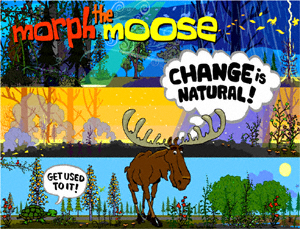
The days of Smokey Bear, an enduring American icon of wildland management and its efforts to communicate with the public, are apparently numbered. Whilst his message about taking precautions against starting wildfires remains necessary, the underlying ethos of forest (and environmental) management has changed. Once, ecologists’ theoretical foundation was the ‘balance of nature’ and the presence of equilibrium and stability within ecosystems. But over the past three decades this perception has dramatically shifted and now ‘change is natural’ would be a more apt motto. Ecosystems are dynamic. Disturbance, such a wildfire, is now seen as an inherent and necessary component of many landscapes to ensure ecosystem health. This shift in thinking is evident on the Smokey website, with sections discussing the use of prescribed fire, fire’s role in ecosystem function, and the potential pitfalls of excluding fire entirely. George Perry has written an excellent review of these shifts in ecological understanding.


So what about Smokey Bear? His message about taking precautions in wilderness areas still remain of course. But with this new ecological ethos in mind, Botkin was asked for suggestions for a new management mascot. He came up with Morph the Moose. I haven’t seen anything about Morph previously, and a quick Google search currently only throws up 7 hits, so we’ll have to watch out for Morph wandering around with his new message soon.

The second post that got my eye is related to the evaluation of the forest growth model JABOWA that Botkin developed. JABOWA is an individual-based model that considers the establishment, growth and senescence of individual trees. In 1991 JABOWA was used to forecast how potential global warming would influence the Kirtland’s warbler, an endangered species that nests only in Michigan. Botkin and his colleagues forecast that by 2015 the Jack pine habitat of the warbler would decline significantly with detrimental consequences for the warbler. On his blog he suggests that matching this prediction with contemporary observations will be an ideal test to validate the predictions of the JABOWA model. Given my previous discussion about ‘affirming the consequent’ (i.e. deeming a model a true representation of reality if its predictions match observed reality, and false if it does not) it’s good to see Botkin does not suggest a valid prediction indicates the validity of the model itself. We’re advised us to stay tuned for the results. Given the subject matter and quality of the articles on the new renegade blog I certainly will.

Affirming the Consequent

A third epistemological problem of knowing whether a given (simulation) model structure is appropriate, after Equifinality and Interactive Kinds, regards the comparison of model results with real-world empirical data. Comparison of models’ predictions with empirical events has frequently been used in an attempt to show that the model structure is an accurate representation of the system being modelled (i.e. demonstrate it is ‘true’). Such an idea arises from the hypothetico-deductive scientific method of isolating a system and then devising experiments to logical prove a hypothesis via deduction. As I’ve discussed, such an approach may be useful in closed laboratory-type situations and systems, but less so in open systems.

The issue here is that predictions about real-world environmental systems are temporal predictions about events occurring at explicit points in time or geographical space, not logical predictions that are independent of space and time and that allow the generation of science’s ‘universal laws’. These temporal predictions have often been treated with the same respect given to the logical prediction of the hypothetico-deductive method. However, as Naomi Oreskes points out, it is unclear whether the comparison of a temporal prediction produced by a simulation model with empirical events is a test of the input data, the model structure, or the established facts upon which the structure is based. Furthermore, if the model is refuted (i.e. temporal predictions are found to be incorrect) given the complexity of many environmental simulation models it would be hard to pin-point which part of the model was at fault.

In the case of spatial models, the achievement of partially spatially accurate prediction does little to establish where or why the model went wrong. If the model is able to predict observed events, this is still no guarantee that the model will be able predict into the future given it cannot be guaranteed that the stationarity assumption will be maintained. This assumption is that the processes being modelled are constant thought time and space within the scope of the model. Regardless, Oreskes et al. (1994) have argued that temporal prediction is not possible by numerical simulation models of open, middle-numbered systems because of theoretical, empirical, and parametric uncertainties within the model structure. As a consequence, Oreskes et al. (1994) warn that numerical simulation modellers must beware of making the fallacy of ‘affirming the consequent’ by deeming a model invalid (i.e. false) if it does not reproduce the observed real-world data, or valid (i.e. true) if it does.

Initial Michigan UP Ecological Economic Modelling Webpage


We now have a very basic webpage online, (very) briefly outlining the Michigan UP Ecological-Economic Modeling project. This is just so that we have an online presence for now – in time we will develop this into a much more comprehensive document detailing the model, its construction and use. Hopefully, at some point in the future we’ll also mount a version of the model online. I’ll keep you posted on the online development of the project.

Critical Realism for Environmental Modelling?

As I’ve discussed before, Critical Realism has been suggested as a useful framework for understanding the nature of reality (ontology) for scientists studying both the environmental and social sciences. The recognition of the ‘open’ and middle-numbered nature of real world systems has led to a growing acceptance of both realist (and relativist – more on that in a few posts time) perspectives toward the modelling of these systems in the environmental and geographical sciences.

To re-cap, the critical realist ontology states that reality exits independently of our knowledge, and that it is structured into three levels: real natural generating mechanisms; actual events generated by those mechanisms; and empirical observations of actual events. Whilst mechanisms are time and space invariant (i.e are universal), actual events are not because they are realisations of the real generating mechanisms acting in particular conditions and contingent circumstances. This view seems to fit well with the previous discussion on the nature of ‘open’ systems – identical mechanisms will not necessarily produce identical events at different locations in space and time in the real world.

Richards initiated debate on the possibility of adopting a critical realist perspective toward research in the environmental sciences by criticising emphasis on rationalist (hypothetico-deductive) methods. The hypothetico-deductive method states that claims to knowledge (i.e. theories or hypotheses) should be subjected to tests that are able to falsify those claims. Once a theory has been produced (based on empirical observations) a consequence of that theory is deduced (i.e. a prediction is made) and an experiment constructed to examine whether the predicted consequences are observed. By replicating experiments credence is given to the theory and knowledge based upon it (i.e. laws and facts) is held as provisional until evidence is found to disprove the theory.

However, critical realism does not value regularity and replication as highly as rationalism. The separation of real mechanisms from empirical observations, via actual events, means that “What causes something to happen has nothing to do with the number of times we have observed it happening”. Thus, in the search for the laws of nature, a rationalist approach leaves open the possibility of the creation of laws as artefacts of the experimental (or model) ‘closure’ of the inherently open system it seeks to represent (more on model ‘closure’ next time).

The separation of the three levels of reality means that whilst reality exists objectively and independently, we cannot observe it. This separation causes a problem – how can science progress toward understanding the true nature of reality if the real world is unobservable? How do critical realists assess whether they have reached the real underlying mechanisms of a system and can stop studying it?

Whilst critical realism offers reasons for why the nature of reality makes the modelling of ‘open’ systems tricky for scientists, it doesn’t seem to provide a useful method by which to overcome the remaining epistemological problem of knowing whether a given (simulation) model structure is appropriate. In the next few posts I’ll examine some of these epistemological issues (equifinality, looping effects, and affirming the consequent) before switching to examine some potential responses.

Validating Models of Open Systems

A simulation model is an internally logically-consistent theory of how a system functions. Simulation models are currently recognised by environmental scientists as powerful tools, but the ways in which these tools should be used, the questions they should be used to examine, and the ways in which they can be ‘validated’ are still much debated. Whether a model aims to represent an ‘open’ or ‘closed’ systems has implications for the process of validation.

Issues of validation and model assessment are largely absent in discussions of abstract models that purport to represent the fundamental underlying processes of ‘real world’ phenomena such as wildfire, social preferences and human intelligence. These ‘metaphor models’ do not require empirical validation in the sense that environmental and earth systems modellers use it, as the very formulation of the system of study ensures it is ‘closed’. That is, the system the model examines is logically self-contained and uninfluenced by, nor interactive with, outside statements or phenomena. The modellers do not claim to know much about the real world system which their model is purported to represent, and do not claim their model is the best representation of it. Rather, the modelled system is related to the empirical phenomena via ‘rich analogy’ and investigators aim to elucidate the essential system properties that emerge from the simplest model structure and starting conditions.

In contrast to these virtual, logically closed systems, empirically observed systems in the real world are ‘open’. That is, they are in a state of disequilibrium with flows of mass and energy both into and out of them. Examples in environmental systems are flows of water and sediment into and out of watersheds and flows of energy into (via photosynthesis) and out of (via respiration and movement) ecological systems. Real world systems containing humans and human activity are open not only in terms of conservation of energy and mass, but also in terms of information, meaning and value. Political, economic, social, cultural and scientific flows of information across the boundaries of the system cause changes in the meanings, values and states of the processes, patterns and entities of each of the above social structures and knowledge systems. Thus, system behaviour is open to modification by events and phenomena outside the system of study.

Alongside being ‘open’, these systems are also ‘middle-numbered’. Middle-numbered systems differ from small-numbered systems (controlled situations with few interacting components, e.g. two billiard balls colliding) that can be described and studied well using Cartesian methods, and large-numbered systems (many, many interacting components, e.g. air molecules in a room) that can be described and studied using techniques from statistical physics. Rather, middle-numbered systems have many components, the nature of interactions between which is not homogenous and is often dictated or influenced by the condition of other variables, themselves changing (and potentially distant) in time and space. Such a situation might be termed complex (though many perspectives on complexity exist). Systems at the landscape scale in the real world are complex and middle-numbered. They exist in a unique time and place. In these systems history and location are important and their study is necessarily a <a href="http://dx.doi.org/10.1130/0016-7606(1995)1072.3.CO;2&#8243; target=”_blank” class=”regular”>‘historical science’ that recognises the difficulty of analysing unique events scientifically through formal, laboratory-type testing and the hypothetico-deductive method. Most real-world systems possess these properties, and coupled human-environment systems are a prime example.

Traditionally laboratory science has attempted to isolate real world systems such that they become closed and amenable to the hypothetico-eductive method. The hypothetico-deductive method is based upon logical prediction of phenomena independent of time and place and is therefore useful for generating knowledge about logically, energetically and materially ‘closed’ systems. However, the ‘open’ nature of many real-world, environmental systems (which cannot be taken into the laboratory and instead must be studies in situ) is such that the hypothetico-deductive method is often problematic to implement in order to generate knowledge about environmental systems from simulation models. Any conclusions draw using the hypothetico-deductive method for open systems using a simulation model will implicitly be about the model rather than the open system it represents. Validation has also frequently been used, incorrectly, as synonymous with demonstrating that the model is a truly accurate representation of the real world. By contrast, validation in the discussion presented in this series of blog posts refers to the process by which a model constructed to represent a real-world system has been shown to represent that system well enough to serve that model’s intended purpose. That is, validation is taken to mean the establishment of model legitimacy – usually of arguments and methods.

In the next few posts I’ll examine the rise of (critical) realist philosophies in the environmental sciences and environmental modelling and will explore the philosophy underlying these problems of model validation in more detail.