Columbia University Press Sale


Columbia University Press currently has a sale on. They have savings of up to 80% on more than 1,000 titles from several fields of study. I was particularly interested in their books in the Environmental Studies and Ecology section and purchased several:

Previously on this blog I reviewed another book they have on sale, Useless Arithmetic: Why Environmental Scientists Can’t Predict the Future by Orrin H. Pilkey and Linda Pilkey-Jarvis.

When I get round to reading this new batch I’ll review some of these also (at first glance the Wiens et al. book looks particularly useful for any Landscape Ecologist – student, teacher or researcher). You’ve got up until May 31st to order yours.

Michigan UP Seedling Experiment

I’ve been back from our study area in Michigan’s Upper Peninsula for over a week so it’s about time I posted something about what we were doing up there.

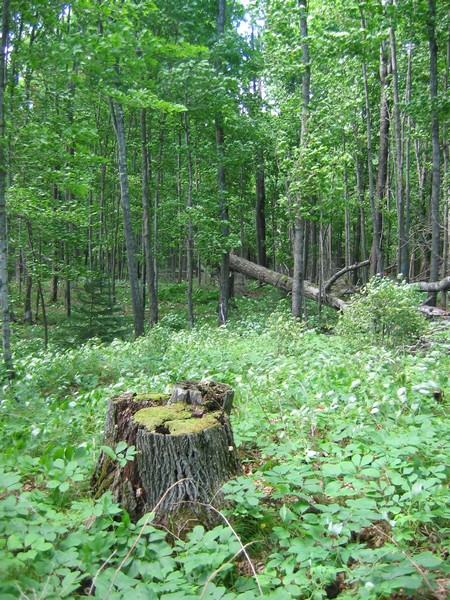
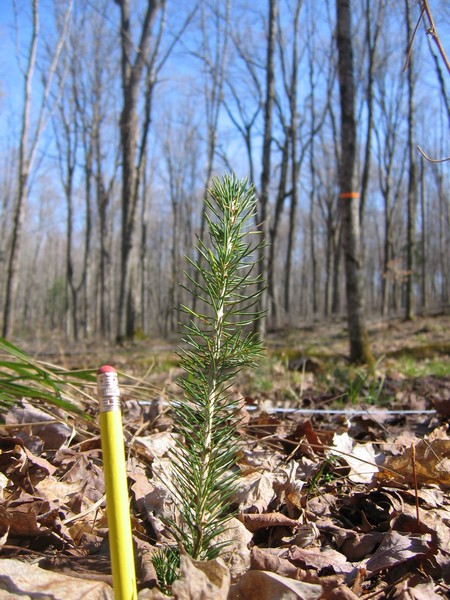
One of the main issues we will study with our integrated ecological-economic landscape model is the impact of whitetail deer (Odocoileus virginianus) herbivory on tree regeneration following cutting. Last November we spent a week planting 2 year-old seedlings in Northern Hardwood forest gaps created by selective timber harvest (like the one in the photo below).

Our plan was to return this spring to examine the impacts of deer browse on these seedlings. In particular, we wanted to examine how herbivory varies across space due to changes in deer population densities (in turn driven by factors such as snow depth).

To this end we selected almost 40 forest sites that would hopefully capture some spatial variation in snowfall and that had recently been selectively harvested. At each site we selected 10 gaps produced by timber harvest in which to plant our seedlings.

In each gap we planted six trees of each of three species: White Spruce (Picea glauca), White Pine (Pinus strobus) and Eastern Hemlock (Tsuga canadensis). We chose these coniferous species as these are examples of the mesic confer species the Michigan DNR are trying to restore across our study area, and because we expected a range of herbivory across these species.

At each site we would also undertake deer pellet counts in the spring to estimate the number of deer in the vicinity of the site during the winter (during which time the browse we were measuring would have occurred).

On returning to the study sites a couple of weeks ago we set about looking for the trees we had planted to measure herbivory and count deer pellets. In some cases, finding the trees we planted was easier said than done. We tried to get our field crews to plant the trees in straight lines with equal spacing between each tree. In general, this was done well but on occasion the line could only be described as crooked at best. Micro-topography, fallen tree trunks and limbs, and slash from previous cutting all contributed to hamper the planned planting system. However, we did pretty well and found well over 90% of the trees.

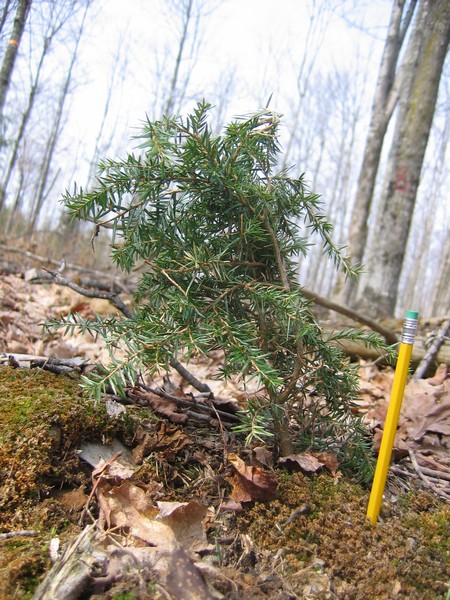
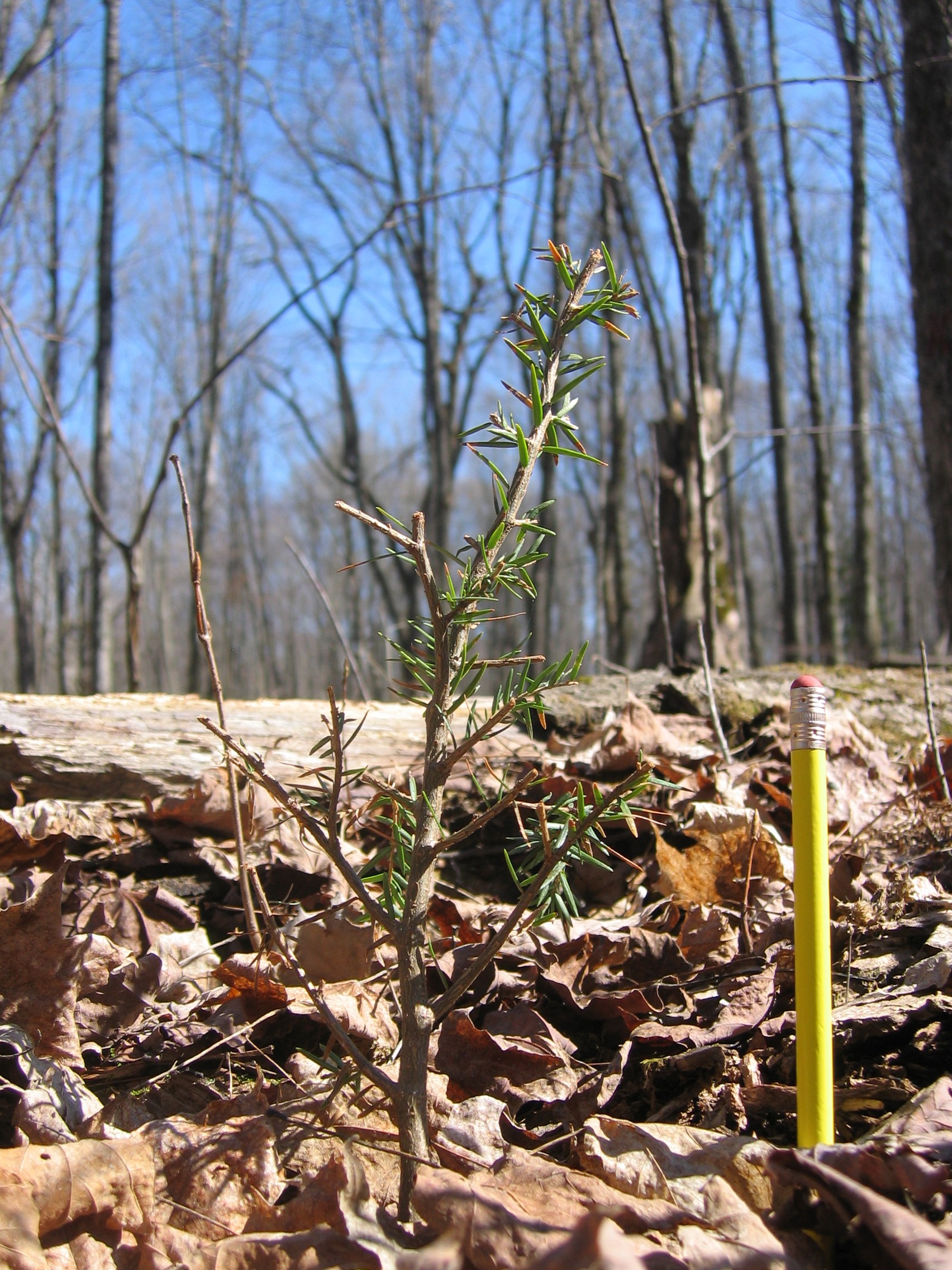
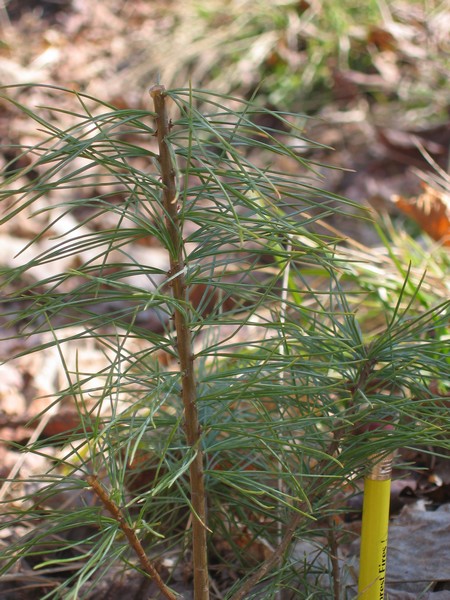
We haven’t begun analyzing our data as yet, but some anecdotal observations stand out. First, the deer preferentially browsed Hemlock over the other species, often removing virtually all non-woody biomass as shown by the ‘before and after’ examples below (NB – these photographs are not of the same tree and this is not a true before/after comparison).

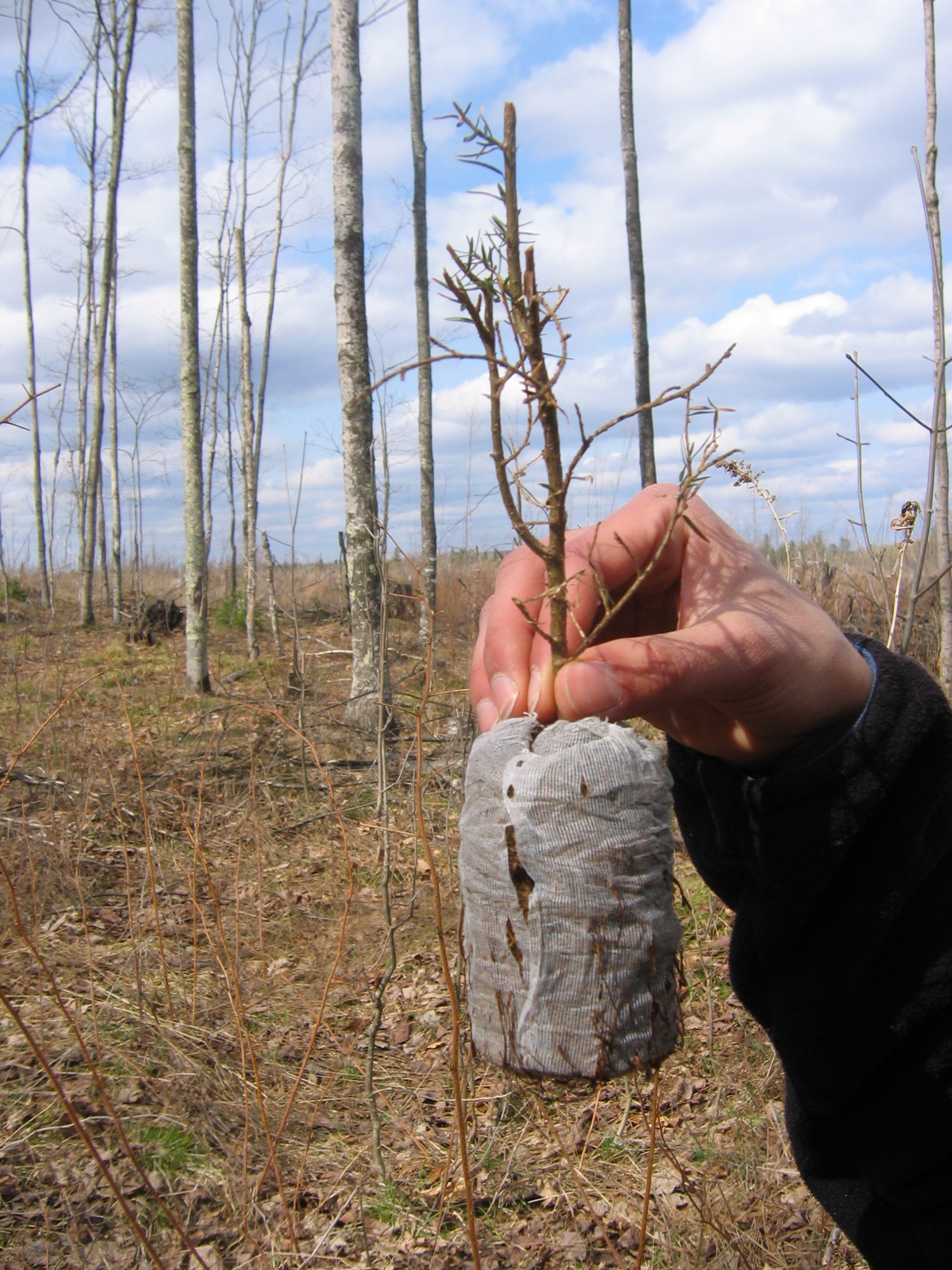
In some cases, the deer not only removed all non-woody biomass but also pulled the tree out of the ground (as shown below).

In contrast, White Pine was browsed to a much lesser extent and White Spruce was virtually untouched (as shown below).

Having a species that was unaffected by deer (i.e. spruce) often made our job of finding the other trees much easier. Finding heavily browsed Hemlock that no longer had any green vegetation was often tricky against a background of forest floor litter.

The next step now is to start looking at this variation in browse through a more quantitative lens. Then we can start examining how browse and deer densities vary across space and how these variables are related to one another and other factors (such as snow depth and distance to conifer stands).

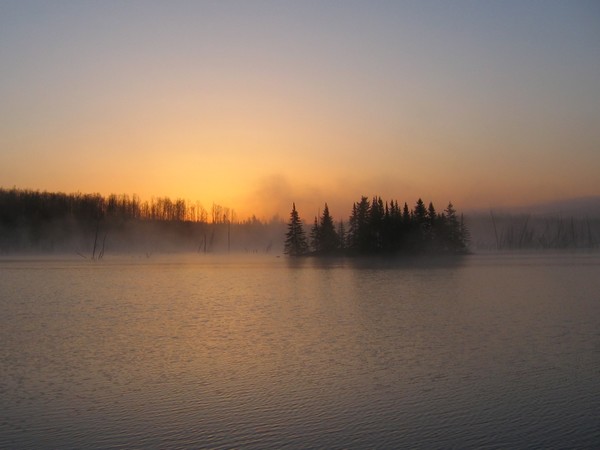
All-in-all the two weeks of work went pretty well. There were some issues with water-logged roads (due to snow melt) meaning we couldn’t get to one or two of the sites we planted at, but generally the weather was pretty good (it only rained heavily one day). I’ll write more once we have done more analysis and stop here with a shot I took at sunrise as I left for home.

US-IALE 2008 – Summary


A brief and belated summary of the 23rd annual US-IALE symposium in Madison, Wisconsin.

The theme of the meeting was the understanding of patterns, causes, and consequences of spatial heterogeneity for ecosystem function. The three keynote lectures were given by Gary Lovett, Kimberly With and John Foley. I found John Foley’s lecture the most interesting and enjoyable of the three – he’s a great speaker and spoke on a broader topic than the the others; Agriculture, Land Use and the Changing Biosphere. Real wide-ranging, global sustainability stuff. He highlighted the difficulties of studying agricultural landscapes because of the human cultural and institutional factors, but also stressed the importance of tackling these tricky issues because ‘agriculture is the largest disturbance the biosphere has ever seen’ and because of its large contribution to greenhouse gas emissions.

Presentations I was particularly interested in were mainly in the ‘Landscape Patterns and Ecosystem Processes: The Role of Human Societies’, ‘Challenges in Modeling Forest Landscapes under Climate Change’ and ‘Cross-boundary Challenges to the Creation of Multifunctional Agricultural Landscapes’ sessions.

In the ‘human societies’ session, Richard Aspinall discussed the importance of considering human decision-making at a range of scales and Dan Brown again highlighted the importance of human agency in spatial landscape process models. In particular, with regards modelling these systems using agent-based approaches he discussed the difficulty of model calibration at the agent level and stressed that work is still needed on the justification and evaluation phases of agent-based modelling.

The ‘modeling forest landscapes’ session was focused largely around use of the LANDIS and HARVEST models that were developed in and around Wisconsin. In fact, I don’t think I saw any mention of the USFS FVS at the meeting whilst I was there, largely because (I think) FVS has large data demands and is not inherently spatial. LANDIS and HARVEST work at more coarse levels of forest representation (grid cell compared to FVS’ individual tree) allowing them to be spatially explicit and to run over large time and space extents. We’re confident we’ll be able to use FVS in a spatially explicit manner for our study area though, capitalising on the ability of FVS to directly simulate specific timber harvest and economic scenarios.

The ‘multifunctional agricultural landscapes’ session had an interesting talk by Joan Nassauer on stakeholder science and the challenges it presents. Specific issues she highlighted were:
1. the need for a precise, operational definition of ‘stakeholder’
2. ambiguous goals for the use of stakeholders
3. the lack of a canon of replicable methods
4. ambivalence toward the quantification of stakeholder results

Other interesting presentations were given by Richards Hobbs and Carys Swanwick. Richard spoke about the difficulties of ‘integrated research’ and the importance of science and policy in natural resource management. He suggested that policy-makers ‘don’t get’ systems thinking or modelling, and that some of this may be down to the psychological profiles of the types of people that go into policy making. Such a conclusion suggests scientists need to work harder to bridge the gap to policy makers and do a better job of explaining the emergent properties of the complex systems they study. Carys Swanwick talked about the landscape character assessment, which was interesting for me having moved from the UK to the US about a year ago. Whilst ‘wilderness’ is an almost alien concept in the UK (and Europe as a whole), landscape character is something that is distinctly absent in the new world agricultural landscapes. Carys talked about the use of landscape character as a tool for conservation and management (in Europe) and the European Landscape Convention. It was a refreshing change from many of the other presentations about agricultural landscape (possibly just because I enjoyed seeing a few pictures of Blighty!).

Unfortunately the weather during the conference was wet which meant that I didn’t get out to see as much of Madison as I would have liked. Despite the rain we did go on the Biking Fieldtrip. And yes, we did get soaked. It was also pretty miserable weather for the other fieldtrip to and International Crane Foundation center and the Aldo Leopold Foundation (more on that in a future blog), but interesting nevertheless.

Other highlights of the conference for me were meeting the former members of CSIS and eating dinner one night with Monica Turner. I also got to meet up with Don McKenzie and some of the other ‘fire guys’, and a couple of people from the Great Basin Landscape Ecology lab where I visited previously. And now I’m already looking forward to the meeting next year in Snowbird, Utah (where I enjoyed the snow this winter).

US-IALE 2008 – Landscape Change and other CSIS involvement

Today I started thinking in earnest about the 2008 US-IALE Symposium to be held in Madison, Wisconsin early next month.

I’ll be presenting a poster on our early model development work on the USDA deer/timber regeneration project at CSIS. I will also be chairing the Landscape Change session which has presentations discussing change within and across a diverse range of landscapes including, the Great Plains of the US, the Bolivian Andes and Ukrainian Carpathian mountain ranges, Boreal and Tropical forests, and the Congo Basin.

Whilst in Madison I also plan on attending sessions, symposia, workshops and field-trips devoted to Landscape Patterns and Ecosystem Processes, Modeling Forest Landscapes under Climate Change, Multifunctional Agricultural Landscapes, Forest Landscapes, and Fire. At this last session I’m particularly looking forward to the presentation entitled “Ecological complexity produces simple structure: Power laws in low-severity fire regimes” by Don McKenzie, co-convener of the wildfires session at EGU 2008 the following week (but which I will not be attending).

There will be plenty of other activity by members of CSIS. Jack Liu, president-elect of US-IALE, and CSIS PhD student Vanessa Hull are co-organising the H. Ronald Pulliam Symposium: Sources, Sinks, and Sustainability. Mao-Ning Tuanmu (PhD student) will be making a presentation entitled “Detecting understory vegetation using MODIS data: Implications for giant panda habitat evaluations” in the Remote Sensing session, and Wei Liu (also CSIS PhD student) will present “Conservation success leads to human-wildlife conflicts: Spatial patterns of crop damages and livestock depredation in Wolong Nature Reserve for Giant Pandas, China” in the Social Issues session.

And there’s loads more going on so it promises to be an interesting and busy week! If I get online during a spare 5 minutes I’ll see if I can blog an update on how it’s all going…

Tackling Amazonian Rainforest Deforestation

This week’s edition of Nature devotes an editorial, a special report and an interview to the subject of tropical rainforests and their deforestation. The articles highlight both the proximate causes and underlying driving forces of tropical deforestation, and the importance of human activity as an agent of change (via fire for example), in these socio-ecological systems.

The editorial considers the economics of rainforest destruction, with regards to global carbon emissions. It suggests that deforestation must be integrated into international carbon markets, to reward those countries that have been able to control the removal of forest land (such as India and Costa Rica). Appropriate accounting of tropical rainforest carbon budgets is required however, and the authors point to the importance of carbon budget modelling and the monitoring of (via satellite imagery for example) change in rainforest areas over large spatial extents. Putting an economic price on ‘ecosystem services’ is key to this issue, and the editorial concludes:

One of the oddly positive effects of global warming is that it has given the world the opportunity to build a more comprehensive and inclusive economic model by forcing all of us to grapple with our impact on the natural environment. We are entering a phase in which new ideas can be developed, tested, refined and rejected as necessary. If we find just one that can beat the conventional economic measure of gross domestic product, and can quantify some of the basic services provided by rainforests and other natural ecosystems, it will more than pay for itself.


The special report focuses on the efforts of the Brazilian government to curb the rate of deforestation in the their Amazonian forests. The Brazilian police force is blockading roads, conducting aerial surveys and inspecting agricultural and logging operations, to monitor human activities on the ground. Brazilian scientists meanwhile are monitoring the situation from space, and have developed methodologies and techniques that are leading the way globally in the remote monitoring of forests. The Brazilian government is a keen advocate of the sort of economic approaches to the issues of rainforest destruction highlighted in the editorial outlined above, and sees this rigorous monitoring as key to be able to show how much carbon they can save by preventing deforestation.

Halting the removal of forest cannot simply be left to carbon trading alone, however, and local initiatives need to be pursued. To ensure the forest’s existence is sustainable, local communities need to be able make money for themselves without chopping down the trees – if they can do this it will be their in their interests NOT to remove forest. But developing this incentive has not been straightforward. For example, some researchers have have suggested that as commodity prices for crops such as soya beans have increased (possibly due to increased demand for corn-based ethanol in the US) deforestation has increased as a result. Although the price of soya beans may be a contributing factor to rainforest removal, Ruth DeFries (who will be visiting CSIS and MSU next week as part of the Rachel Carson Distinguished Lecture Series) suggests that it is not the main driver. Morton et al. found that during for the period 2001-04, conversion of forest to agriculture peaked in 2003. This situation makes it clear that there are both proximate causes and underlying driving forces of tropical deforestation. The Nature special report suggests:

If the international community is serious about tackling deforestation, it will probably need to use a hybrid approach: helping national governments such as Brazil to fund traditional policies for enforcement and monitoring and enabling communities to experiment with a market-based approach.


But how long do policy-makers have to discuss this and get these measures in place? One set of research suggests 55% of the Amazon rainforest could be removed over the next two decades, and the complexity of the rainforest system means that a ‘tipping point’ (i.e., an abrupt transition) beyond which the system might not recover (i.e., reforestation would not be possible). The Nature interview with Carlos Nobre highlights this issue – the interactions of climate change with soil moisture and the potential for fire indicate that the there is risk of rapid ‘savannization’ in the eastern to southeastern Amazon as the regional climate changes. When asked what the next big question scientists need to address in the Amazon is, Nobre replies that the role of human-caused fire will be key:

Fire is such a radical transformation in a tropical forest ecosystem that biodiversity loss is accelerated tremendously — by orders of magnitude. If you just do selective logging and let the area recover naturally, perhaps in 20–30 years only a botanist will be able to tell that a forest has been logged. If you have a sequence of vegetation fires going through that area, forget it. It won’t recover any more.


As I’ve previously discussed, considering the feedbacks and interactions between systems is important when examining landscape vulnerabilities to fire. Along with colleagues I have examined the potential effects of changing human activity on wildfire regimes in Spain (recently we had this paper published in Ecosystems and you can see more wildfire work here). However, the integrated study of socio-economic and ecological systems is still very much in its infancy. And the processes of landscape change in the northern Mediterranean Basin and the Amazonian rainforest are very different; practically inverse (increases in forest in the former and decreases in the latter). As always, plenty more work needs to be done on these subjects, and with the potential presence of ‘tipping points’, now is an important time to be doing it.

utah pics


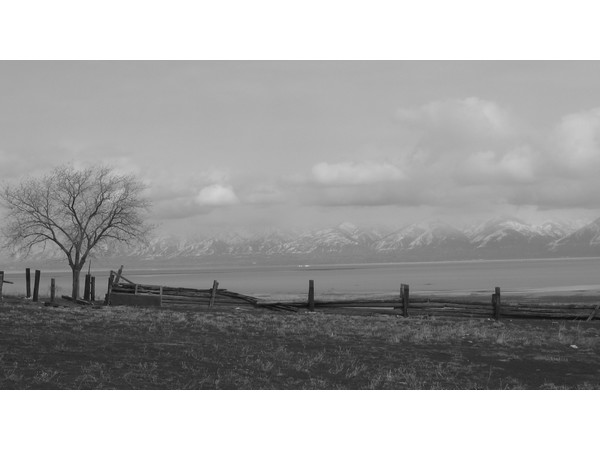
Last week I took a brief snowboarding trip to Utah. After two days on the fantastic Snowbird slopes we explored the area around Salt Lake City a little. One place we visited was Garr Ranch on Antelope Island, home of the oldest Anglo house still on its original foundation in Utah. Perched in the middle of the Great Salt Lake, it was quite a windswept location and impressive that it’s also the longest Anglo inhabited site in the state. A couple of photos from the trip now on the photos page.

Forest Ecology and Management Special Issue: Forest Landscape Modeling

In June 2006 the China Natural Science Foundation and the International Association of Landscape Ecology sponsored an international workshop of forest landscape modelling. The aim of the workshop was to facilitate a discussion on the progress made in the theory and application of forest landscape models. A special issue of Forest Ecology and Management, entitled Forest Landscape Modeling – Approaches and Appplications [Vol. 253, Iss. 3], presents 12 papers resulting from that meeting. In their editorial, He et al. summarise the papers, organising them into three sections that describe current activities in forest landscape modelling: (1) effects of climate change on forest vegetation, (2) forest landscape model applications, and (3) model research and development.

The LANDIS model is used in several of the papers on climate and human management of forest systems. Advances in the representation of processes that propagate spatially, including fire and seed dispersal, are discussed in several of the papers examining model research and development. He et al. conclude their editorial by reiterating why landscape models are a vital tool for better understanding and managing forested regions of the world:

The papers represented in the special issue of forest landscape modeling highlight the advances and applications of forest landscape models. They show that forest landscape models are irreplaceable tools to conduct landscape-scale experiments while physical, financial, and human constraints make real-world experiments impossible. Most of the results presented in this issue would not have been possible without the use of forest landscape models. Forest landscape modeling is a rapidly developing field. Its development and application will continually be driven by the actual problems in forest management planning and landscape-scale research. We hope that the papers contained in this special issue will serve both researchers and managers who are struggling to incorporate large-scale and long-term landscape processes into their management planning or research.

IALE-IUFRO WG Website


A while back the ‘new’ IALE-IUFRO Working Group website launched, so I thought I’d highlight it here. During the IALE World Congress 2007 in Wageningen, a new IALE-IUFRO working group was approved and sanctioned by both IALE (International Association of Landscape Ecology) and IUFRO (International Union of Forestry Research Organizations):

Forestry was the first major field to recognize the importance of landscape ecology, and today foresters widely know, use, and even develop landscape ecology principles based on experience and science. Landscape ecology is an exciting field for researchers and managers together. In this sense, landscape ecology is viewed as the nexus of ecology, resource management, and land use planning. It is within this framework of synergy and integration that we envisaged this formal link between the two groups.

Thus, the IALE-IUFRO WG aims to collate landscape ecologists with an interest in forest science and ecology including studies and methods for monitoring, planning, designing, and managing forest ecosystems and landscapes. Through the website, members of IALE-IUFRO WG will be able to exchange experiences and share common needs and interests to build up on the strength of the network. This group can serve as an international platform for advocating and updating research and management on forest landscapes.

Tom Veldkamp: Advances in Land Models

As I mentioned before, the Global Land Project website is experimenting with the use of webcasts to enable the wider network to “participate” and use the GLP webpage as a resource. For example, several presentations are available for viewing from the Third Land System Science (LaSyS) Workshop entitled ‘Handling complex series of natural and socio-economic processes’ and held in Denmark in October of 2007. One that caught my attention was by Tom Veldkamp, mainly because of its succinct title: Advances in Land Models [webcast works best in IE].


Presented in the context of other CHANS research, Veldkamp used an example from the south of Spain to discuss recent modelling approaches to examine the effects of human decisions on environmental processes and the feedbacks between human and natural systems. The Spanish example examined the interaction of human land-use decision making and soil erosion. A multi-scale erosion model, LAPSUS, represented the interactive natural and human processes occurring olive groves on steep hillslopes; gullying caused by extreme rainfall events and attempts to preserve soils and remove gullies by ploughing. Monte Carlo simulations were used to explore uncertainties in model results and highlighted the importance of path dependencies. As such, another example of the historical dimension of ‘open’ systems and the difficulties it presents for environmental modellers.

The LAPSUS model was coupled with the well known land use/cover change CLUE model to examine feedbacks between human land use and erosion. The coupled model was used to examine the potential implications of farmers adopting land use practices as a response to erosion. Interestingly, the model suggested that human adaptation strategy modelled would not lead to reduced erosion.

Veldkamp also discusses the issue of validating simulation models of self-organising processes, and suggests that ensemble and scenario approaches such as those used in global climate modelling are necessary for this class of models. However, rather than simply using ‘static’ scenarios that specify model boundary conditions, such as the IPCC SRES scenarios, scenarios that represent some form of feedback with the model itself will be more useful. Again, this comes back to his point about the importance of representing feedbacks in coupled human and natural systems.

For example, Veldkamp suggests the use of “Fuzzy Cognitive Maps” to generate ‘dynamic’ scenarios. Essentially, these fuzzy cognitive maps are produced by asking local stakeholders in the systems under study to quantify the effects of the different factors driving change. First, the appropriate components of the system are identified. Next, the feedbacks between these components are identified. Finally, the stakeholders are asked to estimate how strong these feedbacks are (on a scale of zero to one). This results in a semi-quantitative systems model that can be run for several iterations to examine the consequences of the feedbacks within the system. This method is still in development and Veldkamp highlighted several pros and cons:

Pros:

  • it is relatively easy and quick to do
  • it forces the stakeholders to be explicit
  • the emphasis is placed on the feedbacks within the system

Cons:

  • it is a semi-quantitative approach
  • often feedbacks are of incomparable units of measurement
  • time is ill defined
  • stakeholders are often more concerned with the exact values they put on an interaction rather than the relative importance of the feedbacks

I agree when Veldkamp suggests this ‘fuzzy cognitive mapping’ is a promising approach to scenario development and incorporation into simulation modelling. Indeed, during my PhD research I explored the use of an agent-based model of land use decision-making to provide scenarios of land use/cover change for a model of forest succession-disturbance dynamics (and which I am currently writing up for publication). ‘Dynamic’ model scenario approaches show real promise for representing feedbacks in coupled human natural systems. As Veldkamp concludes, these feedbacks, along with the non-linearities in system behaviour they produce, need to be explicitly represented and explored to improve our understanding of the interactions between humans and their environment.

Sustainability Science: An Emerging Interdisciplinary Frontier

Sustainability. Integration. Interdisciplinary. These are the three words that stood out from Prof William C. Clark’s Rachel Carson Distinguished Lecture at MSU on Thursday and reflect the research we do at the the Center for Systems Integration and Sustainability.

Prof Clark discussed the recent emergence of ‘Sustainability Science’ as a field that is use-inspired (like health science or agricultural science), that is defined by the practical problems it addresses, that is focused on the scientific understanding of coupled human and natural systems (CHANS), and that integrates knowledge and research from multiple disciplines.

The definition of ‘sustainability’ has always been a tricky one – in part Clark suggested because it is a concept that is as broad as concepts such as ‘freedom’, ‘good’ and ‘bad’. What sustainability means depends on who is using the word and the context of the problem in which it is being used. Because sustainability science is use-inspired, what is to be sustained is defined by the the problem or issue being addressed. In one situation the objective might be examine how best to sustain a community’s cultural and social well-being, in another it might be the continuation of the life-supporting functions of an ecosystem, and in yet another it might the continued growth of the economy and the material well-being that affords. An idealist might argue that the objective should be to sustain all three examples, but in reality priorities will often need to be drawn up.

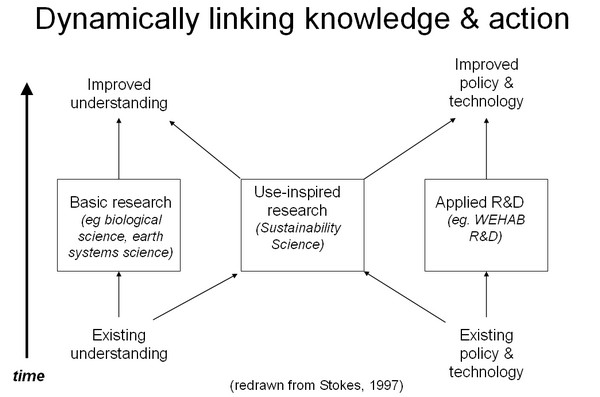
Clark used Stoke’s (1997) presentation of the four quadrants of the reasons to undertake research, highlighting that sustainability science falls into Pasteur’s Quadrant. Research in sustainability science is driven by both a quest for fundamental understanding and the consideration of the use to which the research will be put in the real world. Research with the goal of the former alone might be termed ‘Basic Research’ (e.g. physics – Bohr’s Quadrant), whereas the latter might be termed ‘Applied Research’ (e.g. engineering – Edison’s Quadrant). Through time, research in Pasteur’s Quadrant often results in a dialogue between the basic and the applied sciences, as demonstrated below.


The characterisation of sustainability science highlights that the domain of sustainability science is geo-historical. Place and history are important in defining both the problem to be examined and the solutions we might suggest. Prof Clark highlighted this, noting that a good knowledge of the environmental history of the location under study is important, and that such a history can be used in some ways as a laboratory provides data. But equally we need to remember that this history can be framed or contextualised itself – the narrative of an environmental history is unlikely to provide data that is as ‘objective’ as would be produced in a biology lab say.

Furthermore, the nature of geo-historical systems highlights the problems associated with a science that tries to be both applied and basic. How do we take use the knowledge gained from a given study to inform wider policy and decision making? Critics can argue that ‘it only happens in this particular place’, whereas advocates can argue that ‘it happens like this everywhere’. A balance between these stances will need to be struck. Multiple examples of processes, treatments, and outcomes in different places might be one way to approach this balance. Given that real-world systems are context-dependent, and that the problems sustainability science will study are value-laden, a certain level of subjectivity probably isn’t such a big deal anyway. The development of nomothetic generalizations in the same vein as the hard sciences may not be possible. However this situation, which implies uncertainty, will need to be acknowledged and understood by decision-makers.

Clark also discussed the ‘lessons for designing university-based knowledge systems for sustainability’. An article in the current issue of Futures highlights the issues faced by university departments and researchers wishing to perform sustainability science:

“The art of problem-based interdisciplinarity lies in the choice of problems that will be both academically and socially fruitful. Too heavy emphasis on the former leads to research that may successfully address problems within a particular field of study and make a contribution to the literature but that are of limited value or interest beyond the academy. Too much emphasis on the latter leads to work that is indistinguishable from consulting or pure advocacy work. Being problem-driven means starting from a problem or concern in society, but, in order to create the hybrid activity described above, this problem must be translated into a form that is amenable to issue-driven interdisciplinary research. Such translation is an indispensable prerequisite to obtaining funding from academic funding agencies and buy-in from academic collaborators, who have to be able to undertake research that will lead to publications in the outlets in which they need to publish in order to further their career prospects.”


To develop successfully Prof Clark suggested that the academy will need to maintain and engage strength in the foundation disciplines, support focused programs of ‘use-inspired basic research’ on core questions of sustainability science, build collaborative problem-solving programs, and create recognition and reward systems for those who develop and participate in such programs. The ‘publish or perish’ mantra also demands that there be suitable outlets for sustainability science research – the creation of the Sustainability Science section in PNAS is an indication that the importance, and uniqueness, of this emerging interdisciplinary field of study is becoming increasingly recognised.

There was so much more said and discussed during Prof Clark’s visit to MSU but that’s enough here for now. A copy of the powerpoint presentation used during the lecture can be downloaded from the CSIS website.